Why Does Your Pellet Machine Produce Low-Quality Pellets?
Why Does Your Pellet Machine Produce Low-Quality Pellets?
Biomass pellet production has become an important part of the global renewable energy industry. With increasing interest in alternative fuels, industrial heating, biomass power generation, and agricultural waste utilization, more manufacturers are investing in professional pellet production equipment.
However, purchasing a high-performance pellet machine does not automatically guarantee high-quality pellets. Many manufacturers encounter problems during production, including loose pellets, excessive powder, uneven sizes, surface cracks, and low mechanical durability.
These problems can reduce production efficiency, increase raw material losses, and affect the commercial value of the final product.
Why does your pellet machine produce low-quality pellets? In most cases, the problem is not caused by a single factor. Raw material characteristics, moisture content, die compression ratio, feeding stability, operating parameters, and equipment maintenance all influence the final pellet quality.
Understanding these factors is essential for selecting the right biomass pellet machine and maintaining stable production.
1. What Are the Main Signs of Low-Quality Pellets?
Before adjusting your pellet machine, it is important to identify the specific quality problems occurring during production.
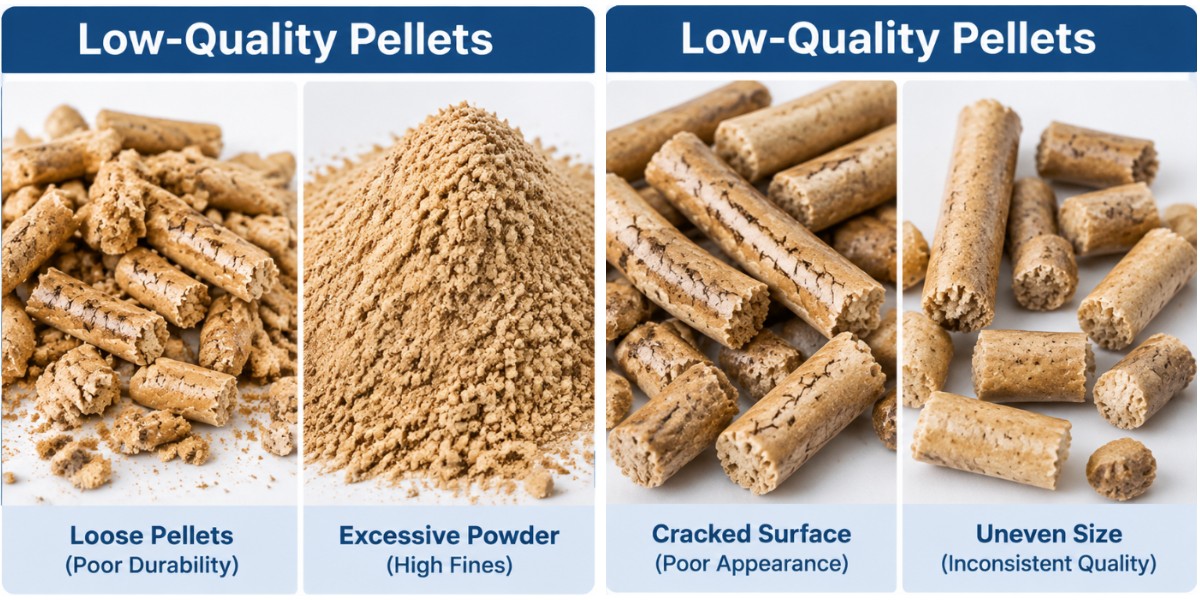
Common signs include:
1.1 Loose Pellets and Poor Hardness
If finished pellets break easily when handled, the raw material may not be bonding properly under compression. This can result from unsuitable moisture content, insufficient compression, incorrect die specifications, or unsuitable raw material composition.
1.2 Excessive Powder and Fine Particles
A large amount of powder around the pellet discharge area usually indicates poor particle bonding or unstable forming conditions. Excessive fines can also appear during cooling, screening, transportation, and storage.
1.3 Cracked or Uneven Pellet Surfaces
Cracks, rough surfaces, and inconsistent pellet lengths may be related to uneven feeding, unsuitable particle size, incorrect moisture levels, or unstable operating conditions.
1.4 Low Pellet Density
Low-density pellets occupy more storage and transportation space and may have insufficient mechanical strength. For industrial buyers, this can increase handling costs and reduce the overall value of the finished product.
For wood fuel pellets, ENplus quality requirements provide useful reference indicators. For example, the ENplus A1 class specifies moisture content of no more than 10%, mechanical durability of at least 98%, and fines of no more than 0.7%. These figures should not be applied automatically to every agricultural or industrial biomass pellet, because different feedstocks and product standards have different requirements.
2. Five Main Reasons Why Your Pellet Machine Produces Low-Quality Pellets
2.1 Incorrect Raw Material Moisture Content
Moisture content is one of the most important factors affecting pellet formation.
If the material contains too much water, particles may not compress effectively. Finished pellets can become soft, sticky, or prone to cracking after drying and cooling.
On the other hand, excessively dry material may create higher friction inside the compression chamber, increasing power consumption and equipment wear.
For many wood pellet applications, a feedstock moisture level around 10%–15% is a useful starting point. However, the optimal range depends on the material, particle size, pellet mill design, and production conditions. Agricultural residues may require different settings.
How to solve this problem:
Test raw material moisture before production.
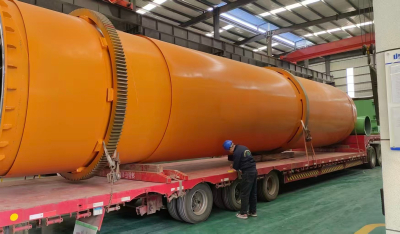
Install a suitable rotary drum dryer when the feedstock is too wet.
Use a moisture meter to monitor material consistency.
Adjust moisture according to different biomass materials.
Avoid mixing materials with significantly different moisture levels without proper adjustment.
A well-designed drying system helps the biomass pellet machine receive more consistent raw materials, improving production stability.
2.2 Unsuitable Raw Material Particle Size
Particle size directly affects compression, bonding, and pellet durability.
If raw materials contain large wood chips, long fibers, or uneven particles, they may not pass smoothly through the die holes. This can lead to unstable feeding, poor pellet formation, and increased equipment wear.
However, excessively fine particles are not always ideal. Over-grinding increases electricity consumption and may affect material flow.
How to solve this problem:
A suitable crushing and grinding process should be arranged before pelletizing.
For example:
Wood chips can be processed using a wood crusher.
Sawdust can be further refined using a hammer mill if necessary.
Agricultural residues can be crushed to achieve a more uniform particle distribution.
Screens can help control the final particle size.
A complete pellet production line should match the crusher, hammer mill, dryer, and pellet machine according to the characteristics of the raw material.
2.3 Incorrect Die Compression Ratio
The ring die is one of the most important components of an industrial pellet machine. Its hole diameter, effective working length, and compression ratio influence the resistance experienced by biomass during extrusion.
If the compression ratio is too low, pellets may be loose and have insufficient density.
If it is too high, the machine may experience excessive resistance, increased power consumption, unstable output, or blockage.
Different materials require different compression conditions. Wood sawdust, rice husks, straw, palm fiber, and other agricultural residues do not behave identically during pelletizing.
How to solve this problem:
Select the die according to the raw material.
Match the compression ratio to the required pellet diameter.
Check whether the die holes are worn or blocked.
Replace damaged or unsuitable dies when necessary.
Conduct material tests before confirming the final configuration.
For manufacturers processing different biomass materials, selecting the correct ring die is essential for maintaining stable pellet quality.
2.4 Unstable Feeding and Improper Roller Adjustment
The feeding system controls how raw materials enter the compression chamber.
If feeding is uneven, the pellet mill may experience fluctuating loads. Too much material can cause blockage, while insufficient feeding reduces production efficiency.
The distance and working condition between the rollers and ring die also influence the compression process.
Worn rollers, uneven roller surfaces, or improper adjustment can result in inconsistent pellet formation.
How to solve this problem:
Maintain a stable feeding speed.
Check the feeder and internal material distribution.
Inspect roller surfaces regularly.
Adjust the roller-to-die working clearance according to the manufacturer's instructions.
Replace seriously worn components.
A well-maintained vertical ring die pellet machine can provide consistent compression when its feeding and roller systems are correctly configured.
2.5 Improper Cooling and Post-Processing
Some manufacturers focus heavily on the pelletizing process but overlook what happens after the pellets leave the machine.
Freshly produced biomass pellets may still be hot and contain residual moisture. If they are packed immediately without adequate cooling, condensation can develop inside the bags.
This may cause pellets to soften, crack, or deteriorate during storage.
How to solve this problem:
A professional pellet production line should include appropriate post-processing equipment:
Cooling: Reduce pellet temperature and stabilize the finished product.
Screening: Remove excessive powder and broken particles.
Packaging: Protect finished pellets during transportation and storage.
Proper cooling and screening help maintain pellet quality beyond the forming stage.
3. How Does a Biomass Pellet Machine Affect Final Pellet Quality?
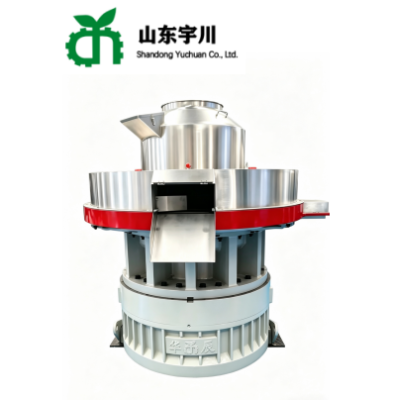
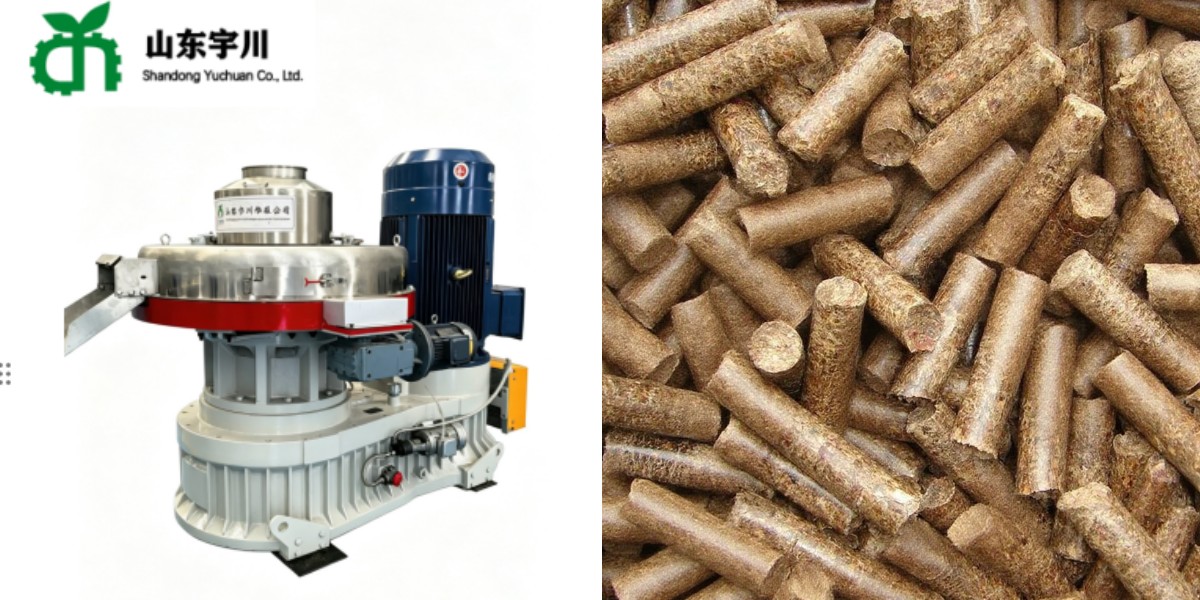
A biomass pellet machine converts prepared biomass materials into cylindrical pellets through mechanical compression.
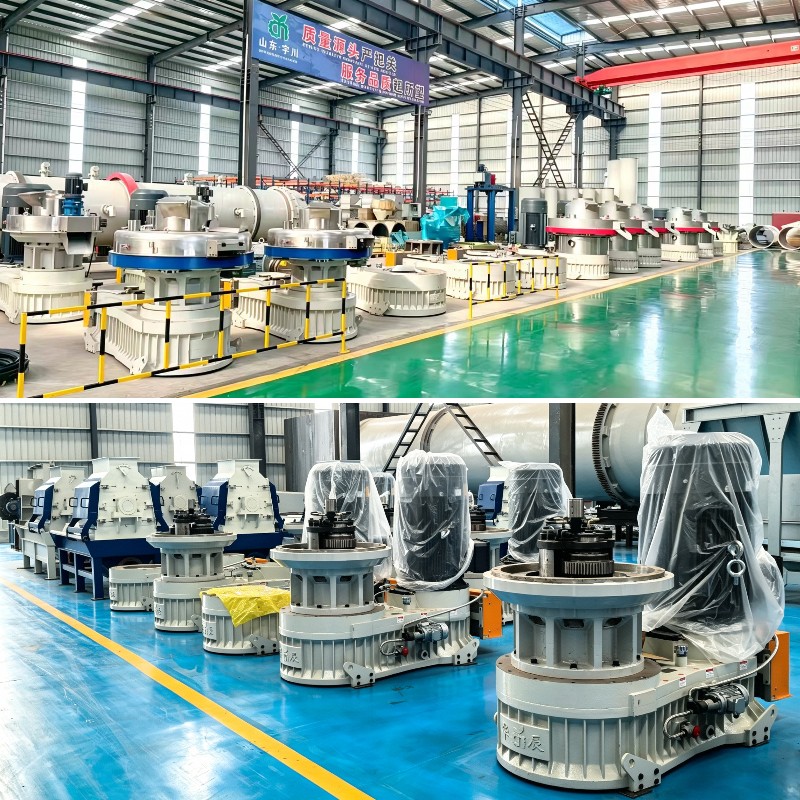
In a typical vertical ring die pellet mill, the main working components include the feeding system, ring die, pressure rollers, main drive system, and discharge section.
During operation, prepared biomass enters the compression chamber. The rollers press the material against the rotating ring die, forcing it through the die holes under pressure and friction.
Natural binding components, including lignin in suitable woody materials, help particles bond together during the process.
The final pellet quality depends on the combined performance of the machine and the material preparation system.
For industrial production, equipment selection should consider:
Required production capacity, such as 500 kg/h, 1 T/H, or 2 T/H.
Raw material type and composition.
Initial moisture content.
Required pellet diameter.
Expected operating hours.
Finished pellet quality requirements.
Choosing a suitable industrial pellet machine is therefore more important than simply selecting equipment with the highest advertised output.
4. Biomass Pellet Industry Trends: Why Is Consistent Quality Becoming More Important?
The global biomass pellet industry continues to provide opportunities for manufacturers, particularly in industrial heating, renewable energy, and agricultural waste utilization.
According to Bioenergy Europe's 2025 Statistical Report, global wood pellet production reached approximately 48.3 million tonnes in 2024, while global consumption exceeded 45 million tonnes for the first time. Production capacity reached approximately 75 million tonnes.
These figures indicate an established international market, but production volume alone is not enough to guarantee competitiveness.
Several trends are becoming increasingly important:
4.1 Greater Attention to Pellet Durability
Buyers increasingly consider mechanical durability, moisture, density, ash content, and fines when evaluating suppliers. Stable product quality helps reduce losses during handling and transportation.
4.2 More Diverse Biomass Feedstocks
In addition to traditional wood sawdust, manufacturers are exploring rice husks, straw, palm fiber, palm shells, and other agricultural residues.
This creates new opportunities but also increases the need for feedstock-specific pelletizing solutions.
4.3 Integrated and Automated Production Lines
More industrial buyers are considering complete pellet production lines instead of purchasing individual machines.
Integrated crushing, drying, pelletizing, cooling, screening, and packaging systems can improve production coordination and reduce manual intervention.
For equipment manufacturers, providing customized solutions based on raw material characteristics is becoming an important competitive advantage.
5. How Can You Improve Pellet Production Quality with a Complete Production Line?
For manufacturers planning long-term commercial production, solving pellet quality problems requires more than adjusting one machine. A properly designed production line can help control the entire manufacturing process.
A typical biomass pellet production line includes the following stages:
Production Stage | Main Equipment | Function |
|---|---|---|
1. Crushing | Wood Crusher / Hammer Mill | Reduce raw material size |
2. Drying | Rotary Drum Dryer | Control moisture content |
3. Feeding | Screw Conveyor / Feeder | Ensure stable material supply |
4. Pelletizing | Biomass Pellet Machine | Compress biomass into pellets |
5. Cooling | Pellet Cooler | Reduce temperature and stabilize pellets |
6. Screening | Vibrating Screen | Remove powder and broken pellets |
7. Packaging | Automatic Packing Machine | Prepare finished products for delivery |
At Shandong Yuchuan Environmental Protection Equipment Co., Ltd., we focus on biomass pelletizing equipment, rotary drum dryers, wood crushers, and complete pellet production solutions.
Our vertical ring die pellet machines are designed for industrial biomass processing applications. Equipment configurations can be adjusted according to different raw materials, production capacities, and customer requirements.
For example, a customer processing pine sawdust may require a different drying and compression configuration from a manufacturer using rice husks or palm fiber.
Therefore, a professional equipment supplier should evaluate the complete production process before recommending a suitable pellet machine.
6. How Can You Prevent Pellet Quality Problems in Daily Production?
Regular maintenance and standardized operating procedures are essential for maintaining consistent production.
Here are six practical recommendations for industrial pellet manufacturers:
Check moisture regularly: Test raw material moisture before feeding.
Inspect the ring die: Remove blockages and monitor die-hole wear.
Maintain rollers: Check roller surfaces and working conditions.
Control feeding speed: Avoid excessive or insufficient material supply.
Monitor finished pellets: Check pellet hardness, length, density, and powder content.
Maintain cooling equipment: Ensure finished pellets are adequately cooled before packaging.
A preventive maintenance schedule can help reduce unexpected downtime, improve equipment reliability, and extend the service life of important components.
7. Frequently Asked Questions About Pellet Machine Quality
Q1: Why Does My Pellet Machine Produce Too Much Powder?
Excessive powder may result from incorrect raw material moisture, unsuitable particle size, insufficient compression, worn rollers, or improper cooling. Check the material preparation process and compression system before changing machine settings.
Q2: What Is the Best Moisture Content for Biomass Pellet Production?
For many wood pellet applications, approximately 10%–15% feedstock moisture is a useful initial reference. However, the ideal level varies depending on the biomass type, equipment design, and production conditions. Material testing is recommended before commercial production.
Q3: Can One Biomass Pellet Machine Process Different Raw Materials?
Yes. Many biomass pellet machines can process different materials, including sawdust, wood chips after suitable size reduction, straw, rice husks, and palm residues. However, different materials may require adjustments to moisture, particle size, die compression ratio, and machine configuration.
Q4: How Can I Increase Pellet Machine Production Capacity Without Reducing Quality?
Start by improving raw material preparation, maintaining stable feeding, selecting a suitable ring die, and ensuring adequate cooling. If higher output is required, consider a larger-capacity pellet machine or an integrated production line rather than simply increasing the feeding speed.
8. Conclusion: Choose the Right Pellet Machine for Stable Production
Low-quality pellets are usually the result of several interconnected factors rather than a single equipment problem.
Raw material moisture, particle size, die compression ratio, roller condition, feeding stability, and cooling efficiency all influence the final product.
For industrial biomass manufacturers, selecting the right pellet machine is only the first step. A well-matched production line, proper operating parameters, and regular equipment maintenance are equally important.
If you are experiencing loose pellets, excessive powder, low production capacity, or unstable pellet quality, a professional technical assessment can help identify the actual cause.
Looking for a reliable biomass pellet machine manufacturer in China?
Shandong Yuchuan Environmental Protection Equipment Co., Ltd. provides vertical ring die pellet machines, rotary drum dryers, wood crushers, and customized biomass pellet production lines.
Contact our team today and tell us about your project. Please share your raw material type, moisture content, required production capacity, and target pellet size.
Our engineers can evaluate your requirements and recommend a suitable pelletizing solution to help improve production efficiency and finished pellet quality.
Contact Heather at Shandong Yuchuan Environmental Protection Equipment Co., Ltd. for technical consultation and a customized quotation.