What Should You Know Before Buying a Biomass Pellet Machine?
What Should You Know Before Buying a Biomass Pellet Machine?
Investing in a biomass pellet machine is an important decision for wood-processing companies, biomass fuel manufacturers, agricultural businesses, and energy project developers. The right equipment can help convert wood residues and agricultural by-products into uniform, marketable pellets. However, selecting a machine based only on its advertised capacity or purchase price can lead to production bottlenecks, higher operating costs, and unexpected maintenance requirements.
Before purchasing a biomass pellet machine, buyers should evaluate raw material characteristics, required output, pellet quality, machine structure, power consumption, after-sales support, and compatibility with the entire production process. These factors are particularly important for industrial projects where stable operation and long-term production costs matter more than the initial equipment price.
This guide explains the main considerations international buyers should review before choosing a biomass pellet machine.
1. Understanding the Global Biomass Pellet Industry
Biomass pellets are increasingly used in residential heating, industrial boilers, combined heat and power generation, and other energy applications. They are generally manufactured from processed biomass materials such as sawdust, wood chips, shavings, straw, rice husks, and other agricultural or forestry residues.
According to Bioenergy Europe’s 2026 market update, global wood pellet production reached approximately 53.5 million tonnes in 2025, representing a 10% increase compared with 2024. Global consumption reached around 51.5 million tonnes in the same year. These figures indicate continued demand for pellet fuel, although market conditions and growth rates vary by region and end-use sector.
The market is not driven by energy demand alone. Pellet manufacturers also need to meet requirements for consistent product quality, raw material traceability, production costs, and reliable supply. Buyers investing in a biomass pellet machine should therefore consider the intended market before finalizing equipment specifications.
1.1 Regional Demand and Industrial Applications
Europe remains an important market for wood pellets, particularly for heating and industrial energy applications. Japan and South Korea are also significant import markets, while Southeast Asian producers have developed export-oriented pellet industries. In North and South America, forestry residues and wood-processing by-products provide raw material opportunities for pellet production.
These regional differences influence equipment selection. A manufacturer supplying industrial fuel users may prioritize continuous operation, production capacity, and consistent pellet dimensions. A smaller producer serving local heating markets may place greater emphasis on investment cost, flexible raw material handling, and straightforward maintenance.
1.2 Key Market Trends Affecting Equipment Purchases
Several developments are shaping investment decisions:
Greater attention to production efficiency: Manufacturers are assessing energy consumption, labor requirements, and equipment utilization rather than looking at nominal output alone.
More diverse raw materials: Producers are exploring agricultural residues and different types of wood waste, which require appropriate preparation and process adjustments.
Integrated production systems: Buyers increasingly evaluate crushing, drying, pelletizing, cooling, screening, and packaging as one coordinated process.
Higher quality expectations: Consistent pellet size, durability, moisture content, and low fines are important for storage, transportation, and end-use performance.
Stronger focus on lifecycle costs: Spare parts availability, maintenance access, technical support, and equipment service life are becoming important purchasing considerations.
These trends make the selection of a suitable biomass pellet machine a technical and commercial decision rather than a simple price comparison.
2. Check Your Raw Materials Before Selecting a Biomass Pellet Machine
Raw material characteristics directly affect pelletizing performance. A biomass pellet machine designed for one material may not deliver the same output or pellet quality when processing another.
Common raw materials include:
Wood sawdust and wood shavings
Pine sawdust and hardwood residues
Wood chips after appropriate size reduction
Rice husks and straw
Peanut shells and other agricultural residues
Selected forestry and agricultural by-products
Before requesting a quotation, buyers should provide the supplier with the material type, initial moisture content, particle size, bulk density where available, and any information about contamination or seasonal variation.
2.1 Moisture Content and Particle Size
Moisture content is one of the most important factors in biomass pellet production. Material that is too wet may cause unstable feeding, poor pellet formation, or increased energy consumption. Material that is excessively dry may also affect bonding and pellet quality, depending on its composition and the machine configuration.
For many wood-based pellet applications, a moisture range of approximately 10%–15% is commonly used as a preliminary reference for prepared material. This is not a universal setting. The suitable range depends on the raw material, pellet mill, die design, and required pellet quality. Testing the actual material is recommended before confirming the process parameters.
Particle size should also be controlled. Oversized chips and uneven particles can affect feeding and compression. A wood crusher or hammer mill may be required before the material enters the pelletizing stage.
3. Evaluate the Main Technical Specifications
A professional supplier should provide more than a single capacity figure. Buyers should request a complete technical specification sheet for the proposed biomass pellet machine.
Important parameters include:
| Parameter | What Buyers Should Check |
|---|---|
| Rated capacity | Output under specified raw material and operating conditions |
| Main motor power | Installed power and actual operating requirements |
| Die type | Ring die or other applicable pelletizing structure |
| Die hole diameter | Selected according to the required pellet size |
| Raw material requirements | Moisture content and particle size range |
| Pellet diameter | Commonly selected according to the end-use market |
| Feeding system | Feeding stability and material distribution |
| Dimensions and weight | Workshop layout and transportation requirements |
| Spare parts | Die, rollers, bearings, and other wear components |
3.1 Rated Capacity Versus Actual Output
One of the most common purchasing mistakes is treating rated capacity as guaranteed production. Actual output can vary with material type, moisture content, particle size, formulation, die specifications, and operating conditions.
When comparing suppliers, ask how the quoted capacity was measured. Confirm the raw material used in the test, its moisture content, the pellet specifications, and whether the figure refers to the pellet mill alone or the complete production line.
A biomass pellet machine should be selected according to the project's expected operating conditions, not simply the highest number in a product catalogue.
4. Understand the Structure of an Industrial Biomass Pellet Machine
The machine structure influences feeding stability, compression performance, maintenance requirements, and operating reliability. An industrial biomass pellet machine generally includes several key components.
4.1 Feeding System
The feeding system delivers prepared biomass material into the pelletizing chamber. Stable and uniform feeding helps reduce fluctuations during operation. Depending on the project, the system may include a feeder, conveyor, or variable-speed feeding arrangement.
4.2 Pelletizing Chamber
The pelletizing chamber is the core working area. In a ring die pellet mill, material is compressed between the rollers and the die. Under pressure and friction, the biomass material is forced through the die holes and formed into cylindrical pellets.
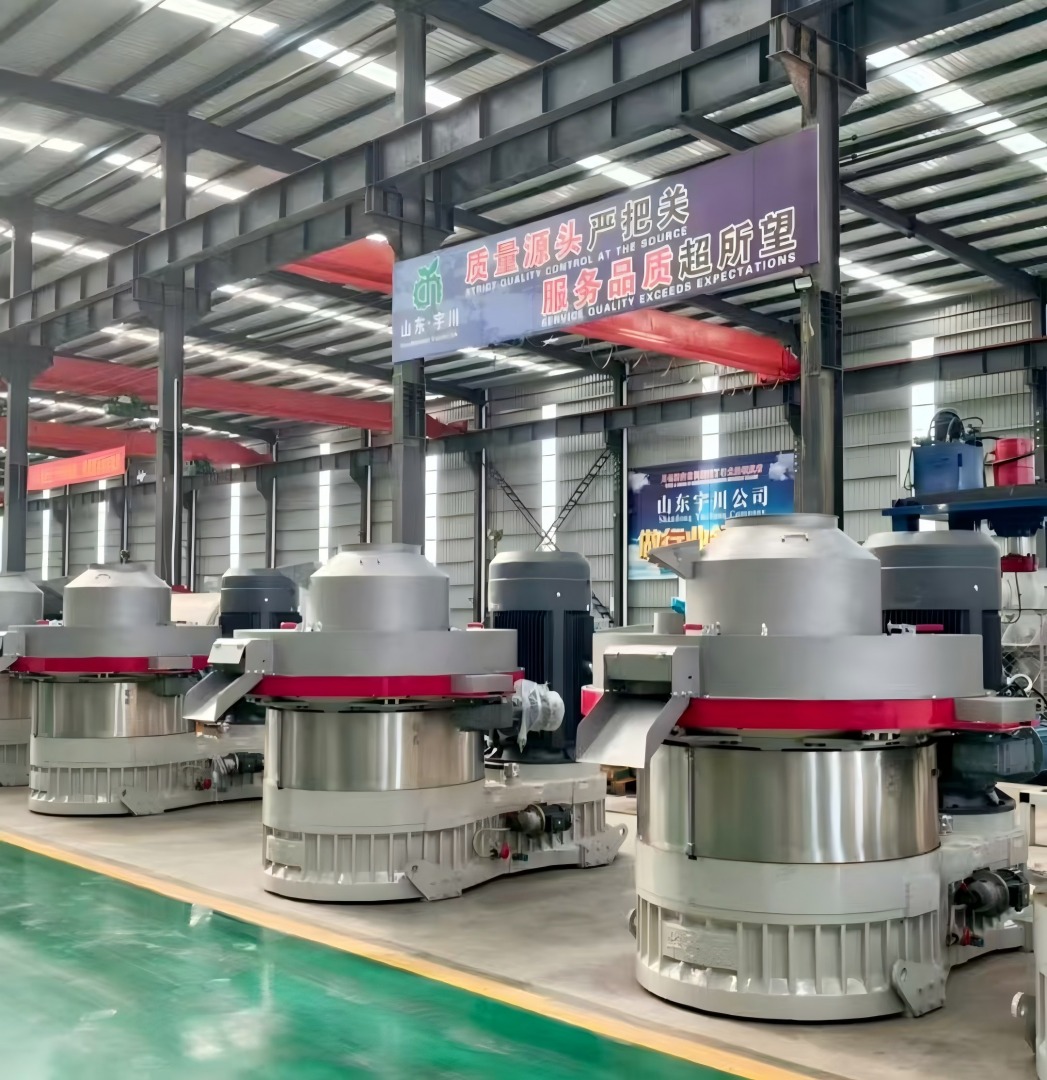
Yuchuan mainly manufactures vertical ring die pellet machines. This structure is designed for industrial biomass pelletizing applications. Buyers should review the specific machine configuration, die dimensions, roller arrangement, and maintenance access when comparing models.
4.3 Cutting and Discharging System
After extrusion, the pellets are cut to the required length and discharged from the machine. The cutting arrangement and operating settings influence pellet appearance and length consistency.
4.4 Drive and Supporting Components
The motor, transmission system, bearings, frame, and lubrication arrangements all contribute to machine operation. Buyers should ask about component specifications, routine inspection points, lubrication requirements, and the replacement cycle of wear parts.
5. Consider the Complete Biomass Pellet Production Process
A biomass pellet machine is only one part of an industrial pellet manufacturing system. The upstream preparation and downstream handling equipment can significantly affect final production results.
A typical wood pellet production process includes:
Raw Material → Crushing → Drying → Conveying → Pelletizing → Cooling → Screening → Packaging
5.1 Crushing and Material Preparation
Wood chips, branches, and other oversized materials may need to be reduced to a suitable particle size. A wood crusher or hammer mill can be selected according to the raw material and required output.
5.2 Drying
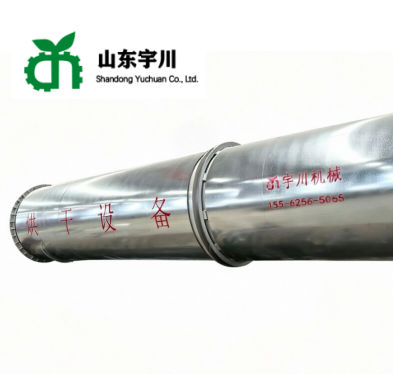
If the raw material has excessive moisture, a rotary drum dryer may be required before pelletizing. The drying system should be selected according to the initial moisture content, target moisture level, material properties, and required processing capacity.
5.3 Pelletizing
The prepared material enters the biomass pellet machine, where it is compressed through the die to form pellets. The machine configuration should match the material characteristics and target production capacity.
5.4 Cooling, Screening, and Packaging
Freshly produced pellets are usually hot and may contain loose particles or fines. A pellet cooler helps reduce product temperature, while a screening system separates fines for possible return to the production process. The finished pellets can then be transferred to a weighing and packaging system.
For industrial buyers, an integrated biomass pellet production line can simplify equipment coordination and make it easier to plan material flow, workshop layout, and production management.
6. What Do International Buyers Look for in a Biomass Pellet Machine Supplier?
International equipment procurement involves more than comparing quotations. Buyers need reliable technical information and clear communication before placing an order.
6.1 Technical Documentation
Request a detailed quotation, machine drawings, technical specifications, electrical requirements, foundation information, and a proposed production process. For a complete line, the supplier should clarify the function and configuration of each major machine.
6.2 Transparent Capacity and Energy Information
Ask for the basis of the capacity calculation and the installed power of each machine. For a complete line, request a list of major equipment and its individual power requirements. Actual energy consumption should be assessed under the project's operating conditions rather than assumed from motor power alone.
6.3 Installation and After-Sales Support
Confirm whether installation guidance, commissioning assistance, operator training, spare parts, and technical support are available. Buyers should also clarify which services are included in the quotation and which may involve additional costs.
6.4 Delivery, Payment, and Warranty Terms
Before signing a contract, confirm the delivery schedule, packaging method, shipping terms, payment arrangements, warranty scope, and spare-parts supply process. These details help reduce misunderstandings during international transactions.
7. How to Choose the Right Biomass Pellet Machine for Your Project
A practical selection process should begin with the production target and raw material rather than a specific machine model.
First, define the required output, such as 500 kg/h, 1 ton/h, 2 tons/h, or a larger industrial capacity. Next, provide the raw material type, moisture content, and particle size. Then determine the required pellet diameter and end-use market.
After these details are confirmed, compare suitable machine configurations and decide whether a standalone biomass pellet machine or a complete production line is more appropriate.
Buyers should also request a material test or production reference where possible. A supplier's recommendation is more useful when it is based on the buyer's actual raw material and project conditions.
Frequently Asked Questions
Q1: What raw materials can a biomass pellet machine process?
A biomass pellet machine can process prepared materials such as wood sawdust, wood shavings, certain wood residues, rice husks, straw, and other suitable biomass materials. The machine configuration and preparation process must match the raw material. A material test is recommended when using unfamiliar or mixed materials.
Q2: What moisture content is suitable for biomass pellet production?
For many wood-based applications, prepared material with approximately 10%–15% moisture is a common preliminary reference. However, the appropriate moisture level varies with material type, machine design, and pellet quality requirements. Buyers should confirm the target through testing and process evaluation.
Q3: Should I buy a standalone biomass pellet machine or a complete production line?
A standalone machine may be suitable if the buyer already has reliable crushing, drying, conveying, and pellet-handling equipment. A complete production line is often more suitable for new projects that require coordinated material preparation, pelletizing, cooling, screening, and packaging.
Q4: What information is needed to receive an accurate quotation?
Prepare the raw material type, initial moisture content, required capacity, target pellet diameter, electricity standard, project location, and whether you need a single machine or a complete line. These details help the supplier recommend an appropriate configuration and calculate the equipment and shipping requirements.
Discuss Your Biomass Pellet Production Project with Yuchuan
Choosing the right biomass pellet machine requires a clear understanding of raw materials, production targets, equipment configuration, and long-term operating costs. A properly matched machine and production process can help manufacturers improve production consistency and make better use of available biomass resources.
Shandong Yuchuan Environmental Protection Equipment Co., Ltd. manufactures biomass pelletizing equipment, including vertical ring die pellet machines, as well as supporting equipment such as rotary drum dryers and wood crushers. We can discuss equipment selection and production-line configuration according to your raw materials and project requirements.
Contact Yuchuan to request a quotation, detailed technical specifications, equipment drawings, and a proposed production-line solution. Please share your raw material, moisture content, target capacity, and project location so our team can evaluate a suitable configuration for your application.