Biomass Pellet Mill: Technology, Market Trends and Buying Guide for Industrial Pellet Plants
Learn biomass pellet mill technology, global market trends, vertical ring die pellet machine advantages, full pellet production line and FAQ for B2B pellet plant investors.
Biomass Pellet Mill: Technology, Market Trends and Buying Guide for Industrial Pellet Plants
Global Market Background and Growth of Biomass Pellet Mill Industry The global push for carbon neutrality and the continuous rise of fossil fuel costs have steadily lifted demand for renewable biomass fuel, directly driving investment in biomass pellet mill equipment across Southeast Asia, Russia, Latin America and Europe. According to market research, the global biomass pellet machine market was valued at USD 1.06 billion in 2025 and is projected to reach USD 2.07 billion by 2034, with a compound annual growth rate of 7.8%.
Europe remains a mature consumption market for biomass pellets for heating and power generation, while Southeast Asia, including Indonesia, Malaysia and Vietnam, is emerging as a fast-growing manufacturing hub thanks to abundant palm EFB, sawdust and agroforestry waste resources. Russian and Latin American buyers are also actively building pellet plants to convert wood residues and crop stalks into exportable biomass fuel pellets. For plant investors, selecting a reliable biomass pellet mill is the core factor that determines long-term plant stability, output consistency and final pellet quality.
Unlike small flat die pellet machines designed for home or workshop use, industrial vertical ring die biomass pellet mill is built for non-stop continuous production, and it has gradually become the mainstream configuration for medium and large commercial pellet factories. Many new investors confuse the two types of pellet machines at the early stage of project planning, which often leads to insufficient output, frequent blockage and high wear-part replacement cost after commissioning. Understanding the technical logic and applicable boundaries of industrial biomass pellet mill can help buyers avoid costly project mistakes.
Core Technology of Vertical Ring Die Biomass Pellet Mill
Working Principle of the Pelletizing Process A vertical ring die biomass pellet mill compresses pre-treated agroforestry residues into dense cylindrical pellets without adding chemical binders. Raw materials such as sawdust, straw, rice husk, palm EFB and corn cob enter the pelletizing chamber by gravity feeding. Under high pressure and friction heat between roller and ring die, the natural lignin inside biomass softens at 80–100℃ and acts as an organic binder. Materials are extruded through precision machined ring die holes and cut into uniform pellets by adjustable cutters.
The vertical feeding layout is the most distinctive design compared with horizontal ring die pellet mill. Materials fall naturally and distribute evenly inside the chamber, greatly reducing bridging and blockage risks, especially for light, fluffy raw materials like straw and palm fibre. The compression ratio of the ring die can be adjusted to match different feedstock properties, so the same biomass pellet mill can produce pellets of different hardness and ash indicators by replacing ring dies. Common finished pellet diameters include 6 mm, 8 mm, 10 mm and 12 mm to meet industrial boiler, power plant and animal feed requirements.
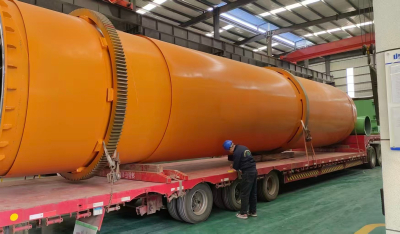
Complete Biomass Pellet Production Line Flow A stable pellet plant cannot rely on a standalone biomass pellet mill alone. The full production workflow forms a closed loop from raw material preparation to finished packing. First, magnetic separators and screens remove stones and metal impurities to protect the ring die and roller from damage. Large branches and logs go through wood chipping and hammer milling to reach 3–5 mm fine powder. Then a three-pass rotary dryer adjusts raw material moisture to the optimal 12%–18%, the critical range for stable pellet forming.
After pelletizing, hot fresh pellets are sent to a counter-flow cooler for temperature reduction and hardening. A vibrating screen sifts out fine powder, and screened fines are recycled back into the biomass pellet mill to reduce material waste. Qualified pellets are automatically packed to prevent moisture absorption during storage and sea transportation. This integrated workflow ensures continuous operation and stable pellet quality for long-term commercial production.
Key Advantages of Industrial Biomass Pellet Mill for B2B Buyers The vertical ring die biomass pellet mill stands out for three core strengths for commercial operators. First, it delivers high output and stable continuous running. Reinforced heavy-duty drive structures support 24-hour industrial operation with low failure rates. Classic models such as YC-850 provide two power options: 250 kW for 3.5 t/h and 280 kW for 4 t/h, matching the capacity demand of medium and large pellet factories.
Second, this biomass pellet mill offers wide raw material compatibility and low blockage risk. Adjustable ring die compression ratios adapt to nearly all common agroforestry waste. The gravity vertical feeding design avoids material accumulation problems that frequently appear on flat die machines. It is suitable for buyers with mixed raw material sources, such as palm EFB in Southeast Asia and corn cob or straw in inland agricultural regions.
Third, the machine brings lower long-term maintenance cost and flexible application. Heavy-duty roller assemblies and wear-resistant alloy ring dies extend the service life of wearing parts. The structural layout allows quick disassembly and replacement of consumables. The biomass pellet mill can run independently or combine with supporting equipment to form a full turnkey line. Certified with CE and EAC, it meets the import compliance requirements of EU, Russian Federation and many other overseas markets, with stable spare parts supply throughout the equipment lifecycle.
Frequently Asked Questions for Biomass Pellet Mill Buyers Q1: Do I need to add adhesive or binder when using a biomass pellet mill? A: No chemical binder is required. Lignin inside biomass softens under friction heat during pelletizing and serves as a natural binder. Proper moisture control and matched ring die compression ratio are sufficient to produce hard, durable pellets.
Q2: What raw material moisture range delivers the best pellet quality? A: The optimal moisture content is 12%–18%. Raw material with moisture above this range generates loose, fragile pellets that are easy to break during cooling and transport. Over-dry materials accelerate wear on ring die and roller and increase power consumption.
Q3: Can one biomass pellet mill produce multiple pellet sizes? A: Yes. Pellet diameter is determined by the ring die. Buyers can change ring dies to produce 6 mm, 8 mm, 10 mm or 12 mm pellets on the same machine, which is convenient for serving different downstream customers.
Q4: What certifications should I confirm before purchasing a biomass pellet mill for export projects? A: CE certification is required for EU markets, while EAC certification is mandatory for Russia and many EAEU countries. ISO quality certificates are also available upon request. Confirm the certification scope with your supplier before order placement to avoid customs clearance delays.
Conclusion and Call to Action Global demand for biomass pellets will keep rising as countries tighten carbon emission rules and search for affordable alternatives to fossil fuels. Investing in a qualified vertical ring die biomass pellet mill is a reliable way for agroforestry waste processors, energy investors and boiler operators to build sustainable profit channels. The success of your pellet plant depends not only on equipment quality, but also on matched raw material pre-treatment solutions, technical commissioning support and long-term spare parts service.
If you are planning a new pellet project or upgrading your existing pellet production line, share your raw material type, target hourly output, raw material moisture, local voltage and workshop dimension. Our engineering team can prepare a custom biomass pellet mill solution and layout drawing tailored for your site conditions. Contact us today to get a detailed quotation and technical proposal.