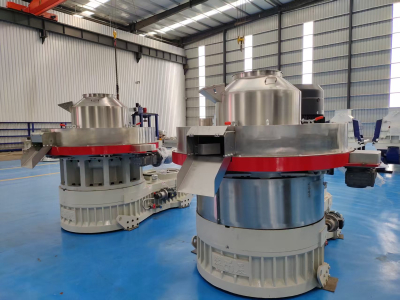
Why Is Raw Material Preparation Important for Pelletizing Efficiency?
Why Is Raw Material Preparation Important for Pelletizing Efficiency?
Introduction: Raw Material Preparation Is the Foundation of Efficient Pellet Production
In the biomass pellet industry, production efficiency is determined by more than the performance of the pellet machine. The physical condition of raw materials before entering the pelletizing chamber has a direct influence on production capacity, pellet quality, energy consumption, and equipment operating costs.
For manufacturers processing sawdust, wood chips, agricultural residues, straw, rice husks, or palm waste, proper raw material preparation is an essential part of the production process. Materials with excessive moisture, inconsistent particle sizes, or unsuitable fiber characteristics can cause unstable feeding, increased mechanical resistance, poor pellet formation, and unnecessary equipment wear.
As international demand for renewable solid fuels continues to develop, biomass manufacturers are paying greater attention to the entire production process rather than purchasing pelletizing equipment alone.
According to the Food and Agriculture Organization (FAO), global wood pellet production reached approximately 48 million tonnes in 2024, with around 31 million tonnes entering international trade. Bioenergy Europe's 2026 statistical update subsequently reported that global production reached 53.5 million tonnes in 2025. These figures reflect the continued expansion of international biomass fuel markets and the growing importance of consistent production standards.
For industrial manufacturers, effective raw material preparation is therefore not simply a preliminary operation. It is a key factor in establishing a reliable and commercially competitive pellet production system.
1. How Raw Material Conditions Affect Pelletizing Efficiency
Different biomass materials have different physical and chemical properties. Even when two materials appear similar, their moisture content, fiber structure, bulk density, and compression behavior may differ considerably.
Understanding these characteristics helps manufacturers determine the appropriate raw material preparation process before selecting a pellet machine.
1.1 Moisture Content and Pellet Formation
Moisture is one of the most important factors affecting biomass pelletizing.
If the raw material contains excessive moisture, particles may become difficult to compress effectively. Finished pellets can have insufficient mechanical strength, uneven surfaces, or increased deformation during cooling and storage.
On the other hand, excessively dry materials may generate more friction during compression, increasing power consumption and placing additional demands on the die and rollers.
For many conventional wood pellet production processes, feedstock moisture is commonly adjusted to approximately 10%–15%. However, this is a general reference rather than a universal specification. The ideal moisture level depends on the material, particle size, pellet mill design, and operating conditions.
A suitable drying system helps maintain more consistent moisture levels and provides a stable material supply for the pelletizing stage.
1.2 Particle Size and Material Uniformity
Particle size directly influences feeding performance and material compression.
Oversized wood chips or long fibers may cause uneven feeding, material bridging, or inconsistent extrusion. Extremely fine particles, meanwhile, can increase dust generation and may affect material flow and production conditions.
A properly configured hammer mill or wood crusher helps reduce oversized materials and create a more uniform feedstock.
The appropriate particle size should be determined through material testing and equipment requirements. A commonly used starting reference for many wood pellet processes is approximately 3–5 mm, although different raw materials and die specifications may require different particle sizes.
1.3 Raw Material Composition and Contamination
Biomass materials collected from different sources may contain bark, stones, soil, metal fragments, or other foreign substances.
These contaminants can accelerate die and roller wear, damage mechanical components, and reduce the consistency of finished pellets.
Sorting, screening, and magnetic separation should therefore be considered when designing a reliable raw material preparation system.
2. Main Processes in Biomass Raw Material Preparation
A complete biomass production process generally includes several interconnected preparation stages. The specific configuration depends on the original material condition and the target production capacity.
2.1 Crushing and Size Reduction
Crushing is normally the first mechanical processing stage for oversized biomass materials.
Wood chips, branches, forestry residues, and agricultural waste may need to be reduced before entering the grinding or pelletizing process.
A wood crusher is used for primary size reduction, while a hammer mill can further process the material into smaller particles.
The objective is not simply to make materials smaller. It is to create a feedstock with suitable dimensions and consistent flow characteristics.
2.2 Grinding and Particle Size Control
After primary crushing, the material may enter a hammer mill for further grinding.
The grinding process helps reduce variations in particle size and improves the consistency of the material entering the pellet machine.
Screen specifications, hammer condition, rotor speed, and material characteristics all influence the final particle size.
For industrial production, equipment selection should consider both processing capacity and the required particle size rather than focusing on motor power alone.
2.3 Drying and Moisture Adjustment
Drying is particularly important when processing freshly cut wood, wet sawdust, palm fiber, or agricultural residues.
A rotary drum dryer is commonly used in industrial biomass processing to reduce moisture through controlled heat transfer.
During operation, wet materials enter the drying system and move through the drum while exchanging heat with the drying medium. The dried material is then discharged and transferred to subsequent processing stages.
The dryer should be selected according to initial moisture, target moisture, material characteristics, required evaporation capacity, and available heat sources.
2.4 Screening and Material Separation
Screening helps remove oversized particles, unwanted impurities, and excessive fines.
A vibrating screen can separate materials according to particle size, allowing unsuitable fractions to be returned for further processing where appropriate.
For biomass projects involving agricultural waste or mixed wood residues, screening can also improve feedstock consistency before pelletizing.
2.5 Conveying and Buffer Storage
After crushing, grinding, and drying, prepared materials need to be transferred to the pelletizing section.
Screw conveyors, belt conveyors, and storage bins help maintain an organized material flow.
A suitable buffer storage system can reduce interruptions caused by differences between upstream preparation capacity and downstream pelletizing capacity.
3. Key Equipment for an Efficient Raw Material Preparation System
Different preparation requirements call for different equipment combinations. Selecting machinery according to the actual feedstock condition is more practical than installing unnecessary processing stages.
| Equipment | Main Function | Typical Application |
|---|---|---|
| Wood Crusher | Primary size reduction | Wood chips, branches, timber waste |
| Hammer Mill | Fine grinding | Sawdust, wood residues, straw |
| Rotary Drum Dryer | Moisture reduction | Wet sawdust, palm fiber, biomass |
| Vibrating Screen | Particle separation | Mixed biomass materials |
| Screw Conveyor | Material transportation | Continuous production systems |
| Storage Bin | Material buffering | Automated feeding systems |
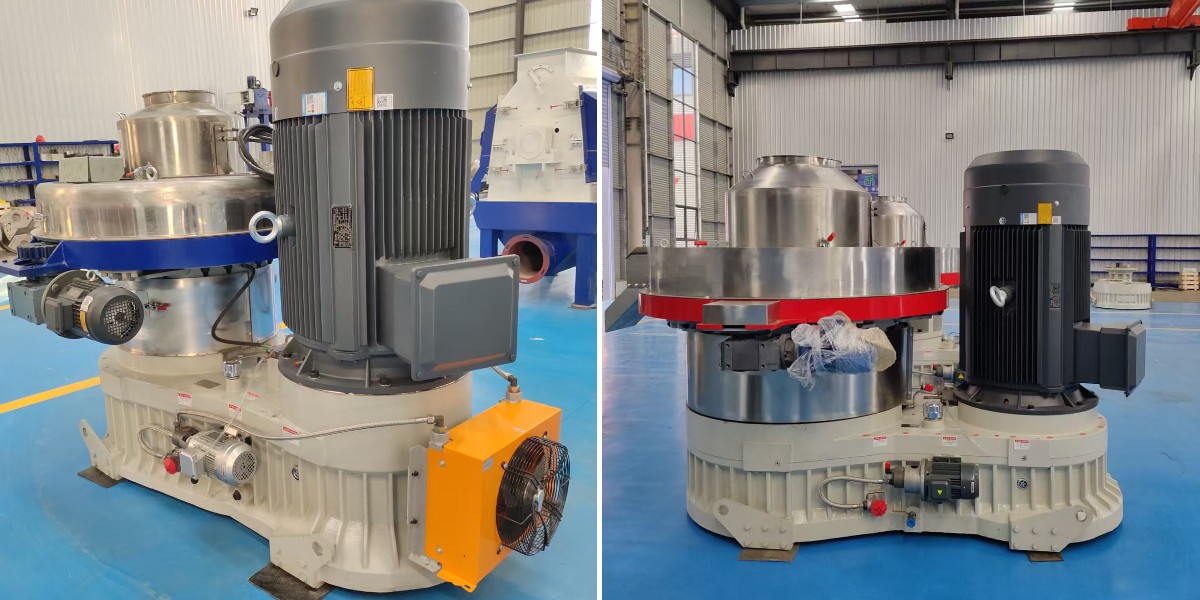
| Pellet Machine | Pellet compression | Prepared biomass feedstock |
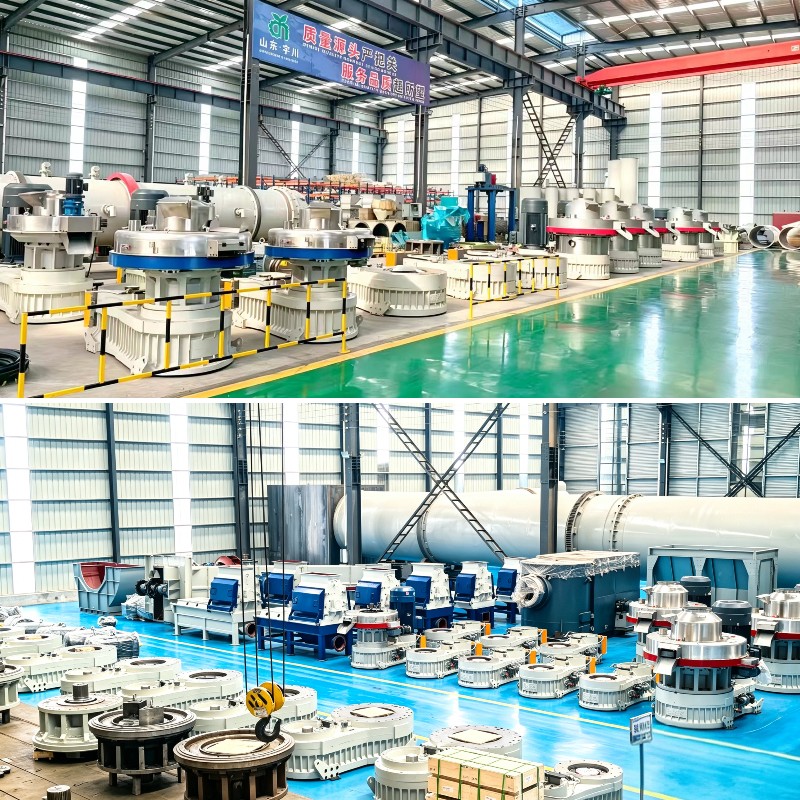
In a complete biomass pellet production line, these machines work together to establish a coordinated processing system.
The purpose of integrated raw material preparation is to provide the pelletizing section with materials that meet the required moisture, particle size, and feeding conditions.
4. How Proper Raw Material Preparation Improves Production Economics
For international buyers, purchasing equipment is only one part of the investment decision. Long-term operating expenses, product consistency, and production stability are equally important.
4.1 More Stable Production Capacity
Consistent feedstock conditions help the pellet machine maintain more stable feeding and compression.
This reduces unnecessary interruptions caused by wet materials, oversized particles, or inconsistent material flow.
4.2 Lower Energy Consumption
Material with unsuitable moisture or particle size may require additional mechanical work during compression.
Appropriate crushing, grinding, and drying can help reduce unnecessary processing resistance. However, drying also consumes energy, so the complete system should be evaluated according to total energy consumption rather than individual machine efficiency.
4.3 Reduced Mechanical Wear
Foreign objects, excessive material hardness, and unsuitable particle sizes can increase mechanical stress.
Effective screening and size control help protect critical components, including dies, rollers, and feeding mechanisms.
4.4 More Consistent Finished Pellets
Uniform feedstock conditions support more consistent extrusion and improve the repeatability of pellet dimensions, density, and mechanical durability.
This is particularly important for manufacturers supplying industrial customers with specific product requirements.
5. Different Biomass Materials Require Different Preparation Solutions
Not all biomass materials should follow exactly the same processing route.
A suitable raw material preparation system should be designed around the characteristics of each feedstock.
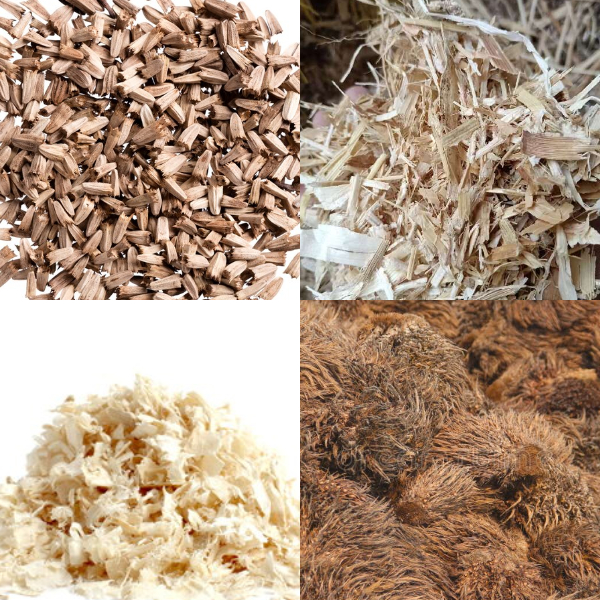
Wood Sawdust: Usually requires moisture adjustment and particle size inspection. Additional grinding may be unnecessary if the material is already sufficiently fine.
Wood Chips: Generally require crushing and grinding before entering the pellet machine. Drying may also be necessary depending on the original moisture content.
Rice Husk: Its silica content and relatively hard structure should be considered when selecting grinding and pelletizing equipment.
Straw and Agricultural Residues: Long fibers often require cutting or crushing before further processing. Moisture and material composition should also be evaluated.
Palm Fiber and Empty Fruit Bunch (EFB): These materials may contain considerable moisture and fibrous structures. Size reduction and drying are often important preparation stages.
For overseas biomass projects, especially those using locally available agricultural residues, material testing is recommended before finalizing the equipment configuration.
6. How to Design a Suitable Raw Material Preparation System
Before purchasing equipment, manufacturers should evaluate several important project conditions.
First, identify the actual raw materials and whether they are supplied continuously or seasonally. Different suppliers may provide materials with significantly different moisture levels and particle sizes.
Second, measure the initial moisture content and determine the target moisture range required for pelletizing. This helps establish whether a rotary drum dryer or other drying solution is necessary.
Third, confirm the required production capacity. The processing capacity of crushers, hammer mills, dryers, conveyors, and pellet machines should be coordinated to prevent bottlenecks.
Fourth, consider the available factory space, electricity supply, heat source, dust collection requirements, and maintenance access.
Finally, evaluate the finished pellet specifications, including diameter, length, bulk density, and durability requirements.
A well-planned raw material preparation process should match the actual operating conditions of the entire production line rather than relying on isolated machine specifications.
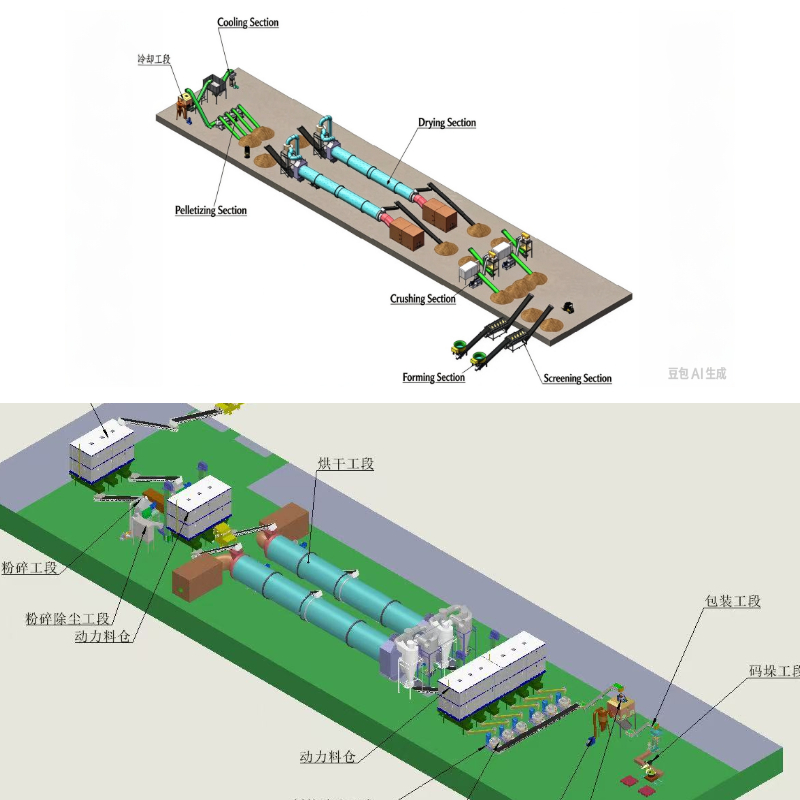
7. Industry Trends: From Individual Machines to Integrated Processing Solutions
The biomass pellet industry is gradually placing greater emphasis on production consistency, resource utilization, and overall operating costs.
For equipment manufacturers and investors, this means that purchasing decisions increasingly involve complete processing solutions rather than individual machines.
FAO statistics show that global wood pellet production reached approximately 48 million tonnes in 2024, while international trade accounted for approximately 31 million tonnes. Bioenergy Europe's 2026 report also indicates continued market expansion in 2025.
As international supply chains develop, buyers are increasingly concerned about feedstock traceability, product specifications, energy efficiency, and production reliability.
These requirements make raw material preparation an increasingly important part of industrial biomass processing.
For equipment suppliers, the ability to provide suitable crushing, drying, conveying, and pelletizing configurations is becoming an important factor in serving customers across different markets.
8. Why Choose Yuchuan for Biomass Processing Equipment?
Shandong Yuchuan Environmental Protection Equipment Co., Ltd. specializes in biomass processing and pelletizing machinery, providing equipment solutions for wood waste, sawdust, agricultural residues, and other suitable biomass materials.
We understand that different raw materials require different processing methods. A pellet machine alone cannot solve every production challenge, particularly when the feedstock has high moisture content or inconsistent particle sizes.
Yuchuan can assist customers in evaluating their material conditions and selecting suitable equipment, including wood crushers, hammer mills, rotary drum dryers, conveyors, pellet machines, cooling systems, screening equipment, and packaging machines.
Whether you are planning a new biomass pellet factory or upgrading an existing production facility, our team can discuss a practical configuration based on your target capacity, raw material characteristics, and project requirements.
Our objective is to help customers establish a coordinated production process that supports stable operation, consistent pellet quality, and efficient resource utilization.
Frequently Asked Questions (FAQ)
Q1: Why is raw material preparation important before pelletizing?
Raw material preparation helps control moisture, particle size, and material consistency. These factors influence feeding stability, pellet formation, energy consumption, and mechanical wear. Proper preparation helps the pellet machine operate under more suitable conditions.
Q2: What moisture content is recommended for biomass pellet production?
For many conventional wood pellet applications, a moisture content of approximately 10%–15% is used as a starting reference. The actual requirement varies with the feedstock, machine design, and production process. Material testing is recommended before determining the final operating parameters.
Q3: Does every biomass pellet production line need a dryer?
No. A dryer is necessary when the original feedstock contains more moisture than the pelletizing process can accommodate. If the materials already meet the required moisture conditions, an additional drying stage may not be necessary.
Q4: How can I select suitable preparation equipment for my project?
Start by identifying the raw material type, initial moisture content, particle size, and required hourly production capacity. You should also consider the target pellet specifications and available factory conditions. An equipment supplier can then recommend a suitable processing configuration.
Contact Yuchuan for a Biomass Processing Solution
Are you looking for a reliable solution to improve your biomass pellet production process?
Shandong Yuchuan Environmental Protection Equipment Co., Ltd. provides professional equipment recommendations for crushing, grinding, drying, pelletizing, cooling, screening, and packaging.
Send us your raw material details, moisture content, required production capacity, and target pellet specifications.
Our team will help evaluate your project and recommend a suitable raw material preparation and pelletizing solution.
Contact Yuchuan today to request a quotation, technical specifications, equipment details, and material testing arrangements for your biomass pellet project.