What Causes Poor Pellet Quality and How Can You Solve It?
What Causes Poor Pellet Quality and How Can You Solve It?
High-quality biomass pellets are essential for efficient production, reliable transportation, and consistent fuel performance. However, many pellet manufacturers experience common problems such as cracked pellets, excessive fines, uneven sizes, low density, and poor mechanical durability.
These issues can reduce production efficiency, increase material waste, and affect customer satisfaction. For businesses operating a biomass pellet production plant, understanding the causes of poor pellet quality is an important step toward improving production performance.
A properly selected Biomass Pellet Machine, together with suitable raw material preparation and operating conditions, can help manufacturers achieve more consistent results.
So, what causes poor pellet quality, and how can these problems be solved? Let's look at the key factors.
Why Is Pellet Quality Important in Biomass Production?
The global biomass pellet industry continues to play an important role in renewable energy supply chains. According to the Food and Agriculture Organization (FAO), global wood pellet production reached approximately 48 million tonnes in 2024, with around 31 million tonnes entering international trade.
As the market develops, buyers increasingly pay attention to pellet consistency, durability, moisture content, ash content, and transportation performance. For manufacturers, producing pellets that meet the requirements of their target markets is essential for maintaining competitiveness.
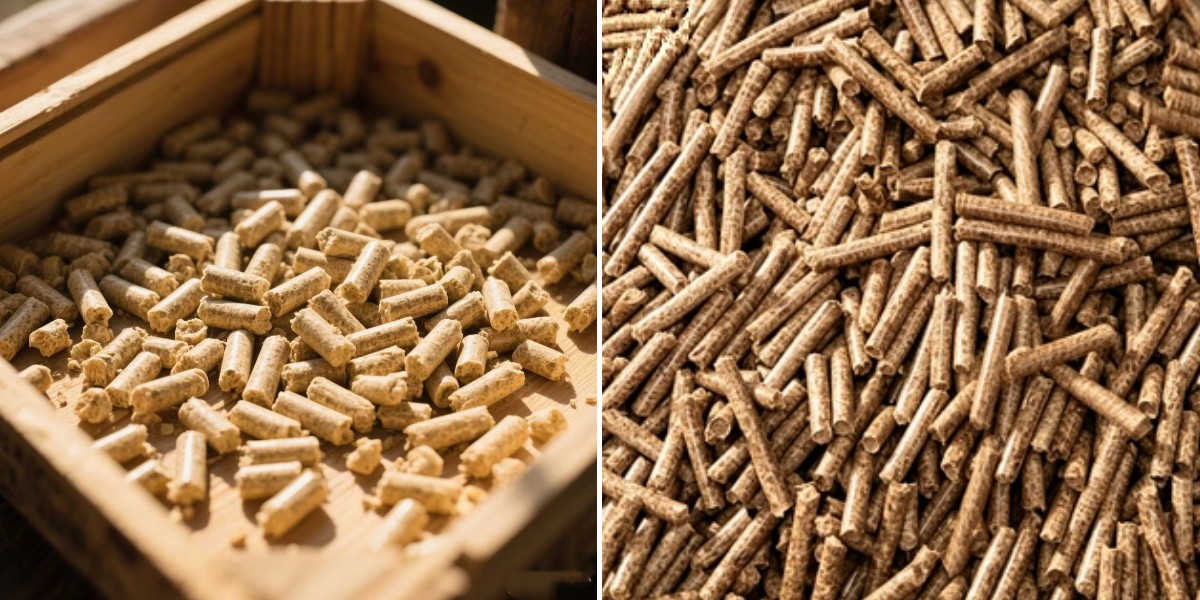
Common indicators of biomass pellet quality include:
Appearance: Uniform cylindrical shape with a relatively smooth surface.
Moisture content: Appropriate moisture levels for the intended application.
Mechanical durability: Pellets should resist breaking during handling and transportation.
Density: Sufficient density helps improve storage and transportation efficiency.
Fines content: Excessive powder and broken particles should be avoided.
Pellet size: Diameter and length should meet customer or equipment requirements.
For example, ENplus A1 wood pellets have a maximum moisture content of 10%, mechanical durability of at least 98%, and fines content of no more than 1% under the applicable test conditions. These values are specific to the certification class and should not be applied automatically to every type of agricultural or biomass pellet.
6 Common Causes of Poor Pellet Quality and Their Solutions
1. Incorrect Raw Material Moisture Content
Moisture content is one of the most important factors affecting pellet formation.
If the raw material is too dry, it may not bind effectively under compression, resulting in loose pellets, cracks, and excessive fines. If the material contains too much moisture, pellets may become soft, sticky, or difficult to form. High moisture can also affect production stability and increase drying costs.
How to solve it:
Measure raw material moisture before pelletizing.
Adjust the drying process according to the feedstock type.
Use a suitable rotary drum dryer when the material requires moisture reduction.
Check moisture levels regularly rather than relying on visual inspection alone.
The ideal moisture content depends on the biomass type, particle size, and pellet mill configuration. Manufacturers should determine the appropriate range through material testing and production trials.
2. Uneven or Excessive Raw Material Particle Size
Large wood chips, long fibers, and uneven particles can affect feeding and compression inside the pellet mill. Oversized particles may cause unstable operation, while excessively fine material can increase energy consumption and influence pellet formation.
How to solve it:
Use a suitable wood crusher or hammer mill to reduce raw materials to a more uniform particle size. Before feeding the material into the Biomass Pellet Machine, check that it is properly crushed and free from foreign objects such as stones and metal fragments.
A stable crushing process helps improve material feeding and supports consistent pellet production.
3. Incorrect Die and Roller Clearance
The ring die and rollers are key components of a pellet mill. Their working condition directly affects material compression and pellet formation.
If the clearance is too large, the material may not receive sufficient compression. If it is too small, excessive friction and heat may occur, increasing wear and potentially affecting production stability.
How to solve it:
Check die and roller clearance regularly.
Adjust the working gap according to the machine manufacturer's instructions.
Inspect die holes and roller surfaces for wear or blockage.
Replace damaged or excessively worn components when necessary.
For industrial production, regular inspection of the die and rollers helps maintain stable operation and reduce unexpected downtime.
4. Unsuitable Die Compression Ratio
The die compression ratio refers to the relationship between the effective working length and the diameter of the die holes. Different biomass materials have different physical properties, so one die configuration may not be suitable for every feedstock.
For example, pine sawdust, hardwood sawdust, rice husks, and agricultural straw differ in fiber structure, natural binding characteristics, and compressibility.
An unsuitable compression ratio may result in soft pellets, excessive friction, unstable output, or high energy consumption.
How to solve it:
Select the die hole diameter and compression ratio according to the raw material, required pellet size, and production conditions. Before purchasing a Biomass Pellet Machine, manufacturers should provide detailed information about their feedstock and intended output.
A professional equipment supplier can evaluate the material characteristics and recommend a suitable die configuration.
5. Unstable Feeding and Incorrect Machine Operation
Even when the raw materials and equipment are suitable, unstable feeding can lead to inconsistent pellet quality.
If the feeding speed changes frequently, the pellet mill may receive too much or too little material. This can cause fluctuating pressure, uneven pellet lengths, and unstable production output.
How to solve it:
Maintain a continuous and uniform feeding process.
Avoid sudden increases in feeding volume.
Check the feeder and material distribution system.
Monitor motor load and machine operating conditions.
Train operators to follow the recommended operating procedures.
A properly configured feeding system helps the Biomass Pellet Machine maintain a more stable production process.
6. Improper Cooling, Screening, and Storage
Pellets coming directly out of the pellet mill are usually hot and may still contain residual moisture. Handling them immediately without sufficient cooling can lead to deformation, cracking, or breakage.
Poor storage conditions can also reduce pellet quality. Biomass pellets may absorb moisture from humid air, making them softer and more likely to crumble.
How to solve it:
After pelletizing, use a suitable pellet cooling system to reduce pellet temperature. A screening machine can then separate qualified pellets from fines and broken particles.
Finished pellets should be stored in a dry, ventilated environment and protected from rain and moisture. Proper packaging and handling are particularly important for manufacturers supplying overseas markets.
How Does a Complete Biomass Pellet Production Line Improve Pellet Quality?
Pellet quality is not determined by the pellet mill alone. It depends on the coordination of the entire production process.
A typical biomass pellet production line includes several stages:
Step 1: Raw Material Collection and Preparation
Wood sawdust, wood chips, rice husks, straw, and other suitable biomass materials are collected and inspected. Foreign materials should be removed before processing.
Step 2: Crushing and Size Reduction
A wood crusher or hammer mill reduces larger materials into smaller particles suitable for subsequent processing.
Step 3: Drying and Moisture Control
A rotary drum dryer reduces excessive moisture and helps prepare the material for stable pelletizing.
Step 4: Pelletizing
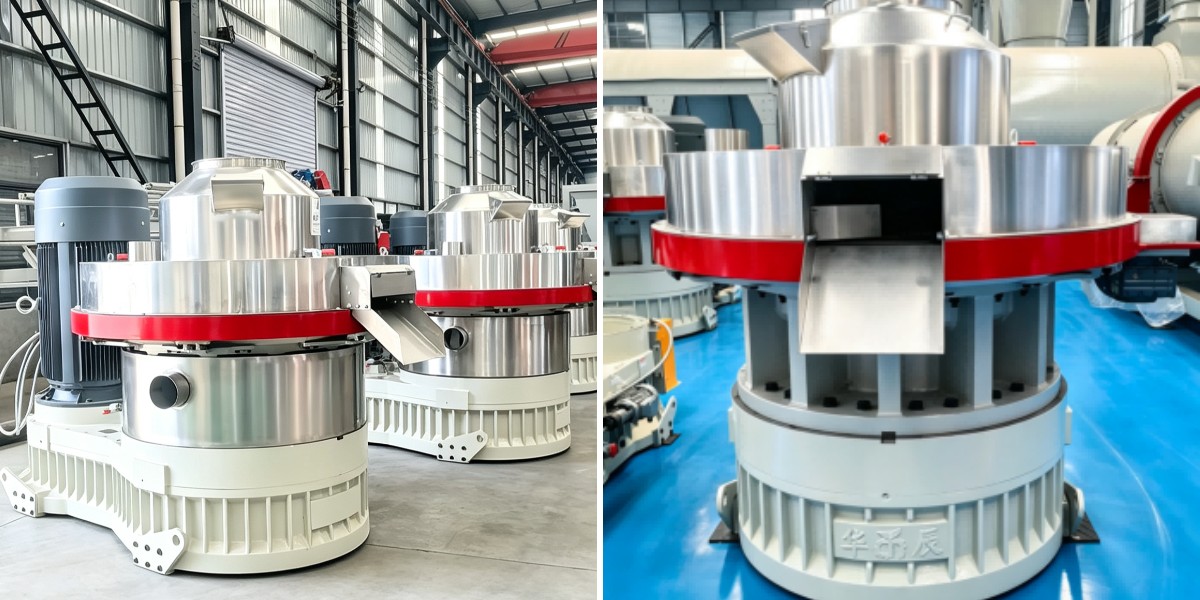
The prepared material enters the Biomass Pellet Machine, where rollers compress it through die holes to form cylindrical pellets.
Step 5: Cooling and Screening
Fresh pellets are cooled and screened to remove excessive fines and broken particles.
Step 6: Packaging and Storage
Qualified pellets are weighed, packaged, and stored under appropriate conditions before transportation or delivery.
Integrating these processes helps manufacturers manage raw material preparation, production stability, and finished pellet quality more effectively.
What Should You Consider When Choosing a Biomass Pellet Machine?
Choosing the right Biomass Pellet Machine is an important decision for both new investors and existing pellet manufacturers.
Before purchasing equipment, consider the following factors:
Raw material type: Different biomass materials require different processing conditions.
Moisture content: Confirm whether a drying system is necessary.
Required capacity: Determine your target output, such as 500 kg/h, 1 ton/h, or higher.
Pellet specifications: Confirm the required diameter, length, and quality standards.
Machine configuration: Check the die structure, roller design, motor power, and feeding system.
After-sales support: Consider installation guidance, spare parts, technical support, and maintenance services.
A suitable Biomass Pellet Machine should be selected according to actual production requirements rather than motor power or advertised capacity alone.
Frequently Asked Questions About Biomass Pellet Quality
1. Why do biomass pellets break easily after production?
Common causes include unsuitable raw material moisture, uneven particle size, insufficient compression, worn rollers or dies, and inadequate cooling. Check these factors systematically before adjusting machine settings.
2. What is the ideal moisture content for biomass pellet production?
There is no single moisture value suitable for all biomass materials. The appropriate range depends on the raw material, particle size, and machine configuration. Testing the material before production is recommended.
3. Can one Biomass Pellet Machine process different raw materials?
Many biomass pellet mills can process different types of suitable biomass materials. However, changes in feedstock may require adjustments to moisture, particle size, die configuration, and operating conditions. Material testing is recommended before large-scale production.
4. Do I need a complete biomass pellet production line?
Not necessarily. If your raw material is already crushed and dried to a suitable condition, purchasing a pellet mill alone may be sufficient. If the material contains excessive moisture or comes in large pieces, additional crushing and drying equipment may be required.
Improve Your Pellet Quality with the Right Equipment Solution
Poor pellet quality is usually the result of several connected factors rather than a single machine problem. Raw material preparation, moisture control, die and roller conditions, feeding stability, cooling, and storage all influence the final product.
At Shandong Yuchuan Environmental Protection Equipment Co., Ltd., we specialize in biomass processing equipment, including vertical ring die pellet mills, rotary drum dryers, wood crusher machines, and complete biomass pellet production lines.
Whether you are planning a new pellet production project or looking to improve the performance of an existing facility, our team can help evaluate your raw materials and production requirements.
Contact us today to discuss your project. Share your raw material type, moisture content, target capacity, and required pellet size. We will help you explore a suitable equipment configuration for your biomass pellet production needs.