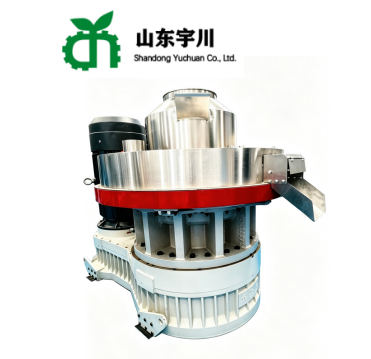
Biomass Pellet Mill
Advantages of Yuchuan Biomass Pellet Mill
1. High Production Efficiency
Designed for continuous industrial operation, the Biomass Pellet Mill delivers stable production performance and reliable pelletizing efficiency, helping customers improve overall productivity.
2. Wide Raw Material Compatibility
Suitable for processing various biomass materials, including wood sawdust, wood chips, rice husks, straw, palm fiber, and other agricultural and forestry residues.
3. Durable Ring Die Structure
Featuring a robust ring die structure and wear-resistant components, the machine is designed for demanding pelletizing applications and long-term industrial operation.
4. Uniform Pellet Quality
The optimized pelletizing system helps produce biomass pellets with consistent dimensions, compact structure, and uniform appearance, meeting different commercial fuel requirements.
5. Easy Operation and Maintenance
The user-friendly design simplifies daily operation, inspection, and routine maintenance, helping reduce equipment downtime and maintenance difficulties.
6. Customized Pelletizing Solutions
Yuchuan provides customized Biomass Pellet Mill solutions based on raw material characteristics, moisture content, pellet diameter, and required production capacity.
1. Product Overview
Biomass Pellet Mill – Reliable Industrial Equipment for Biomass Fuel Production
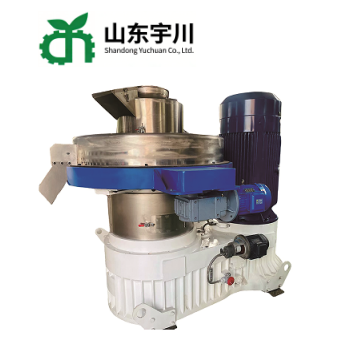
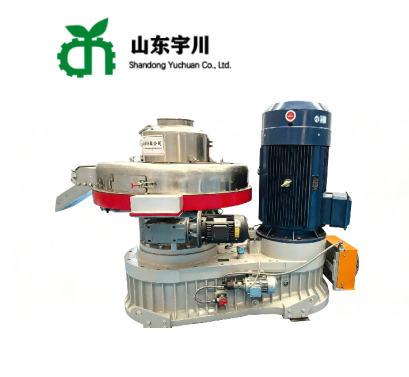
A Biomass Pellet Mill is an industrial machine designed to compress loose biomass materials into dense, uniform pellets. By applying mechanical pressure, biomass powder and processed agricultural or forestry residues can be transformed into compact fuel pellets for heating, industrial boilers, biomass power generation, and other energy applications.
With growing demand for renewable energy and resource recycling, biomass pellet production has become an important way to convert agricultural and forestry waste into commercially valuable fuel products.
The Yuchuan Biomass Pellet Mill is designed for continuous industrial pelletizing applications. It is particularly suitable for processed materials such as sawdust, wood powder, wood chips, rice husks, straw, palm fiber, and other biomass residues, subject to appropriate pretreatment and equipment configuration.
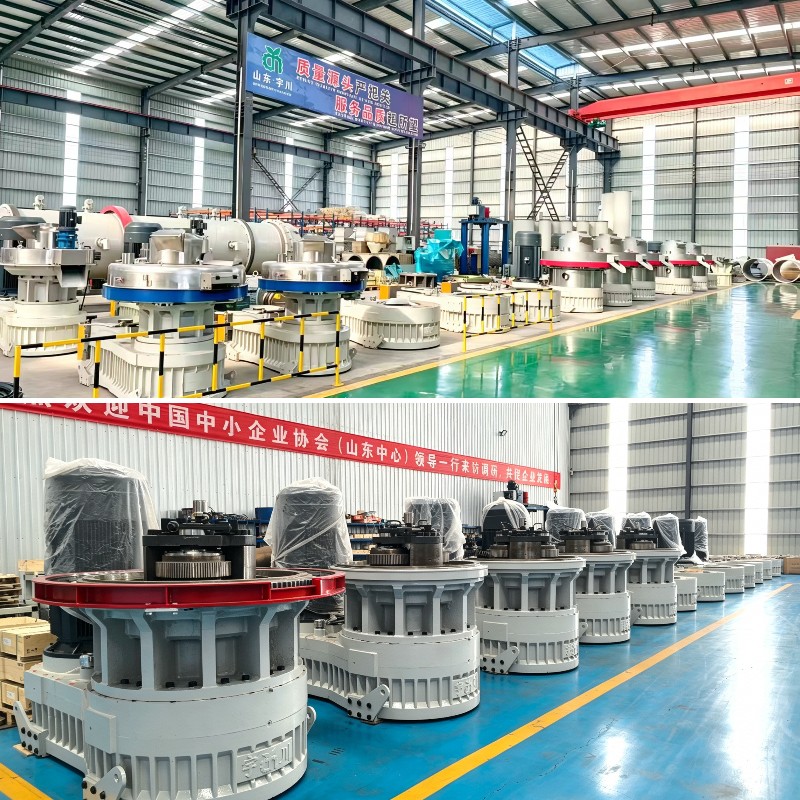
As a professional biomass equipment manufacturer, Shandong Yuchuan Environmental Protection Equipment Co., Ltd. focuses on vertical ring die pelletizing technology and provides individual pellet mills as well as complete biomass pellet production solutions.
Whether you are establishing a new biomass fuel factory, expanding an existing production facility, or upgrading your current pelletizing equipment, choosing the right Biomass Pellet Mill is essential for achieving stable production and consistent pellet quality.
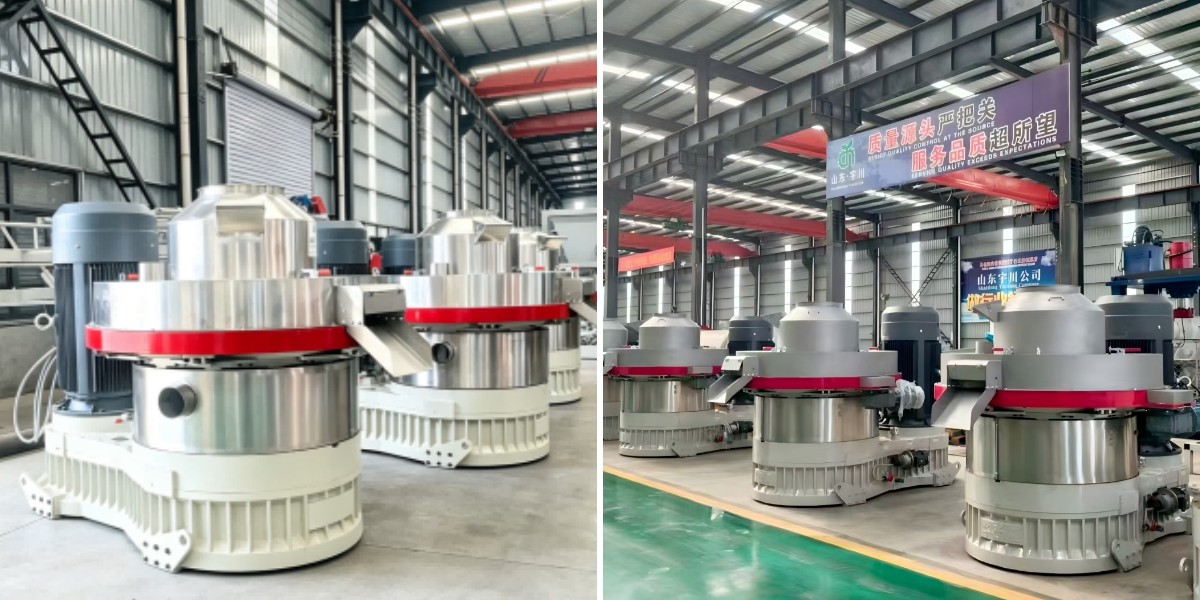
2. Working Principle
How Does a Biomass Pellet Mill Work?
The working principle of a Biomass Pellet Mill is based on mechanical compression and extrusion. Prepared biomass materials are fed into the pelletizing chamber, where the rotating components distribute the material and force it through the die holes under high pressure.
During this process, friction and compression generate heat, helping soften certain natural binding components in the biomass. The material is gradually compressed into cylindrical pellets and cut to the required length.
For a vertical ring die pellet mill, the main pelletizing process generally includes the following steps:
Material Feeding: Prepared biomass materials enter the feeding system at a controlled rate.
Material Distribution: The feeding structure distributes materials evenly inside the pelletizing chamber.
Compression and Extrusion: Rollers press the material through the holes of the ring die.
Pellet Formation: Compressed biomass forms continuous cylindrical strands.
Pellet Cutting: Cutting components control the length of the finished pellets.
Discharging: Finished pellets leave the pelletizing chamber and enter the cooling process.
The actual pelletizing performance depends on raw material composition, moisture content, particle size, die specifications, compression ratio, and operating conditions.
3.Key Advantages
Why Choose Yuchuan Biomass Pellet Mill?
1. Vertical Ring Die Structure
Yuchuan focuses on vertical ring die pelletizing equipment. This structure is designed for industrial biomass pellet production and supports continuous material feeding and compression. The equipment configuration can be selected according to raw material properties and production requirements.
2. Wide Raw Material Compatibility
The Biomass Pellet Mill can process various prepared biomass materials, including wood sawdust, wood powder, rice husks, straw, palm fiber, and selected agricultural residues. Different materials may require different pretreatment and die configurations.
3. Consistent Pellet Formation
A properly configured Biomass Pellet Mill helps produce pellets with consistent dimensions and compact structures. Stable material feeding and suitable die specifications are important for maintaining product consistency.
4. Designed for Industrial Operation
The Industrial Biomass Pellet Mill is designed for continuous production environments. Its configuration can be matched with the required capacity, working conditions, and production line layout.
5. Customized Die and Pellet Specifications
Different applications require different pellet diameters and physical properties. Die specifications can be selected according to the customer's fuel requirements, raw material characteristics, and downstream equipment.
6. Complete Production Line Integration
The Biomass Pellet Mill can be integrated with crushing, drying, conveying, cooling, screening, and packaging equipment to form a complete biomass pellet production line.
4.Applicable Raw Materials
What Materials Can a Biomass Pellet Mill Process?
One of the important factors when selecting a Biomass Pellet Mill is its compatibility with the available raw materials.
Different biomass materials have different fiber structures, ash content, moisture levels, and natural binding characteristics. Therefore, the same machine configuration may not be suitable for every feedstock.
Yuchuan can evaluate the customer's raw materials and recommend suitable pretreatment and pelletizing configurations.
Raw Material | Processing Considerations |
|---|---|
Wood Sawdust | Particle size and moisture should be controlled. |
Wood Chips | Crushing or chipping is usually required. |
Rice Husk | High silica and ash content require consideration. |
Rice Straw | Fiber length and feeding uniformity are important. |
Corn Stalks | Crushing and moisture adjustment may be required. |
Palm Fiber | Fiber size and feeding characteristics should be evaluated. |
EFB Palm Waste | Pre-crushing and drying may be necessary. |
Bagasse | High initial moisture may require drying. |
Bamboo Waste | Size reduction and die selection are important. |
Olive Pomace | Moisture, oil content, and formulation need evaluation. |
Important Note |:
Not all biomass materials can be pelletized directly. Some materials require crushing, drying, screening, blending, or formulation adjustment before entering the Biomass Pellet Mill. For difficult or unfamiliar feedstocks, a material test is recommended before finalizing the equipment configuration.
5. Industrial Applications
Where Is a Biomass Pellet Mill Used?
1. Biomass Fuel Production
A Biomass Pellet Mill converts processed biomass residues into compact fuel pellets. These pellets can be used in compatible biomass boilers, industrial heating systems, and other thermal energy applications.
2. Wood Processing Industry
Woodworking factories, sawmills, and furniture manufacturers generate sawdust, wood shavings, and other wood residues. A Wood Pellet Mill can help convert suitable wood waste into valuable pellet products, improving resource utilization.
3. Agricultural Waste Recycling
Agricultural residues such as rice straw, corn stalks, and selected crop-processing by-products can be processed into biomass pellets after suitable pretreatment. This provides an alternative way to utilize agricultural waste.
4. Palm Waste Utilization
In palm-producing regions, materials such as empty fruit bunches, palm fiber, and palm shells may be available in large quantities. A suitable biomass pelletizing system can help process selected palm residues into fuel pellets, subject to material testing and process evaluation.
5. Industrial Energy Projects
For factories seeking alternative solid fuels, biomass pellets may provide an additional fuel option where compatible combustion equipment and suitable fuel specifications are available. A Biomass Pellet Mill can support the production of pellets tailored to the project's requirements.
6.How to Improve Pellet Quality
Key Factors Affecting Biomass Pellet Quality
The performance of a Biomass Pellet Mill is not determined by the machine alone. Raw material preparation and process control also have a significant impact on pellet quality.
Buyers should pay attention to the following factors:
1. Moisture Content
Moisture affects material binding, compression, and pellet formation. Both excessively wet and excessively dry materials may cause unstable pelletizing performance.
2. Particle Size
Materials should be processed to a suitable and relatively uniform particle size. Oversized particles or long fibers may affect feeding and compression.
3. Raw Material Composition
Different biomass materials have different natural binding characteristics. Some materials may require blending or formulation adjustments to improve pellet formation.
4. Die Specifications
Die hole diameter and compression ratio should be selected according to material characteristics and finished pellet requirements.
5. Operating Conditions
Stable feeding, appropriate machine settings, and regular maintenance help maintain consistent production.
7.Complete Biomass Pellet Production Line
Build a Complete Biomass Pellet Production System with Yuchuan
For customers planning commercial biomass pellet production, purchasing a Biomass Pellet Mill is only one part of the project. A complete production line needs to coordinate raw material preparation, moisture control, pelletizing, cooling, screening, and packaging.
A typical biomass pellet production line may include:
Equipment | Function |
|---|---|
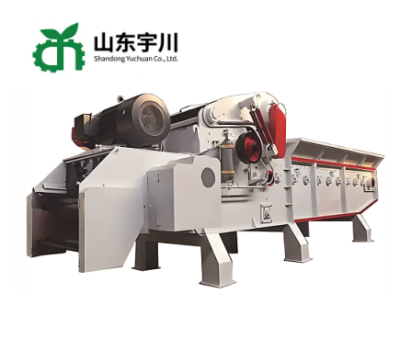
Wood Crusher | Reduces the size of wood chips and other bulky materials. |
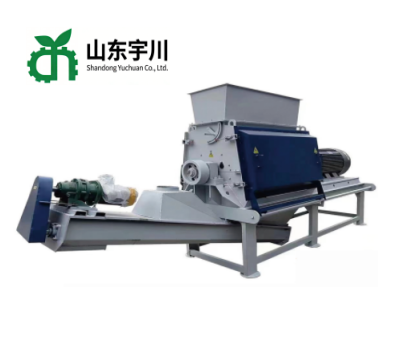
Hammer Mill | Further processes materials into suitable particles. |
Rotary Drum Dryer | Reduces excessive moisture in raw materials. |
Conveyor System | Transfers materials between processing sections. |
Buffer Bin | Provides temporary storage and stabilizes feeding. |
Biomass Pellet Mill | Compresses prepared materials into pellets. |
Pellet Cooler | Reduces pellet temperature after forming. |
Vibrating Screen | Removes fines and separates unqualified particles. |
Packing Machine | Weighs and packs finished pellets. |
Yuchuan can recommend a suitable equipment combination according to the customer's raw materials, production capacity, factory layout, and investment plan.
8.Technical Specifications and Selection
How to Choose the Right Biomass Pellet Mill?
Selecting the right Biomass Pellet Mill requires a comprehensive understanding of the project. A machine with a higher rated motor power or larger appearance does not necessarily provide better results for every raw material.
Before selecting equipment, buyers should clarify the following information:
Raw Material: What biomass materials will be processed?
Moisture Content: What is the initial moisture content?
Particle Size: Does the material require crushing or grinding?
Required Capacity: What is the target output per hour?
Pellet Diameter: What pellet size is required?
Application: Are the pellets used for industrial heating, commercial fuel sales, or other purposes?
Production Line Scope: Is only the pellet mill required, or is a complete production line needed?
Reference Configuration
Parameter | Description |
|---|---|
Equipment Type | Vertical Ring Die Biomass Pellet Mill |
Application | Biomass fuel pellet production |
Raw Materials | Prepared wood and agricultural biomass |
Pellet Shape | Cylindrical |
Pellet Diameter | Selected according to application |
Feeding Method | Continuous feeding |
Die Type | Ring die |
Capacity | Model and material dependent |
Motor Power | Model dependent |
Auxiliary Equipment | Customized according to production line |
Note: The actual capacity and power consumption of a Biomass Pellet Mill depend on the raw material, moisture content, particle size, die specifications, and operating conditions. Please contact Yuchuan for detailed model specifications.
9.Frequently Asked Questions
FAQ About Biomass Pellet Mill
Q1: What is a Biomass Pellet Mill used for?
A Biomass Pellet Mill is used to compress prepared biomass materials into dense pellets. These pellets can be used as solid fuel in compatible heating systems, industrial boilers, and other biomass energy applications.
Q2: What materials can a Biomass Pellet Mill process?
Depending on the machine configuration and pretreatment process, it can process sawdust, wood powder, rice husks, straw, corn stalks, palm fiber, and other suitable biomass residues.
Q3: Can one Biomass Pellet Mill process different raw materials?
Some Biomass Pellet Mill models can process different biomass materials, but the raw materials may require different moisture levels, particle sizes, formulations, and die configurations. A material evaluation is recommended before processing multiple feedstocks on one machine.
Q4: What is the suitable moisture content for biomass pelletizing?
There is no universal moisture requirement for every biomass material. The suitable range depends on material composition, particle size, natural binding characteristics, and machine configuration. The target should be confirmed through material testing or process evaluation.
Q5: What is the difference between a Biomass Pellet Mill and a Wood Pellet Mill?
A Wood Pellet Mill is generally designed for wood-based materials such as sawdust and wood powder. A Biomass Pellet Mill may be configured to process a broader range of biomass feedstocks, including selected agricultural residues. The suitable machine depends on the actual raw material and pelletizing requirements.
Q6: Does the Biomass Pellet Mill require a dryer?
Not every project requires a separate dryer. If the raw material moisture is already within a suitable range, additional drying may not be necessary. However, materials with excessive moisture may need a Rotary Drum Dryer before pelletizing.
Q7: Can Yuchuan provide a complete biomass pellet production line?
Yes. Yuchuan can provide equipment combinations covering crushing, drying, conveying, pelletizing, cooling, screening, and packaging according to project requirements.
Q8: How can I get an accurate quotation for a Biomass Pellet Mill?
To prepare an accurate quotation, please provide your raw material type, moisture content, required hourly capacity, pellet diameter, and whether you need a standalone machine or a complete production line.
10. Why Choose Yuchuan?
Your Biomass Pellet Mill Manufacturer in China
Shandong Yuchuan Environmental Protection Equipment Co., Ltd. specializes in biomass energy equipment and pellet production solutions.
Our main products include vertical ring die biomass pellet mills, rotary drum dryers, wood crushers, and complete biomass pellet production equipment.
We understand that a successful pellet production project depends on more than the pellet mill itself. Raw material characteristics, pretreatment processes, equipment matching, and production line coordination all influence the final results.
That is why Yuchuan focuses on understanding each customer's actual production requirements before recommending equipment.
Our advantages include:
Specialized biomass pelletizing equipment manufacturing.
Vertical ring die pellet mill configurations.
Equipment selection based on raw material characteristics.
Individual machines and complete production line solutions.
Customized equipment combinations for different project capacities.
Technical communication and project support.
Whether you are processing wood sawdust, agricultural residues, or selected industrial biomass waste, Yuchuan is ready to discuss a suitable pelletizing solution for your project.
11. Contact Yuchuan
Looking for a Reliable Biomass Pellet Mill for Your Project?
Choosing the right Biomass Pellet Mill is an important step toward establishing an efficient and stable biomass pellet production process.
At Yuchuan, we focus on matching equipment configurations with actual raw material conditions and production requirements.
Tell us about your project, and our team will help evaluate your requirements and recommend a suitable solution.
To receive a more accurate quotation, please provide:
Raw material type.
Initial moisture content.
Required production capacity per hour.
Required pellet diameter.
Whether crushing and drying equipment are needed.
Whether you need a standalone Biomass Pellet Mill or a complete production line.
Contact Shandong Yuchuan today to discuss your biomass pellet production project and get a customized equipment proposal.