High-Efficiency Energy-Saving Dryer
Safe Operation – Heat source is separated from materials, reducing fire risk.
Efficient Drying – Dries materials in a single pass, regardless of moisture level.
Higher Capacity – Larger size allows for greater material output.
Faster, Even Drying – Optimized airflow speeds up drying and improves uniformity.
Versatile Use – Suitable for various materials, including high-moisture and dense types.
Product Introduction
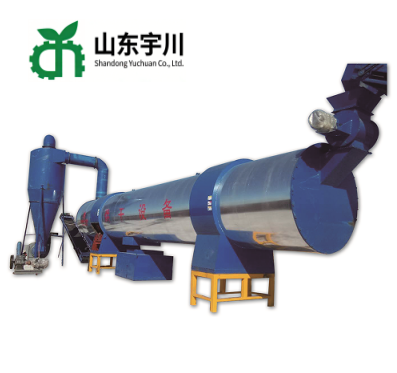
This equipment is a high-efficiency and energy-saving dryer developed by our company. It combines the advantages of rotary drum drying and vacuum drying technologies, effectively overcoming the limitations of traditional drying equipment. Regardless of the initial moisture content, it can achieve efficient one-time drying with stable and uniform results.
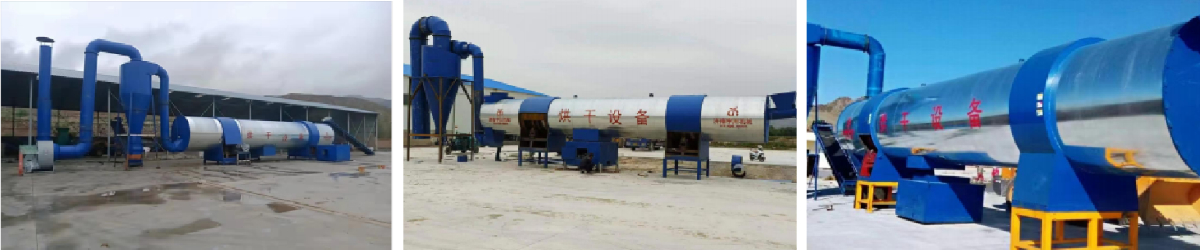
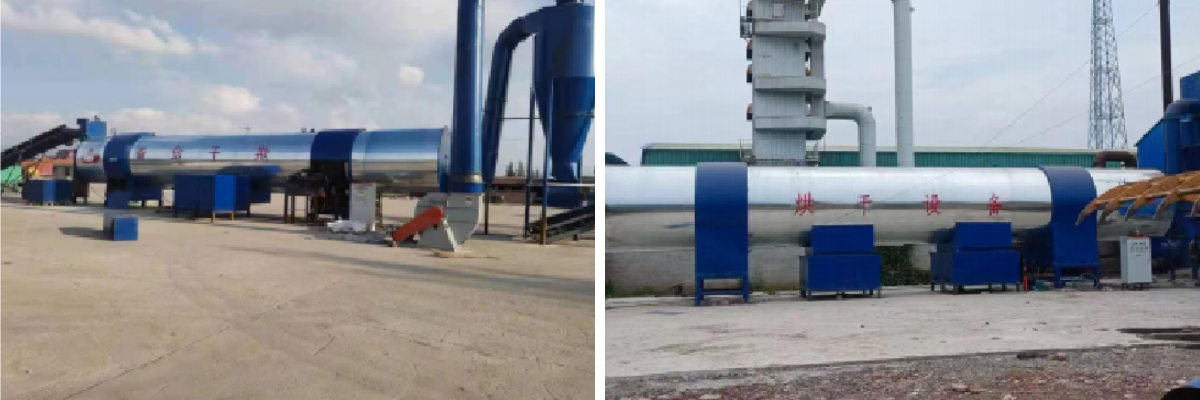
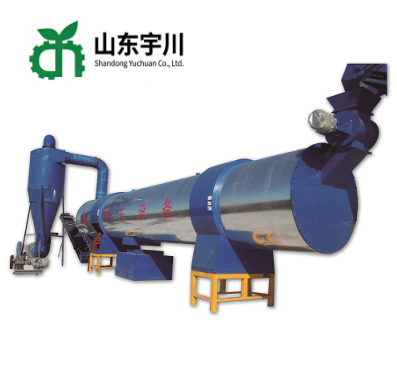
The main unit adopts a double-cylinder structure with an internal rotating drum. In a semi-sealed drying environment, the hot air furnace provides continuous heat, which is transferred to the wet materials to accelerate moisture evaporation. Through the jacketed ventilation system, hot air is efficiently guided to the inlet end of the drum, allowing high-temperature airflow to directly contact the materials with higher moisture content. This design greatly improves drying speed, ensures uniform drying, and reduces energy consumption.
Dryer Configuration
This dryer mainly consists of:
Hot air furnace
Belt conveyor (to be self-provided)
Airtight feed (discharge) valve
Main drying unit
Blower fan
Cyclone separator
Electric control cabinet
Performance Advantages
High Safety: The heat source is located below the drum and does not directly contact the material, ensuring material-fire separation for improved safety.
Higher Output: Compared to the second-generation dual-drum dryers, this third-generation model offers upgraded length and diameter, allowing for higher material capacity and drying throughput.
Wider Applicability: It is suitable for drying a broader range of materials. For example, it ensures high drying quality for industrial salt and is also capable of handling heavier and more moisture-rich materials.
Technical Parameters
| Model | Evaporation Capacity (t/h) | Drive Power (kW) | Matching Fan Power (kW) | Rotary Valve & Airlock Motor (mm/kW) | Remarks |
1.5*9 | 1.5–2.0 | 11 | 15 | 300/3 | Specifications for reference only |
1.5*13 | 2.0–2.3 | 11 | 15 | 300/3 | |
1.8*13 | 2.0–2.7 | 15 | 18.5 | 400/4 | |
1.8*18 | 2.5–3.5 | 18.5 | 22 | 400/4 | |
2.2*13 | 2.5–3.5 | 18.5 | 22 | 400/4 | |
2.2*18 | 4.0–4.5 | 22 | 30 | 500/5.5 | |
2.5*18 | 5.0–5.5 | 22 | 45 | 500/5.5 |
High-Efficiency Energy-Saving Dryer FAQ
Q1:What materials can the High-Efficiency Energy-Saving Dryer process?
The High-Efficiency Energy-Saving Dryer can process various materials, including sawdust, wood chips, straw, rice husk, distillers grains, chicken manure, sludge, and other materials. The final configuration depends on moisture content, particle size, and required capacity.
Q2:How does the dryer save energy?
The dryer improves thermal efficiency by optimizing hot-air circulation, reducing heat loss, and controlling drying temperature and material residence time. This helps reduce energy consumption per unit of output.
Q3:Can it handle high-moisture materials?
Yes. The dryer can be designed for materials with different initial moisture levels. Actual drying capacity depends on material characteristics, initial moisture content, target moisture content, and required production capacity.
Q4:What factors should be considered when selecting the dryer?
Customers should provide the material type, initial moisture content, target moisture content, required capacity, particle size, and available heat source. These parameters help determine the appropriate dryer model and heating configuration.
Finished Product Case