Practical Pain Points & Efficient Solutions of Organic Fertilizer Drying Equipment
The booming global eco-agriculture industry has greatly boosted the market demand for organic fertilizer, making efficient and standardized fertilizer production an urgent need for manufacturers worldwide. As a key core process in organic fertilizer production, material drying directly determines finished product quality, production line capacity and long-term operating profits. However, most traditional drying devices cannot adapt to the characteristics of organic raw materials, resulting in many common operational problems. Selecting a professional, stable and energy-saving organic fertilizer drying machine has become the key to upgrading modern fertilizer production lines.
Common Operational Pain Points of Traditional Fertilizer Drying Equipment
With over a decade of in-depth experience in the drying equipment industry and based on practical feedback from production lines both domestically and internationally, the shortcomings of traditional, general-purpose fertilizer drying equipment have become increasingly apparent in organic fertilizer production. In particular, such equipment is ill-suited for processing high-moisture, high-viscosity raw materials, and the core challenges are concentrated in four key areas.
Materials are prone to clogging, preventing continuous production.
Organic fertilizer raw materials—such as livestock and poultry manure, municipal sludge, and distillers’ grains—have high moisture content and are extremely sticky. Conventional drying equipment lacks specialized anti-clogging and material-distribution mechanisms, causing the materials to easily stick together and accumulate inside the drum, frequently leading to clogs and production shutdowns. Repeated shutdowns for cleaning not only significantly reduce production capacity but also increase labor and maintenance costs, making it impossible to meet the demands of industrial-scale continuous mass production.
Uneven drying and inconsistent product quality
Traditional single-drum drying equipment has low heat exchange efficiency and insufficient material tumbling, making it highly prone to localized over-drying and under-drying. This results in inconsistent moisture content in the finished organic fertilizer and unstable product yield rates.
Dust Leakage and Environmental Compliance Risks
Low-end drying equipment features rudimentary dust-control systems, resulting in significant dust leakage during production. This not only pollutes the workshop environment but also fails to meet environmental emission standards, making the facility highly susceptible to environmental penalties and posing compliance risks for the company.
Poor Equipment Quality, High Failure Rate, and Short Service Life
To cut costs, some manufacturers use thin-walled steel and substandard components in their equipment. Under continuous high-temperature and high-load operating conditions, the equipment ages rapidly, wear-prone parts fail frequently, and breakdowns occur often. This leads to production line interruptions and order delays, significantly increasing maintenance and replacement costs.
Core Competitive Advantages of Yuchuan’s Third-Generation Organic Fertilizer Drying Equipment
Addressing the core challenges in organic fertilizer production, Yuchuan has iteratively upgraded its third-generation energy-efficient organic fertilizer drying equipment. Focusing specifically on drying high-moisture, sticky materials, the equipment has been comprehensively optimized across four key dimensions—structure, energy consumption, quality, and compliance—to precisely resolve the practical operational challenges of traditional equipment.
Fire-Material Separation Structure: Dual Safeguards Against Blockages and Safety
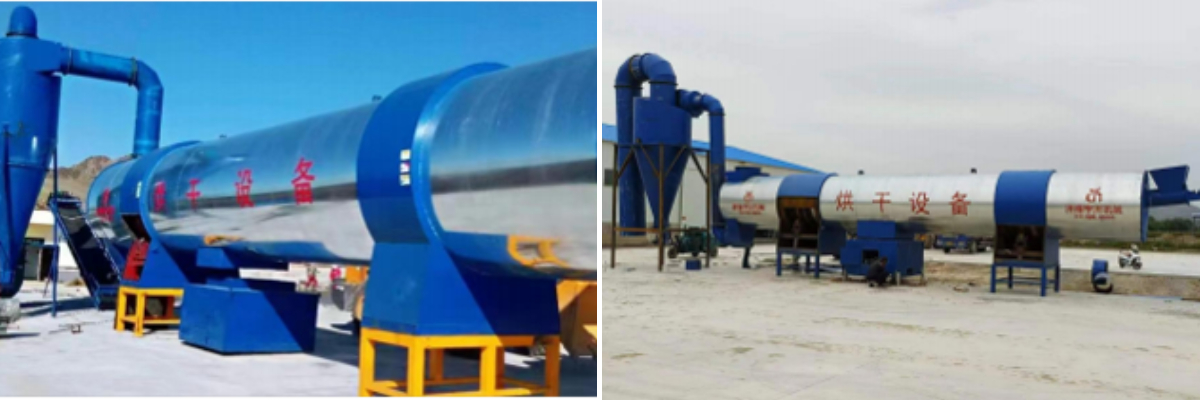
The equipment employs a proprietary dual-cylinder fire-material separation design, physically isolating the heat source from the material to eliminate high-temperature safety hazards and significantly enhance operational safety. It can complete the dehydration and drying of high-moisture organic materials in a single pass, resolving material adhesion and blockage issues at their source. This supports 24-hour uninterrupted and stable production line operation, significantly improving mass production efficiency.
Ultra-High Thermal Efficiency: Long-Term Energy Savings, Cost Reduction, and Efficiency Gains
As a key upgrade highlight, this organic fertilizer dryer achieves a thermal efficiency exceeding 85%, reducing overall energy consumption by 25%–30% compared to traditional industry fertilizer drying equipment. The equipment delivers stable and long-lasting energy-saving performance, effectively reducing fuel and electricity consumption. Over the long term, it saves enterprises substantial production costs, precisely meeting major manufacturers’ core needs for cost reduction and efficiency improvement.
Precision Engineering and Material Selection + International Certifications, Suitable for Global Export Markets
The main body of the equipment features a reinforced steel structure that is pressure-resistant, heat-resistant, and deformation-resistant, ensuring a sturdy and durable frame. Core wear-prone components are made of wear-resistant alloy materials, making them suitable for long-term, high-intensity industrial operations. This significantly extends the equipment’s service life while reducing downtime due to malfunctions and maintenance-related losses. The equipment has passed ISO 9001 international quality management system certification, and export models come standard with CE certification, meeting the equipment access standards of multiple countries.
Application Scenarios and Precautions for Use
This professional organic fertilizer drying equipment is precisely tailored to specific application scenarios and is designed primarily for drying high-moisture, sticky materials. It is widely compatible with various organic fertilizer raw materials, including livestock and poultry manure, municipal sludge, distillers’ grains, and agricultural organic waste, and can be used in new construction and retrofit projects for large, medium, and small-scale organic fertilizer production lines.
Usage Restrictions and Pre-Treatment Recommendations: For special materials containing large amounts of hard particles or coarse fibers, direct drying in the machine is not recommended. Performing pre-treatment—such as crushing and screening—in advance can effectively improve drying uniformity, reduce equipment wear, maximize the equipment’s service life, and optimize overall production efficiency.
Standardized Operation and Maintenance Guidelines to Ensure Long-Term, Stable Operation
Scientific operation and maintenance are key to maximizing the performance of organic fertilizer drying equipment and extending its service life. Two core principles must be followed during daily production: First, conduct regular inspections and maintenance, focusing on vulnerable components such as wear-resistant parts, drums, and sealing structures, and promptly replace aged or damaged parts. Second, adhere to standardized operating procedures, strictly following standards for equipment startup and shutdown, material feeding, temperature control adjustments, and other operations to prevent equipment failures caused by human error. Standardized operation and maintenance can effectively reduce failure rates and ensure the continuous, efficient operation of the production line.
Summary and Customized Export Services
In summary, Yuchuan Environmental Protection’s third-generation energy-efficient organic fertilizer dryer addresses industry pain points associated with traditional equipment—such as material blockages, uneven drying, high energy consumption, susceptibility to damage, and failure to meet environmental standards. With core advantages including safety and stability, high efficiency and energy savings, superior quality, global compliance, and broad adaptability to various production scenarios, it has become the preferred fertilizer drying equipment for upgrading organic fertilizer production lines worldwide.
Whether for small start-up plants or large-scale mass production enterprises, this equipment can meet production needs and help overseas customers achieve production capacity upgrades, cost control, and compliant production. If you require tailored production line drying solutions, equipment quotes, or international trade and export services, please feel free to contact us at any time to receive one-on-one professional technical support and customized solutions.