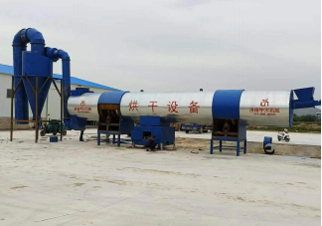
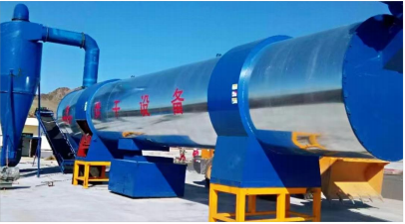
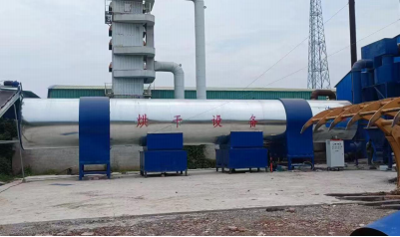
Third Generation High-Efficiency Energy-Saving Dryer
Triple-pass rotary structure realizes sufficient heat exchange, featuring high thermal efficiency and obvious energy-saving effect.
Stable running performance, wide applicability, suitable for drying sawdust, shavings and various biomass raw materials.
Reasonable internal lifting plate design, uniform drying effect, easy operation and low maintenance cost.
Product Overview
The third generation high-efficiency energy-saving dryer is a triple-pass rotary dryer developed for biomass materials. It is installed between the crusher and the pellet mill, and its task is to bring wet raw material down to the moisture range in which pelletizing and briquetting can be carried out reliably, usually 8% to 12%. Material that is too wet cannot be pressed into dense pellets, blocks the die and causes a high breakage rate; material that is too dry cracks easily and generates dust. The dryer controls this moisture level continuously, which is the reason a drying stage is included in almost every industrial biomass line.
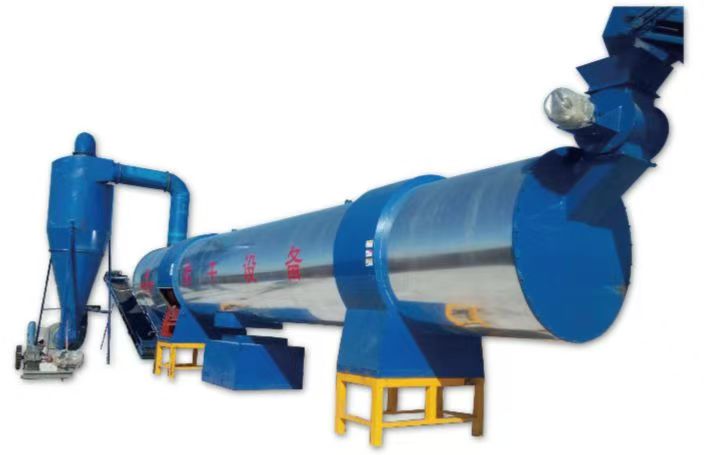
The structure is three concentric rotary cylinders inside one shell. Wet material enters the inner cylinder, is lifted and dropped by the internal lifting plates while hot air passes through it, then moves to the middle cylinder and finally to the outer cylinder before it is discharged. Because the material travels three passes within the length of one drum, the heat exchange path is about three times longer than that of a single-drum dryer of the same size, and the residual heat of the air leaving the inner pass is still used in the second and third passes rather than being lost through the chimney. This is the basis of the high thermal efficiency and the low fuel consumption of the machine.
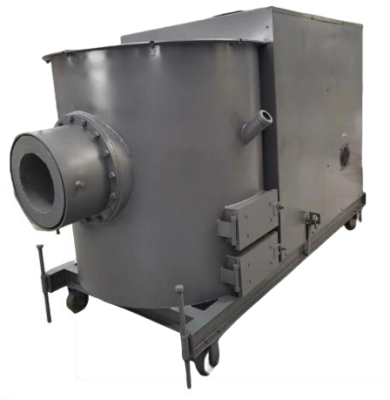
The drum is supported on two riding rings and driven by a gear ring and pinion with a variable-frequency motor, so the rotating speed can be matched to the material and the required final moisture. The cylinder is insulated and clad with a steel jacket, which limits heat loss through the shell and keeps the surface temperature safe for operators. Hot air can be produced by a biomass burner using wood waste from the same plant, by a gas or oil burner, or by waste heat from a boiler or kiln, so the running cost depends on what heat source the customer already has.
The machine is completed with a feeding conveyor, a cyclone and a bag filter at the discharge end. The cyclone separates the coarse dust and the bag filter collects the fine dust, so the exhaust is clean and the dried material is recovered instead of being lost. The whole unit has a compact footprint, which is important for customers whose workshop is already built and who cannot spare the length required by a conventional single-drum dryer. It is suitable for sawdust, wood chips, shavings, straw, rice husk, palm kernel shell, corn cob, bamboo, distillers grains, manure and similar materials, and can be supplied with customized voltage, frequency and capacity to suit different markets.
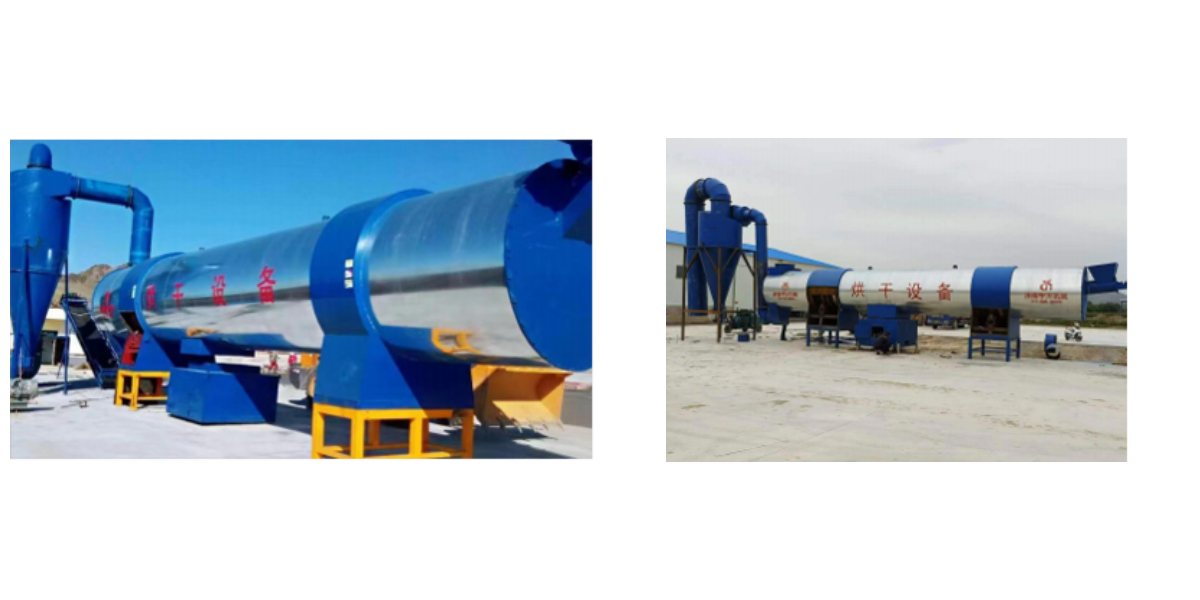
Key Advantages of the Dryer
The advantages below are the points that decide the running cost of a drying line: fuel consumption, drying uniformity, floor space and the stability of continuous operation.
1. The triple-pass structure gives a heat exchange path about three times longer than a single-drum dryer of the same size, and the hot air is used again in the second and third passes, so thermal efficiency is high and fuel consumption per tonne of dried material is markedly lower.
2. The whole drum is insulated and clad with a steel jacket, which reduces heat loss through the shell, keeps the outer surface at a safe temperature and further lowers energy consumption.
3. The lifting plates inside each pass are arranged according to the material flow, so the material is lifted, scattered and dropped evenly through the hot air; the drying result is uniform and there is no wet material at the discharge.
4. The compact three-in-one layout takes roughly one third of the length of a conventional single-drum dryer, which saves civil construction cost and makes the machine easy to fit into an existing workshop.
5. Rotating speed is controlled by a variable-frequency drive, so the residence time can be adjusted to the initial moisture of the material without changing the machine or the heat source.
6. The heat source is flexible: a biomass burner using the plant own wood waste, a gas or oil burner, or waste heat from a boiler or kiln can all be connected, which gives the customer the lowest available running cost.
7. The cylinder runs on two riding rings with a gear ring and pinion drive; the support rollers are machined and hardened, so the drum rotates smoothly with low vibration and long bearing life.
8. Discharge end is equipped with a cyclone and a bag filter, which collect coarse and fine dust respectively; the exhaust is clean and the dried powder is recovered as product rather than lost to the atmosphere.
9. The structure is simple and accessible: inspection doors on the shell allow the lifting plates and the internal cylinders to be checked, and the wearing parts, which are few, are easy to replace.
10. Voltage, frequency, capacity, burner type and the layout of the feeding and discharge sections can all be customized, so the dryer matches the crusher and pellet mill of the customer line.
No. | Industry / Field | Wet Raw Material | Drying Purpose and End Product | Usual Heat Source |
1 | Biomass pellet plants | Wet sawdust, wood chips, shavings | Moisture reduced to 8-12% for pelletizing; wood pellets | Biomass burner |
2 | Sawmills and wood processing | Wet sawdust, bark, offcuts after crushing | Dry wood powder for pellets and briquettes | Biomass burner |
3 | Furniture and panel factories | Wet sawdust, MDF and plywood scrap | Dry powder for briquette and boiler fuel | Biomass burner |
4 | Crop residue stations | Fresh straw, corn stalk, cotton stalk | Dry straw for pelletizing; biomass fuel | Biomass burner |
5 | Rice and grain processing | High-moisture rice husk, corn cob | Dry husk and cob for pellet fuel | Biomass burner |
6 | Palm oil and coconut mills | Wet palm kernel shell, copra, palm fibre | Dry shell and fibre for export pellet fuel | Biomass burner or waste heat |
7 | Bamboo and charcoal plants | Wet bamboo scrap, charcoal fines | Dry material for charcoal briquette | Biomass burner |
8 | Organic fertilizer plants | Fresh manure, wet compost | Dry material for organic fertilizer granulation | Biomass burner or waste heat |
9 | Distillery and brewery plants | Wet distillers grains, brewer spent grain | Dry grains for feed and fuel | Waste heat from boiler |
10 | Paper and packaging mills | Wet paper sludge, pulp reject | Volume and moisture reduced for fuel or disposal | Waste heat from boiler |
11 | Municipal sludge treatment | Dewatered sewage sludge | Sludge dried for incineration or reuse | Waste heat or gas burner |
12 | Chemical and mineral plants | Wet sand, clay, slag fines | Material dried before grinding or batching | Gas or oil burner |
Manufacturing Process
A rotary dryer works under continuous heat and rotation, so the quality of the cylinder, the riding rings and the concentricity of the three passes determines whether the machine will run straight for years. The production process is controlled at the following stages.
1. Material selection and cutting. The inner, middle and outer cylinders are made of Q235B or Q345R steel plate; plates are cut on a CNC plasma cutting machine and the edges are prepared for welding.
2. Rolling and seam welding. Each cylinder shell is rolled on a plate rolling machine, the longitudinal seam is welded with submerged arc or CO2 gas shielded welding, and the circumferential seams are welded after the sections are aligned in a fixture.
3. Weld inspection. Critical seams are checked by penetrant or ultrasonic testing, and the roundness and the straightness of each shell are measured before assembly.
4. Riding ring and roller machining. Riding rings are forged or rolled from carbon steel, then machined and fitted to the cylinder; support rollers are machined, hardened and ground so that the drum runs without runout.
5. Gear ring machining. The transmission gear ring is hobbed and fixed to the cylinder with a pre-loaded fit; the pinion and the reducer are aligned so that the tooth contact is even under load.
6. Concentric assembly. The three cylinders are assembled with spacer plates and supports so that the gaps between the passes are equal along the full length; this gap is what allows the material and the air to flow from one pass to the next.
7. Lifting plate welding. Lifting plates are welded inside each pass at the angles required by the material flow, and their height and spacing are checked so that the material is lifted but not carried over the top.
8. Insulation and cladding. Rock wool insulation is applied to the outer cylinder and covered with a steel jacket; the jacket is sealed at both ends to prevent rain and heat loss.
9. Assembly and no-load test. The drum is assembled on its frame, the drive is connected, and the machine runs without load to check rotation, runout of the riding rings, bearing temperature and noise.
10. Painting, marking and packing. The frame and the jacket are primed and top-coated, a nameplate with model, drum speed, motor power and serial number is fitted, and the unit is packed in sections for container transport.
FAQ
Q1. What materials can this dryer handle?
Sawdust, wood chips, shavings, straw, rice husk, palm kernel shell, corn cob, bamboo, distillers grains, manure and similar biomass materials in granular or short-fibre form. Material that is very long or very wet should be crushed and dewatered first so that it can be fed evenly into the drum.
Q2. What moisture can be reached after drying?
The outlet moisture is normally controlled between 8% and 12%, which is the range required for pelletizing. The exact figure is set by the rotating speed, the inlet air temperature and the initial moisture, and is adjusted during commissioning with the actual material.
Q3. What heat source can be used?
A biomass burner fired with wood waste from the same plant, a gas or oil burner, or waste heat from a boiler or kiln. Using the plant own biomass residue as fuel is normally the most economical option, and our technical team will recommend the arrangement that suits the local fuel supply.
Q4. How much fuel or energy does it save compared with a single-drum dryer?
Because the hot air is reused in three passes and the shell is insulated, the heat consumption per tonne of dried material is considerably lower than that of a single-pass drum dryer, and the exhaust temperature is lower. The exact saving depends on the material, the initial moisture and the heat source, so we calculate it against the customer actual working conditions before quoting.
Q5. What capacity can be supplied?
Capacity is selected according to the output of the pellet line and the moisture that has to be removed, and the model is confirmed together with the crusher and the pellet mill. Please provide the material, the initial moisture and the required hourly output so that the correct size can be calculated.
Q6. Is dust a problem at the discharge end?
A cyclone is fitted at the discharge to separate the coarse fraction, and a bag filter collects the fine dust, so the exhaust is clean. The collected powder is returned to the product, which also avoids material loss.
Q7. What maintenance is required?
Regular lubrication of the support rollers and the gear drive, checking of the riding ring runout, the roller surface and the lifting plates, and confirmation that the internal cylinders are clear. The inspection doors give access to the shell, and the machine needs no special maintenance beyond these routine checks.
Q8. What is included in delivery and after-sales service?
The dryer is delivered with the drive, the burner connection, the cyclone, the connecting ducts and the operation manual. Foundation drawings and an installation guide are provided before shipment; the main machine is warranted for twelve months, and an engineer can be sent to site for commissioning when required.
| Model | Evaporation Capacity (t/h) | Driving Power (kW) | Matched Fan (kW) | Airlock Discharger | Remarks |
|---|---|---|---|---|---|
| 1.5*9 | 1.5–2.0 | 11 | 15 | 300/3 | Reference only, parameters depend on material characteristics |
| 1.5*13 | 2.0–2.3 | 11 | 15 | 300/3 | Reference only, parameters depend on material characteristics |
| 1.8*13 | 2.0–2.7 | 15 | 18.5 | 400/4 | Reference only, parameters depend on material characteristics |
| 1.8*18 | 2.5–3.5 | 18.5 | 22 | 400/4 | Reference only, parameters depend on material characteristics |
| 2.2*13 | 2.5–3.5 | 18.5 | 22 | 400/4 | Reference only, parameters depend on material characteristics |
| 2.2*18 | 4.0–4.5 | 22 | 30 | 500/5.5 | Reference only, parameters depend on material characteristics |
| 2.5*18 | 5.0–5.5 | 22 | 45 | 500/5.5 | Reference only, parameters depend on material characteristics |