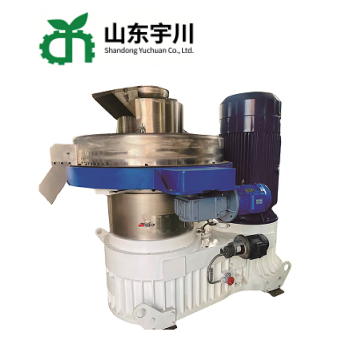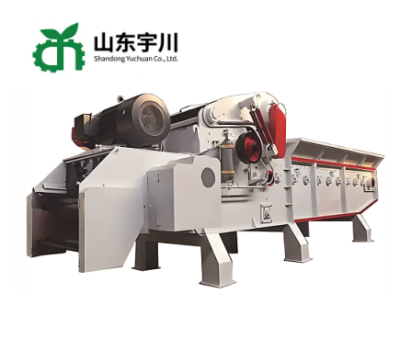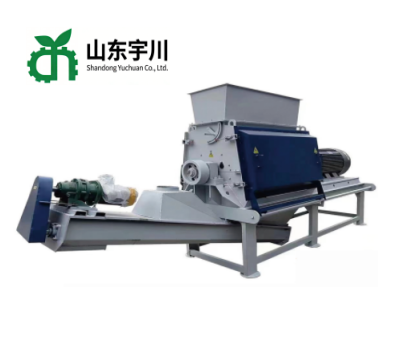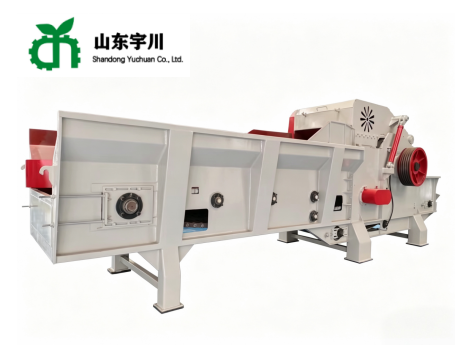
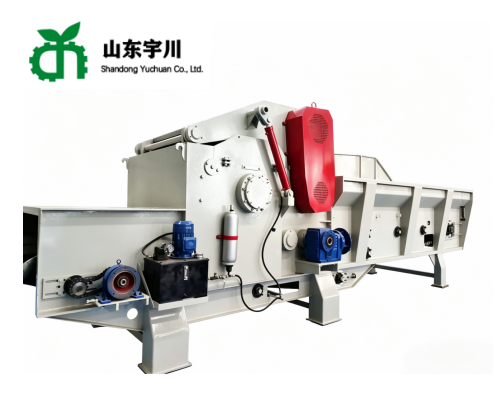
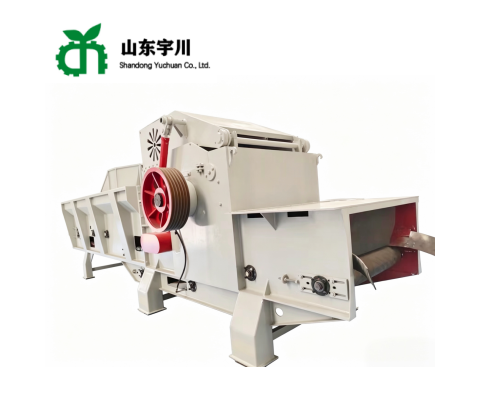
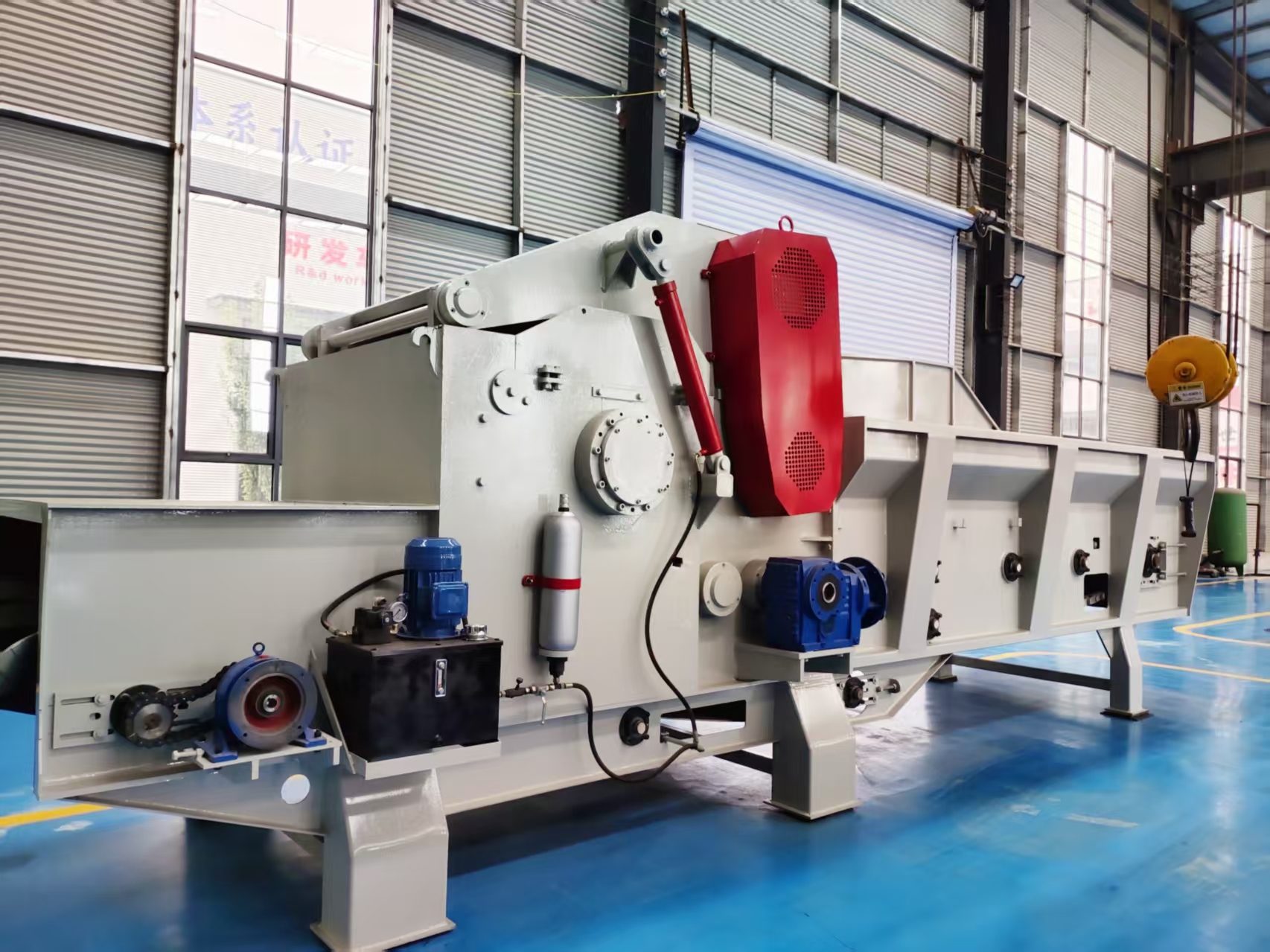
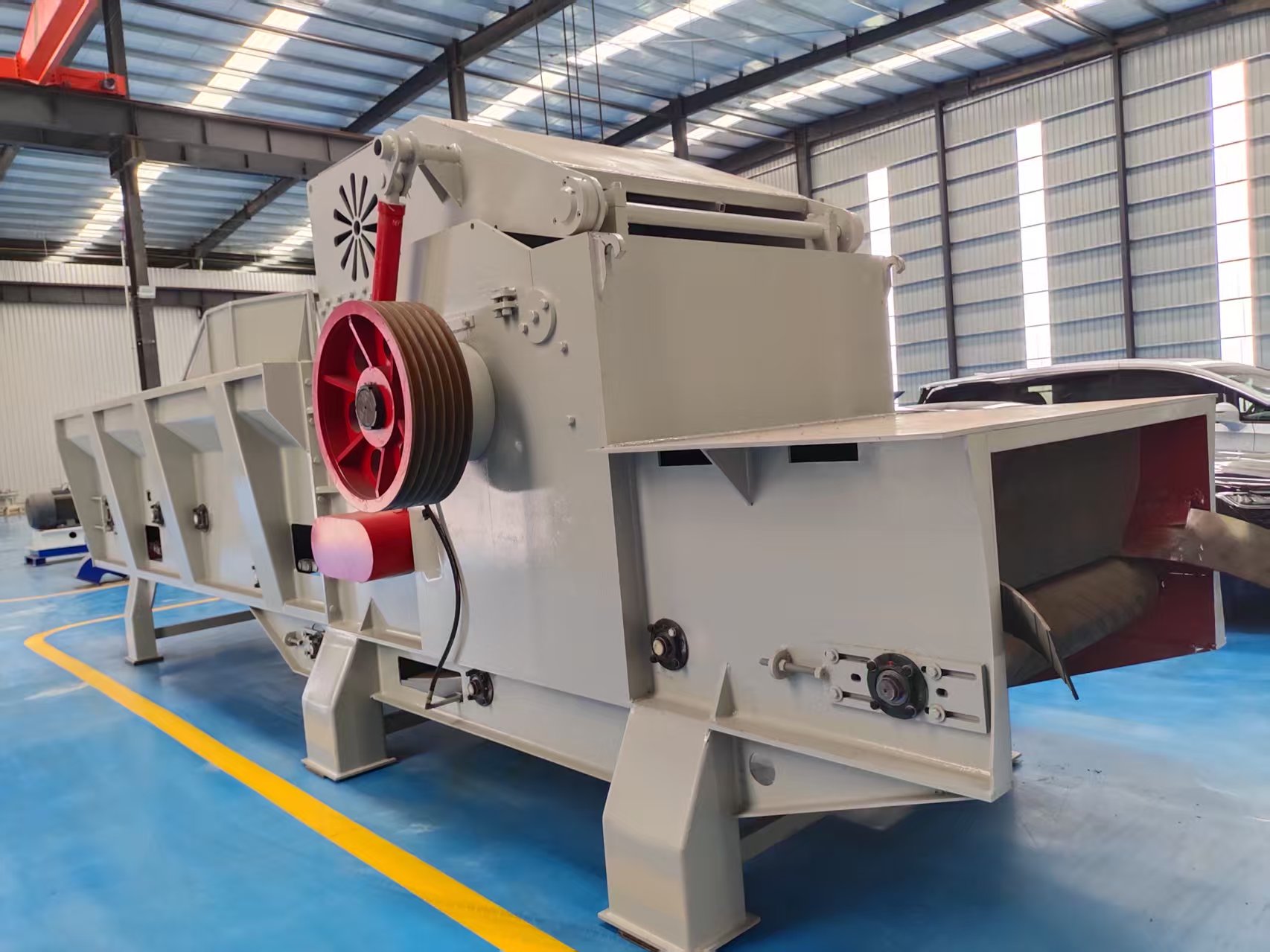
Wood Integrated Crusher
Heavy-duty cutting rotor with sharp alloy blades ensures high chipping efficiency and stable output.
Wide feeding inlet, suitable for logs, branches and waste wood, less material blockage.
Compact structure, easy operation and maintenance, ideal for biomass pretreatment lines.
Product Overview
This high-efficiency wood crusher is a crushing equipment specially designed for the pretreatment of biomass materials. It is used to break straw, sawdust, rice husks, tree branches, corn cobs and similar raw materials into uniform particles, so that they can be fed into a pellet mill, a briquette press or a boiler without blocking the feeding section. The series covers three models from 55 kW to 280 kW, with a production volume of 10 to 30 tonnes per hour, which allows the machine to serve a single small pellet line as well as a medium industrial plant that runs continuous three-shift production.
The working principle is impact and shear crushing. A high-speed rotating rotor carries symmetrically arranged hammer plates; material entering the chamber is hit by the plates, thrown against the chamber wall and cut again on the sieve, and is discharged only when it is small enough to pass the mesh. Several sieve combinations are available, so the finished particle size can be selected according to the requirement of the downstream process rather than being fixed by the machine. The rotor design and the wind speed inside the chamber are matched to the sieve mesh, which lets qualified powder leave the chamber quickly and keeps material residue on the sieve low.
The machine is equipped with a dust removal interface. When a bag filter is connected, the fine dust generated during crushing is collected instead of escaping into the workshop, which lowers dust pollution and keeps the working area clean. The structure is rigid and the layout is compact, so the machine can be installed in an existing workshop without a large foundation. Voltage and frequency, sieve aperture, hammer quantity and the feeding arrangement can be customized for different markets. Typical fields of use are biomass energy production, feed processing and organic fertilizer production, where the machine works either as a stand-alone unit or as the first stage of a complete granulating line.
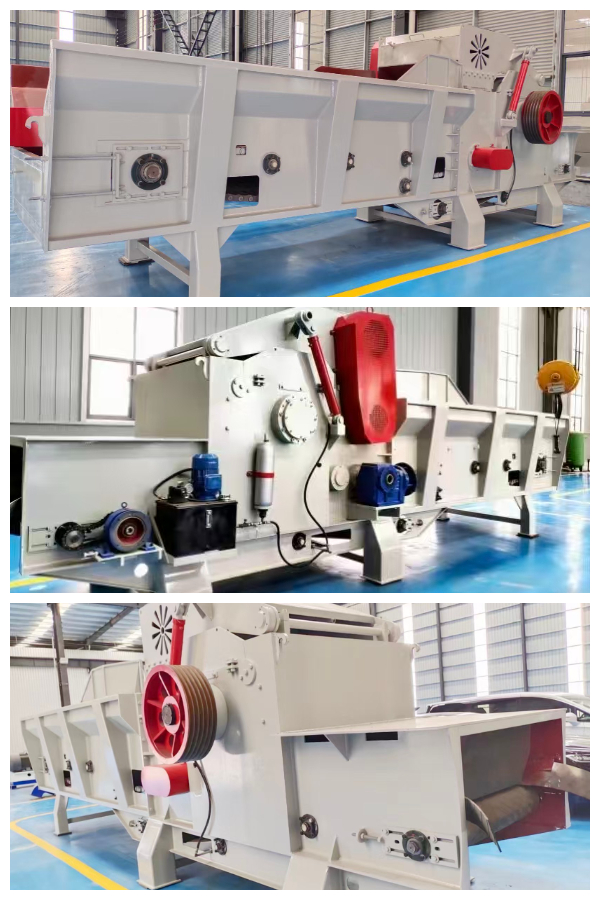
Key Advantages of the Hammer Mill
The advantages below concentrate on what decides the daily cost of the user: crushing efficiency, the life of wearing parts, dust control and the stability of continuous operation.
1. High-speed rotating hammer plates combined with a matched rotor design give high crushing efficiency, so the same output is reached with a shorter residence time inside the chamber and a lower energy cost per tonne.
2. The hammer plates are arranged symmetrically on the rotor, which balances the load on the shaft, reduces vibration and keeps the crushing result uniform over the full width of the chamber.
3. Multiple sieve combinations are available and can be changed quickly, so one machine can produce coarse material for boiler fuel and fine material for pelletizing without a second unit.
4. The wind speed inside the chamber is matched to the sieve mesh, which discharges qualified powder promptly, reduces repeated grinding and keeps material residue on the sieve low.
5. A dust removal interface is provided; connected with a bag filter it greatly reduces dust pollution in the workshop and recovers the fine product instead of losing it.
6. Heavy-duty rotor and wear-resistant hammer plates give a long service life under continuous load, and the reversible plates can be turned over to use the second face.
7. Large processing capacity in a compact frame: the three models cover 10 to 30 tonnes per hour, matching different scales of pellet and briquette production.
8. Simple structure with few wearing parts, easy access for inspection and replacement, which shortens maintenance time and keeps downtime low.
9. Stable running with low noise and low vibration protects the bearings and the foundation, and allows the machine to work continuously for long shifts.
10. Customized motor voltage and frequency, together with a complete set of sieves and spare hammers supplied with the machine, make it ready for export markets.
Manufacturing Process
The performance of a crusher is determined by the quality of the rotor, the hardness of the hammer plates and the accuracy of the chamber, so the production process is controlled at each of the following stages.
1. Material selection and cutting. The chamber, frame and base are made of Q235B or Q345B steel plate; blanks are cut on a CNC plasma or flame cutting machine so that dimensions and welding bevels are accurate before fabrication.
2. Chamber and frame welding. The chamber is welded with CO2 gas shielded arc welding under a fixed welding procedure; stressed joints are welded with full penetration and the seams are checked for porosity, slag and undercut.
3. Stress relief annealing. The welded housing is annealed as a whole to release welding stress, preventing deformation and cracking when the machine runs under continuous vibration.
4. CNC machining. Bearing seats, flange faces and locating surfaces are machined on CNC equipment, with bore tolerance controlled to IT7 and surface roughness to Ra 1.6, so that the rotor runs concentrically with the bearing housing.
5. Rotor fabrication. The rotor shaft is made of 45# carbon steel, quenched and tempered to HB 220-250; the rotor body is welded and fitted, hammer pins are made of 40Cr and fixed with locking devices.
6. Dynamic balancing. The complete rotor is dynamically balanced at working speed to G6.3 grade before assembly, which is the basis of low vibration and long bearing life.
7. Hammer plate treatment. Hammer plates are made of wear-resistant alloy steel, quenched and tempered to HRC 52-58, and machined symmetrically so that both faces can be used after turning over.
8. Sieve manufacturing. Sieves are punched or machined from steel plate with apertures from 1.5 mm to 12 mm; holes are deburred and the frame is rolled to fit the chamber closely without gaps.
9. Assembly and clearance setting. Bearings are installed and their clearance adjusted, the hammer-to-sieve gap is set, and the rotor is turned by hand to confirm free rotation before the motor is connected.
10. Testing and surface treatment. Each unit runs without load for not less than two hours to check vibration, bearing temperature and noise, then is load-tested with actual material to confirm current and output; the machine is shot-blasted, primed and top-coated, fitted with a nameplate and packed for export.
Model Parameters
| Model | YC65-55 | YC65-75 | YC65-100 | YC65-120 | YC120-160 | YC120-200 |
|---|---|---|---|---|---|---|
| Main motor power (kW) | 55 | 75 | 90 | 132 | 185/200 | 250/280 |
| Production volume (t/h) | 1–1.5 | 2–2.5 | 3–3.5 | 4–5 | 8–10 | 10–15 |
Application Scenarios
The table below lists the main industries and raw materials for which this crusher is used, with the recommended sieve aperture. The aperture is a starting point for commissioning and is adjusted to the fineness actually required by the downstream process.
Table 2 Application Scenarios of the Wood Crusher
No. | Industry / Field | Raw Materials | Application and End Product | Sieve Aperture |
1 | Biomass pellet plants | Wood chips, sawdust, shavings | Feedstock for pellet mills; wood pellets | 3–5 mm |
2 | Sawmills and wood processing | Slab, edging, bark, branches, offcuts | Wood powder for pelletizing; boiler fuel | 4–6 mm |
3 | Furniture and panel factories | Sawdust, shavings, MDF scrap | Fuel powder for boilers; briquette material | 3–5 mm |
4 | Crop residue collection stations | Wheat straw, rice straw, corn stalk, cotton stalk | Straw pellets; biomass fuel | 4–8 mm |
5 | Rice and grain processing | Rice husk, peanut shell, corn cob | Pellet fuel; biomass power plant fuel | 3–6 mm |
6 | Palm oil and coconut mills | Palm kernel shell, copra, palm fiber | Export pellet fuel; boiler fuel | 4–8 mm |
7 | Feed processing plants | Corn, soybean, bran, cake meal | Feed mash and crumble | 1.5–3 mm |
8 | Organic fertilizer plants | Dried manure, compost, straw ash | Organic fertilizer granules | 3–5 mm |
9 | Charcoal and briquette plants | Charcoal scraps, bamboo, coconut shell | Charcoal powder; barbecue briquette | 2–4 mm |
10 | Paper and packaging mills | Paper trimmings, wood waste, pulp reject | Boiler fuel; waste reuse | 4–8 mm |
11 | Mushroom substrate plants | Cottonseed hull, sawdust, straw | Culture substrate | 3–8 mm |
12 | Herb and spice processing | Dried herb, cassava chip, spice | Powder for further processing | 2–4 mm |
FAQ
Q1. What raw materials can this wood crusher process?
Straw, sawdust, wood chips, tree branches, rice husks, corn cobs, peanut shells and similar biomass materials. Recommended moisture content is 12% to 15%; wetter material should be dried first, otherwise it will stick to the chamber and reduce capacity.
Q2. Which model should I choose for my production line?
The models are matched by required hourly output: YC1250-600 with 132 kW for about 10 to 15 t/h, YC1400-800 with 160 kW for about 15 to 20 t/h, and YC1600-800 with 220 kW for about 20 to 30 t/h. Actual output depends on the material, its moisture and the sieve aperture, so please confirm with our technical team before ordering.
Q3. How is the finished particle size controlled?
By changing the sieve. Apertures from 1.5 mm to 12 mm are available; 3 mm to 5 mm is normally used for pelletizing, while coarser sieves are used for boiler fuel or substrate material.
Q4. Can the voltage and frequency be customized?
Yes. Motors can be wound for 380 V, 415 V, 440 V or 480 V at 50 Hz or 60 Hz, and the control cabinet is supplied to match the local power supply.
Q5. How is dust controlled during crushing?
The chamber is sealed and a dust removal interface is provided. Connected with a bag filter, the fine dust is collected and the workshop stays clean; the collected powder can be returned to the product.
Q6. How long do the hammer plates and sieves last?
Hammer plates can be turned over and used on the second face, so one set normally serves two working cycles; sieves are replaced when the holes are worn or broken. We keep hammers, sieves, bearings and belts in stock and can ship them quickly.
Q7. What maintenance is required?
Regular checks of hammer plate wear, sieve condition, bearing temperature and lubrication, and confirmation that the rotor turns freely. The inspection cover gives quick access, so hammer and sieve replacement takes only a short time.
Q8. What is included in delivery and after-sales service?
Each unit is delivered with the motor, one set of sieves of the ordered aperture, one set of spare hammer plates, tools and the operation manual. The main machine is warranted for twelve months; installation guidance is provided by video or by an engineer on site when required.