How to Dry Brewer’s Spent Grain Efficiently? Industrial Drying Technology for Better Resource Utilization
Brewer’s Spent Grain (BSG) is one of the major by-products generated during beer production. Because fresh spent grain usually contains a high level of moisture, direct storage can lead to mold growth, deterioration and material agglomeration. As a result, the Brewer’s Spent Grain Dryer has become an important solution for breweries and feed-processing companies seeking to improve spent grain handling and resource utilization.
For businesses that plan to process wet spent grain into animal feed ingredients or other useful products, the key challenge is to reduce moisture efficiently while maintaining stable drying performance and reasonable energy consumption.
Why Does Wet Spent Grain Need Professional Drying?
Compared with conventional granular materials, wet brewer’s spent grain has a high moisture content and a soft, sticky texture. Improper drying methods may cause the material to accumulate or adhere inside the dryer, reducing contact between the hot air and wet material.
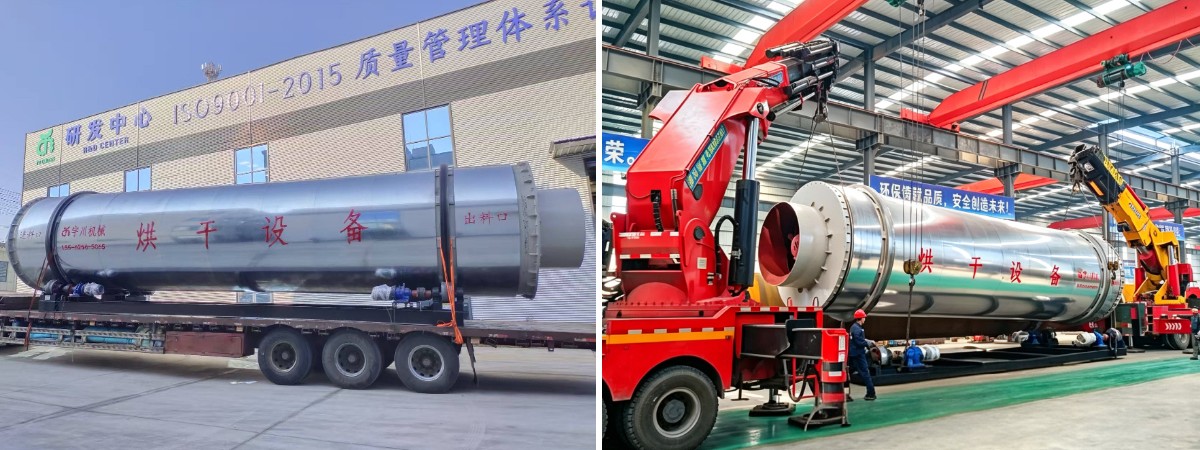
A professional Brewer’s Spent Grain Dryer generally uses a continuous drying process. During operation, spent grain is repeatedly lifted, dispersed and dropped inside the rotary drum, allowing more effective contact with hot air and gradual moisture removal.
This continuous heat-transfer process helps improve drying uniformity while reducing excessive accumulation caused by prolonged material retention.
How Does Rotary Drying Improve Spent Grain Processing?
Rotary drying is a widely used approach for industrial spent grain drying.
As the drum rotates, brewer’s spent grain is continuously lifted and dropped through the drying chamber. At the same time, hot air passes through the material, creating continuous heat and mass transfer.
The combination of lifting, dispersing and heat transfer helps reduce the uneven drying problems that can occur with static drying methods.
For high-moisture spent grain, parameters such as drum diameter, drum length, internal lifting flights and material residence time can be optimized according to the characteristics of the raw material and required production capacity.
How Can Energy Consumption Be Reduced?
Energy consumption is an important consideration when selecting an industrial dryer.
An efficient Spent Grain Dryer is not simply about increasing hot-air temperature. Better performance also depends on how effectively heat is transferred and utilized. Optimized hot-air circulation, material movement and internal heat-transfer design can help improve overall thermal efficiency.
A complete Spent Grain Drying System is normally configured according to several key factors:
Initial moisture content of wet spent grain
Required processing capacity
Target final moisture
Available heat source
Material characteristics
Dust collection requirements
Therefore, the ideal Brewer’s Spent Grain Dryer configuration can vary from one brewery to another. Dryer dimensions, heating systems and auxiliary equipment can be customized according to actual operating conditions.
From Brewery By-Product to Usable Resource
After proper drying, brewer’s spent grain can achieve better storage and transportation stability, making it more suitable for subsequent processing.
Where permitted by local regulations and feed-safety requirements, dried spent grain can be further utilized as an animal feed ingredient. More stable moisture content can also facilitate storage, transportation, mixing and other downstream processes.
In this sense, a Brewer’s Spent Grain Dryer is more than an industrial drying machine. It can serve as an important part of a complete spent grain recycling and resource-utilization system.
Yuchuan Brewer’s Spent Grain Dryer Solution
Shandong Yuchuan Environmental Protection Equipment Co., Ltd. provides drying solutions designed for high-moisture and potentially sticky materials, including Brewer’s Spent Grain Dryer systems.
Based on the customer’s initial moisture content, processing capacity, target moisture level and available heat source, the rotary drum structure, lifting flights, hot-air system, feeding and discharge system, and dust collection equipment can be configured accordingly.
For breweries, feed manufacturers and resource-recycling projects handling large quantities of wet spent grain, selecting the right industrial drying equipment can help create a more stable and efficient spent grain processing process.