Complete Guide to Selecting Pellet Machines in 2026, Avoid Costly Procurement Pitfalls
Global demand for biomass fuel, organic fertilizer, and livestock feed continues to surge. Many countries in Southeast Asia, Africa, and Europe are actively supporting solid waste recycling projects, making pellet mills the core equipment for new plants. However, many overseas buyers have encountered issues such as overstated production capacity, rapid die wear, excessive power consumption, and poor pellet formation due to incorrect equipment selection, which has significantly driven up operating costs. This article breaks down the five key criteria for selecting a pellet mill in clear, professional terms to help overseas clients identify the right model and ensure stable production and returns.
Confirm Raw Material & Production Scale to Choose Machine Type
Flat Die Pellet Mill
Low investment threshold, easy to assemble, disassemble, and maintain, and suitable for small-scale production; ideal for processing wood chips, straw, chicken manure, and small-scale feed production; the top choice for home workshops, farms, and small start-up factories.
Ring Die Pellet Mill
A flagship industrial model capable of continuous, stable operation at high capacity; wear-resistant and durable, it is suitable for processing hard, high-fiber materials (wood chips, bamboo shavings, rice husks, sludge), producing pellets with high density and a high formation rate; the standard choice for large-scale biomass fuel plants, organic fertilizer production lines, and export-oriented pellet processing plants, offering lower overall energy consumption during long-term mass production.
Verify Actual Output & Power Configuration,Check 3 key points before order:
Let the manufacturer know the type of raw material and its moisture content.
We recommend motors that comply with national standards and are made of pure copper. High-power ring die machines are equipped with forced feeding systems to prevent material jams and machine downtime;
Calculate power cost per ton: Premium machines consume 70–90 kWh per ton for sawdust. Higher kWh means heavier long-term electricity expense.
Wear-Part Material Determines Total Service Lifespan
Die and roller are core components; material quality controls maintenance frequency and spare part cost.
High-spec model (preferred for export and mass production): The ring die and pressure rollers are made of heat-treated forged alloy, offering higher hardness and wear resistance, and are less prone to cracking or deformation when processing hard materials;
Extra Inspection: Forged fine-machined spindle & gears, world-brand bearings for low noise and vibration.
Pellet Quality & Automation for Export Standards
Export fuel and feed pellets follow strict density and fines standards. Check pellet performance and automation together:
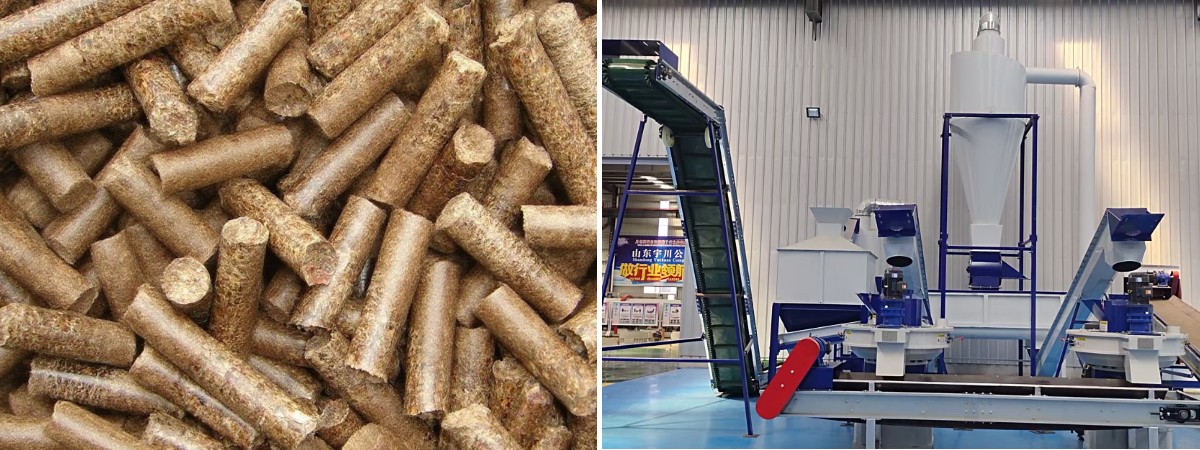
High-quality equipment produces pellets with a smooth, compact appearance
For medium- to large-sized models, we recommend PLC-based intelligent control cabinets, which lower the barrier to manual operation and reduce the risk of errors and malfunctions;
Die aperture sizes can be customized to suit specific needs: for feed, residential heating fuel, industrial boiler fuel, and organic fertilizer pellets.
Manufacturer Strength & After-Sales Service, Top Priority for Overseas Buyers
For cross-border machinery purchase, after-sales service outweighs low price. Verify 4 factory credentials:
Self-owned production workshop and can provide on-site photos and case study videos;
Complete export certifications: CE, ISO.
Comprehensive Support: Remote video installation and commissioning, full-cycle operator training, and technical support. For large-scale production lines, we can arrange on-site guidance by our technical experts.