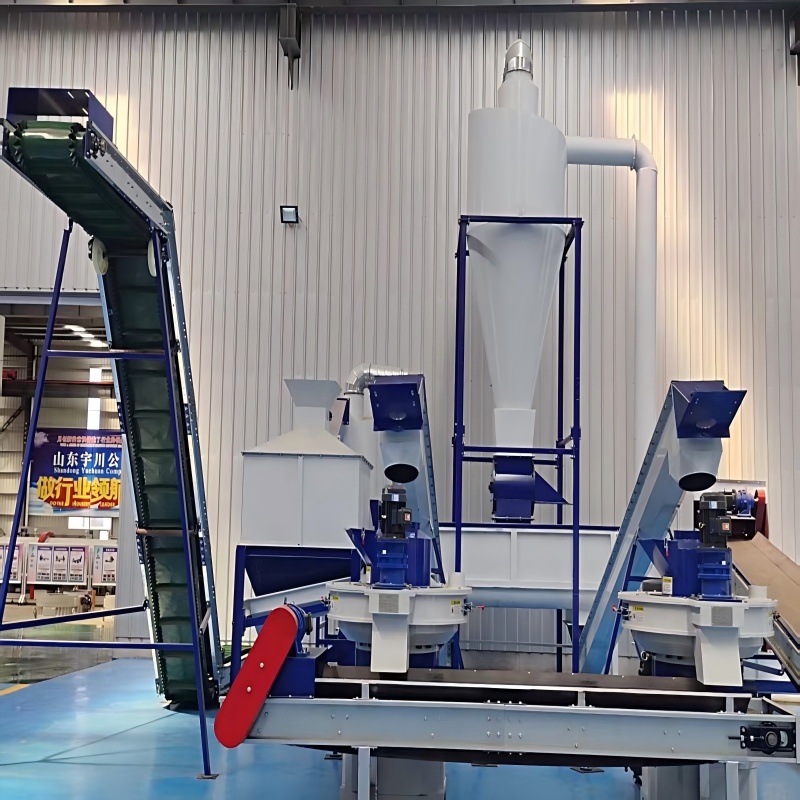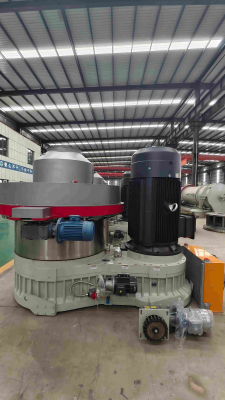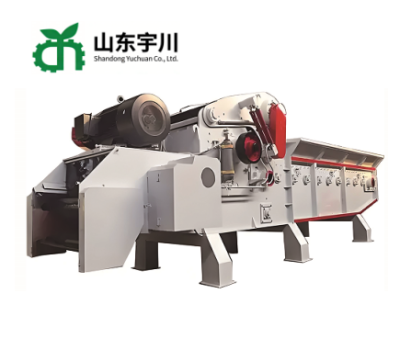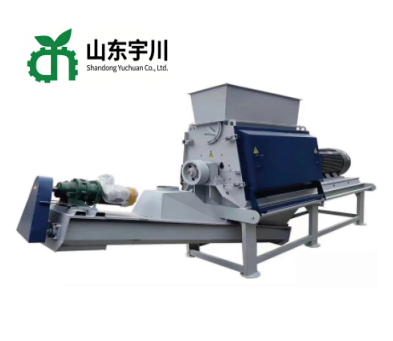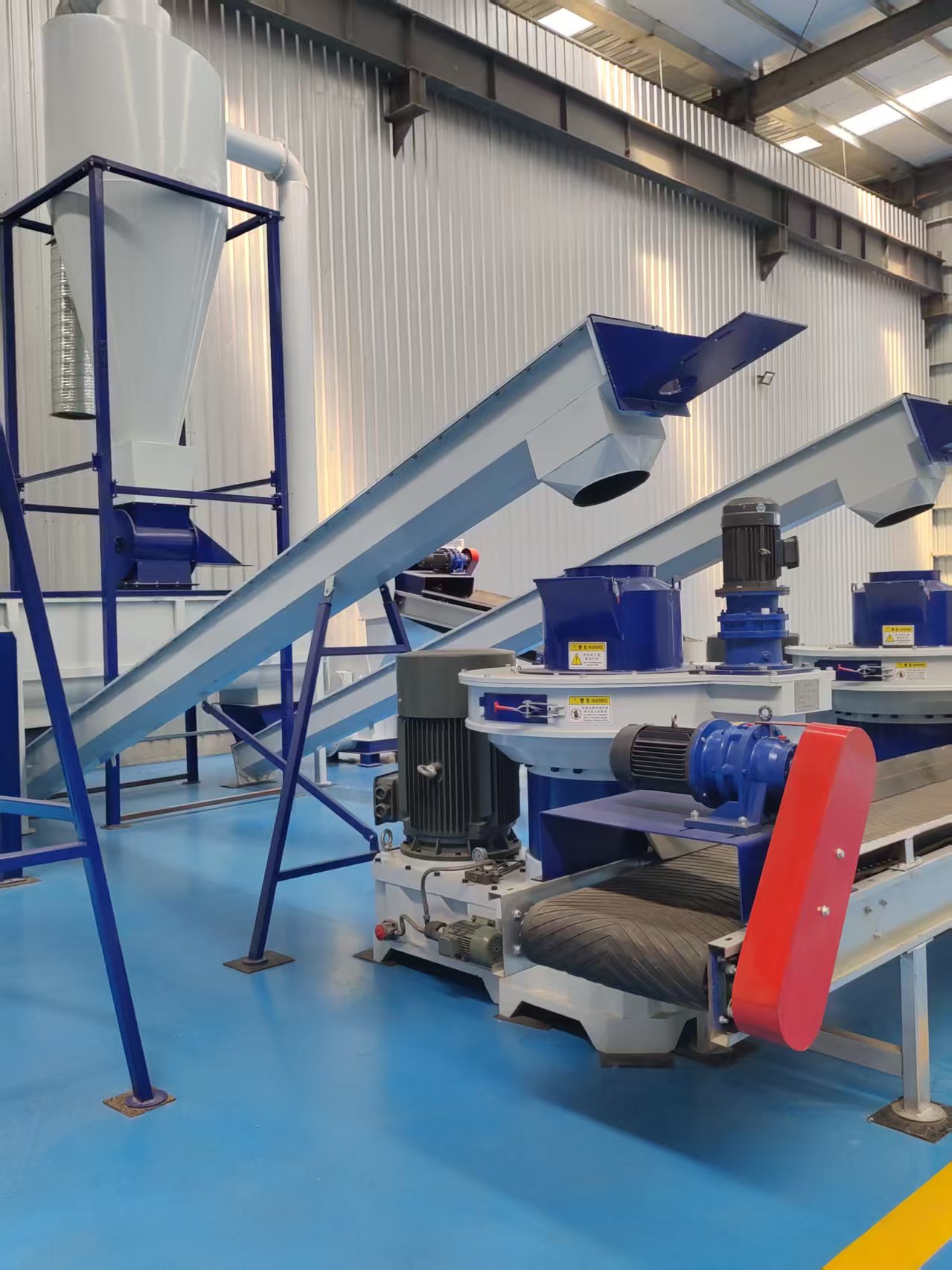
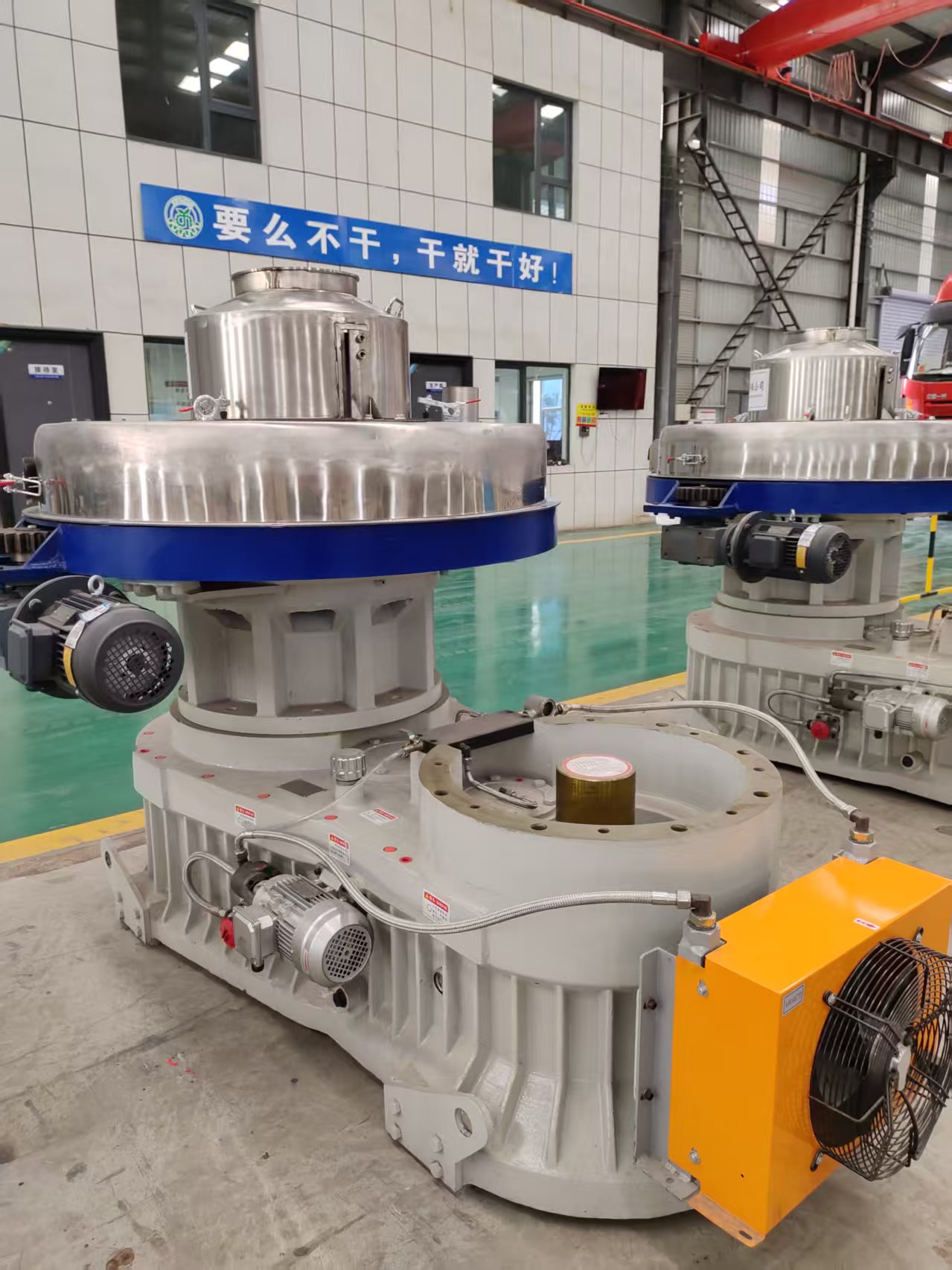
Palm pellet Line
Rapidly reduce moisture content:
Quickly lower the moisture level of high-humidity palm fiber feedstock to the required level for pelletization, ensuring continuous production.
Enhance pellet quality:
Precise moisture control facilitates easier compression and forming within the pellet mill, producing high-quality pellets with a dense structure that resist breakage.
Improve calorific efficiency:
Effectively removing excess moisture significantly increases the unit calorific value of finished pellets, enabling more complete combustion and higher energy output.
Product Overview
The palm kernel pellet production line is a manufacturing system that processes agricultural waste from the palm oil industry—primarily empty fruit bunches and palm kernel shells—into high-density, uniformly shaped biomass fuel pellets through a series of specialized equipment.
Core Raw Materials:
Primary Materials: Palm empty fruit bunches, palm kernel shells.
Material Characteristics: Raw materials typically exhibit high moisture content, complex fiber structures, and irregular shapes.
Basic Process Flow:
Coarse Crushing: Breaking large raw material chunks into smaller sizes.
Drying: Using dryers to reduce moisture content in high-humidity raw materials to meet granulation standards.
Fine Grinding: Pulverizing dried materials into fine powders to satisfy granulation requirements.
Pelletizing: Extruding the powder into high-density pellets under high pressure and temperature using a pellet mill.
Cooling and Screening: Cooling and hardening the hot pellets, then screening out fine powder to obtain the final product.
Frequently Asked Questions (FAQ)
1. What raw materials can be used in a Palm Pellet Line?
Palm Pellet Line is mainly designed for palm fiber, palm kernel shell, empty fruit bunch (EFB), and other palm biomass residues.
2. Does palm material need to be dried before pelletizing?
Yes. The moisture content of palm materials should usually be controlled at around 10%-15% to ensure stable pellet formation and high-quality pellets.
3. What is the production capacity of a Palm Pellet Line?
The capacity depends on raw material characteristics, equipment configuration, and customer requirements. Customized solutions are available for different production scales.
4. Are binders required during palm pellet production?
Usually, no additional binder is required. The natural lignin contained in palm biomass can act as a binder during the pelletizing process under proper pressure and temperature.
5. What are the advantages of palm pellets?
Palm pellets feature high calorific value, easy storage, convenient transportation, and environmental benefits, making them an ideal renewable biomass fuel.
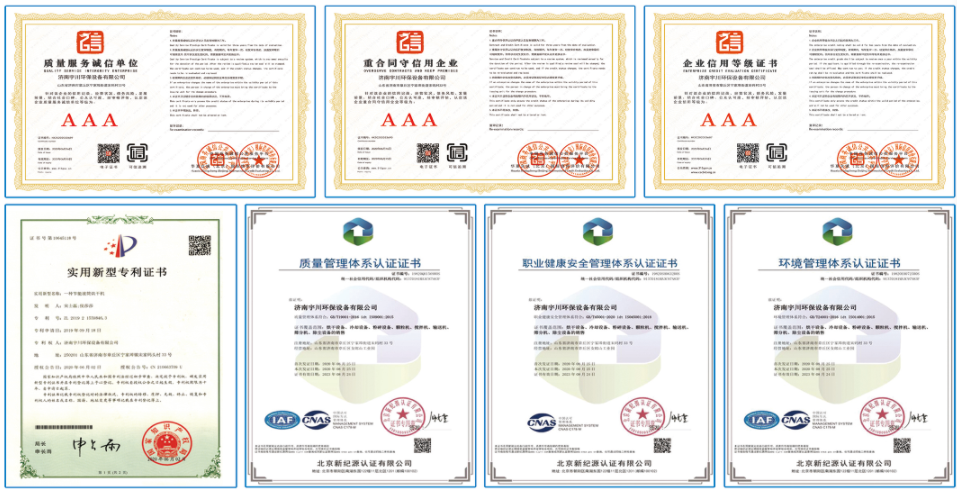
Company Qualifications
production line