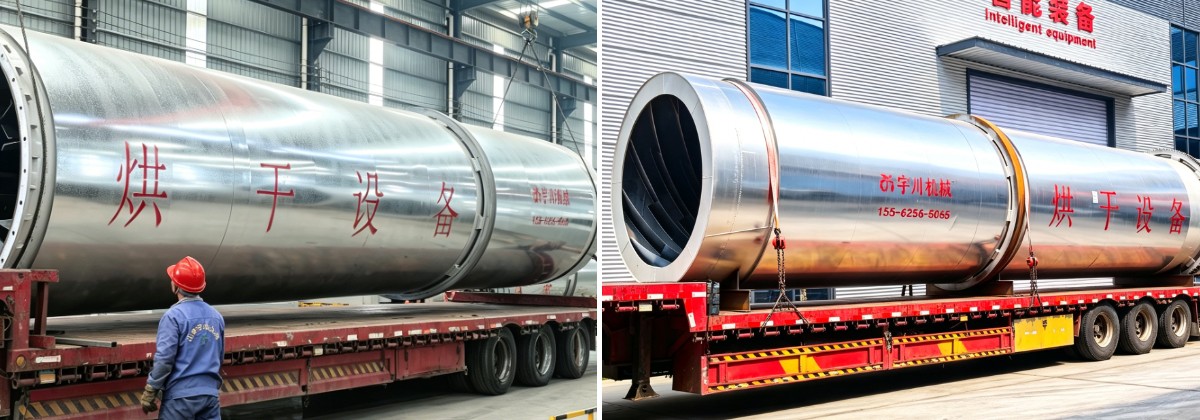
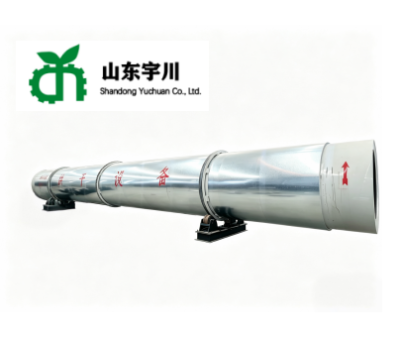
Straw Dryer Supports the High-Value Utilization of Agricultural Residues
1. Straw Resource Utilization Is Entering a More Advanced Processing Stage
With the continuous development of agricultural mechanization, the amount of corn straw, wheat straw, rice straw, and other crop residues is increasing in many agricultural regions. Turning these agricultural residues into materials that can be stored, transported, and further processed has become an important topic in biomass energy, feed processing, and organic fertilizer production.
In this process, the Straw Dryer plays an important role. Fresh straw usually contains relatively high moisture. If it is directly crushed, pelletized, or stored, excessive moisture may lead to material blockage, mold growth, deterioration, and unstable downstream processing.
Therefore, using professional straw drying equipment to reduce moisture content is an important step in improving the overall utilization value of agricultural residues.
According to local raw material characteristics, production capacity, and available energy sources, modern straw drying systems can provide flexible drying solutions for overseas biomass processing companies.
2. Continuous Drying Solutions for High-Moisture Straw
Compared with many conventional industrial materials, straw has low bulk density, a fibrous structure, and high volume after crushing. If the internal structure of a dryer is not properly designed, material distribution may become uneven, reducing heat utilization and potentially causing material accumulation.
Therefore, a Straw Dryer needs to provide not only sufficient evaporation capacity but also efficient material conveying, hot-air distribution, and continuous discharge.
According to project requirements, the drying system can be integrated with feeding machines, conveyors, dust collection systems, heating equipment, and downstream crushing or pelletizing equipment to form a complete straw drying production line.
After entering the system, the straw is continuously lifted, mixed, and exposed to hot air, improving heat and mass transfer efficiency.
This continuous processing method is particularly suitable for biomass companies with stable raw material supplies and large-scale processing requirements.
3. From “Drying” to Lower Overall Production Costs
For customers, choosing straw drying equipment is no longer simply about whether the material can be dried. Long-term operating costs are equally important.
Modern drying systems can be optimized in several areas:
Improved thermal efficiency: Proper hot-air circulation and process design help reduce unnecessary heat loss.
Adaptability to different moisture levels: Drying parameters can be adjusted according to the initial and target moisture content.
Reduced manual operation: Automated conveying and control systems can reduce labor requirements.
Stable continuous operation: Suitable for large-scale straw processing projects.
Better downstream processing: Properly dried straw is easier to crush, briquette, and pelletize.
For overseas projects requiring long-term operation, these factors can directly influence unit processing costs and overall investment returns.
4. Greater Application Value After Drying
Properly dried straw generally offers better storage stability and downstream processing performance.
In the biomass energy sector, dried corn straw, wheat straw, and rice straw can be further crushed, briquetted, or processed into biomass pellets for boilers and industrial heating.
In the feed industry, certain types of straw that meet applicable requirements can be pretreated and dried before being used as roughage materials for ruminant feed.
In organic fertilizer production, straw can also be mixed with livestock manure and processed through fermentation, crushing, and pelletizing to produce organic fertilizer or biomass-based fertilizer products.
Dried straw can additionally be used in biomass boards, fuel briquettes, and other agricultural residue utilization projects.
Therefore, a Straw Dryer is more than a standalone drying machine. It serves as an important link between agricultural residue processing and resource utilization.