Industrial Pellet Mill: How to Build a More Stable Biomass Pellet Production Line
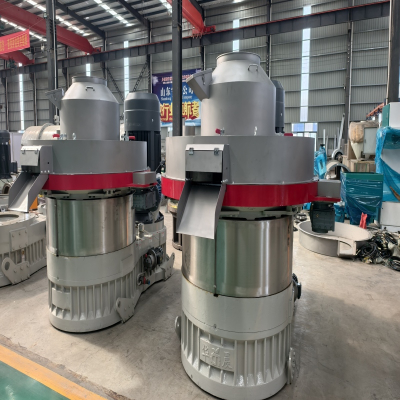
As biomass energy and agricultural waste recycling continue to develop, more manufacturers are looking for reliable equipment to convert sawdust, wood chips, straw, rice husk, and other biomass residues into valuable pellets. In this process, the Industrial Pellet Mill plays a key role in determining production stability and pellet quality.
However, choosing a pellet mill is not simply a matter of selecting the largest-capacity machine. Raw material characteristics, moisture content, particle size, production requirements, equipment durability, and the configuration of the entire production line should all be considered.
1. Start with the Raw Material
Different biomass materials have different physical characteristics. Sawdust may have relatively good flowability, while straw and agricultural residues can contain longer fibers. Rice husk and some other materials may also require appropriate pretreatment before pelletizing.
Therefore, an Industrial Pellet Mill should be selected according to the actual raw material rather than based only on a standard model.
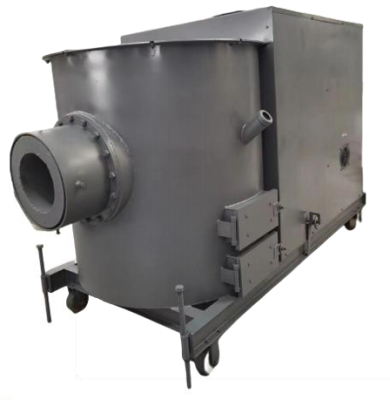
For materials with large particle sizes, a crusher or hammer mill may be required. For high-moisture materials, a biomass dryer can be installed before the pelletizing process.
2. Moisture Control Is Essential
Moisture has a direct influence on pellet formation. Material that is too wet may affect pelletizing efficiency, while excessively dry material may also make stable forming more difficult.
For this reason, a complete biomass pellet production line commonly combines drying equipment with an Industrial Pellet Mill. By controlling the material condition before pelletizing, manufacturers can achieve more consistent production results.
A typical process can be arranged as:
Raw Material → Crushing → Drying → Conveying → Pelletizing → Cooling → Screening → Packing
The exact configuration can be adjusted according to the raw material and production requirements.
3. Look Beyond Rated Capacity
When purchasing an Industrial Pellet Mill, capacity is an important specification, but it should not be the only consideration.
Industrial users should also evaluate:
Continuous operating capability
Transmission structure
Wear resistance of key components
Ease of maintenance
Energy consumption
Pellet quality
Compatibility with upstream and downstream equipment
A machine with suitable capacity and stable operation can be more practical for long-term production than simply choosing a model based on a nominal output figure.
4. Durability Matters in Continuous Production
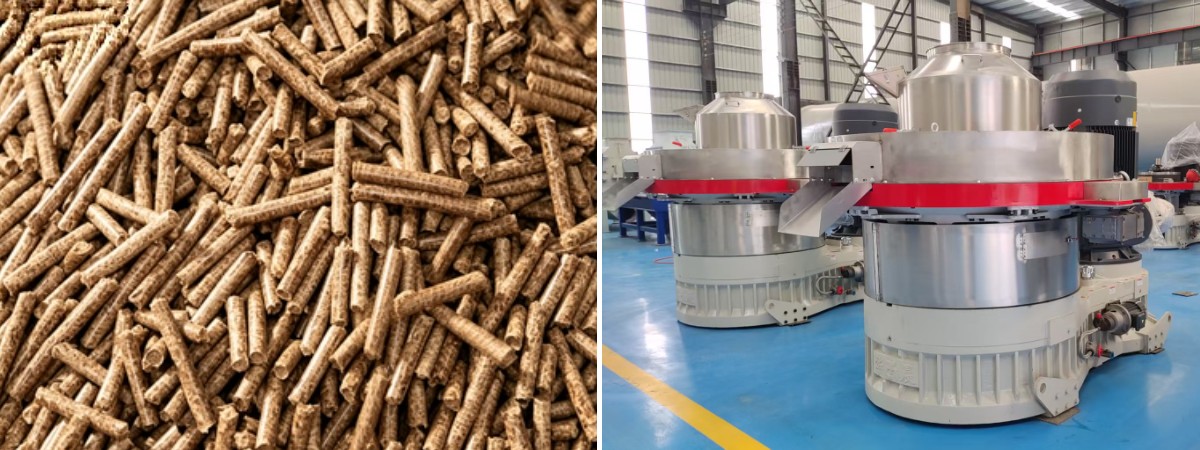
Commercial pellet plants may operate for long periods, so wear of dies, rollers, bearings, and other key components needs to be considered.
A properly designed Industrial Pellet Mill uses heavy-duty components and a robust structure to cope with demanding working conditions. Wear-resistant components can help reduce maintenance frequency and improve equipment service life.
Regular inspection and timely replacement of wearing parts are also important for maintaining stable production.
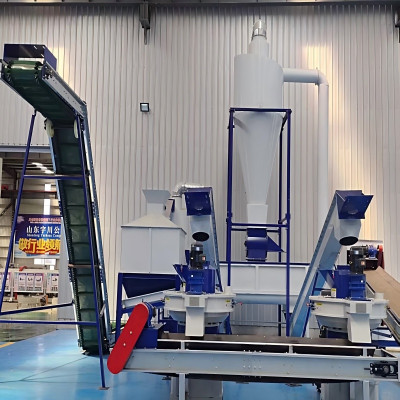
5. Think About the Whole Pellet Production Line
An Industrial Pellet Mill is the core forming equipment, but it cannot operate independently in most large-scale biomass projects.
A practical production line should consider the complete material flow. Crushing equipment prepares the required particle size, drying equipment controls moisture, conveying systems ensure smooth material transfer, and cooling and screening equipment improve the final pellet handling process.
This is why professional equipment selection should focus on the entire biomass pellet production line, rather than one machine alone.
6. Customized Solutions for Different Projects
There is no single pelletizing configuration suitable for every biomass project.
A small agricultural waste project may require a compact processing system, while a commercial biomass fuel plant may need continuous feeding, large-scale drying, multiple pellet mills, cooling, screening, and automatic packing.
Shandong Yuchuan can provide customized biomass pelletizing solutions according to raw material characteristics, required capacity, pellet specifications, and customer project conditions.
The goal is not simply to supply an Industrial Pellet Mill, but to help customers establish a practical and coordinated production system.
Conclusion
Selecting an Industrial Pellet Mill should begin with the raw material and end with the complete production process. Moisture control, particle size, production capacity, equipment durability, maintenance, and line integration all influence the final performance.
For overseas buyers planning a biomass pellet project, evaluating these factors before equipment selection can help build a more stable and efficient production system.
Looking for an Industrial Pellet Mill for your biomass project? Contact Yuchuan for a customized pelletizing solution.