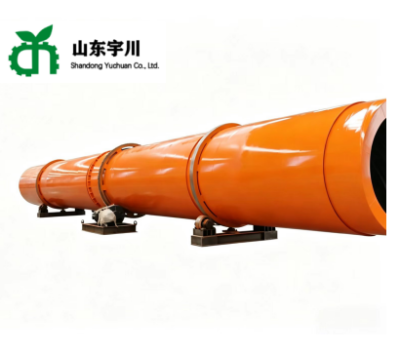
How to Choose an Industrial Dryer for High-Moisture Materials?
High-moisture materials are widely found in biomass processing, agriculture, animal waste treatment, food production, and resource recycling. Materials such as sawdust, wood chips, coco coir, chicken manure, brewer’s spent grain, sludge, bagasse, and straw often contain a large amount of moisture before processing.
For these materials, selecting the right Industrial Dryer is not simply about choosing a machine with a large capacity. Drying efficiency, material characteristics, initial moisture content, final moisture requirements, heat source, energy consumption, and dust control all need to be considered.
So, how can overseas buyers choose a suitable Industrial Dryer for High-Moisture Materials?
1. Understand the Characteristics of the Material
The first step is to understand the material that needs to be dried.
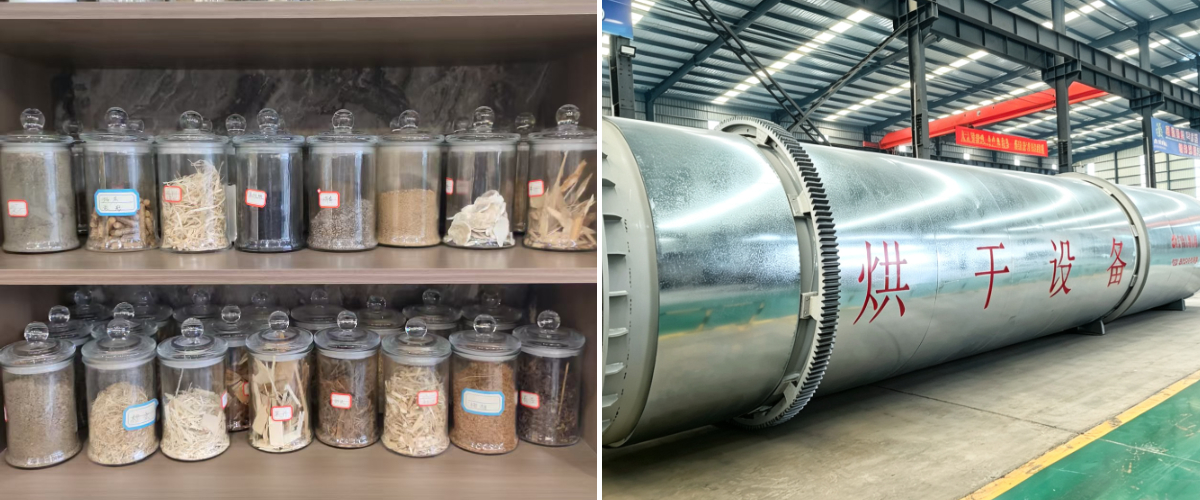
Different materials behave differently during the drying process. Sawdust and wood chips are relatively loose, while chicken manure, sludge, and brewer’s spent grain can have higher viscosity and may easily stick together. Coco coir and bagasse may also have different moisture distributions and flow characteristics.
Before selecting an Industrial Dryer, buyers should consider:
Initial moisture content
Required final moisture content
Material particle size
Bulk density
Material viscosity
Processing capacity
Heat sensitivity
Whether the material tends to stick or block
These factors directly influence the dryer structure, heat transfer method, feeding system, and operating parameters.
2. Consider the Initial and Final Moisture Content
Moisture removal is one of the most important factors in industrial drying.
For example, biomass materials may enter the dryer with relatively high moisture content but need to reach a lower and more stable moisture level before pelletizing, storage, transportation, or further processing.
If the material is not dried sufficiently, it may cause problems such as:
Poor pellet formation
Higher transportation costs
Mold or deterioration during storage
Unstable downstream processing
Lower fuel quality
On the other hand, excessive drying can increase energy consumption and operating costs.
Therefore, a suitable Industrial Dryer should provide controllable and relatively uniform drying performance according to the customer's actual production requirements.
3. Match the Dryer Capacity with the Production Line
Capacity is another key consideration.
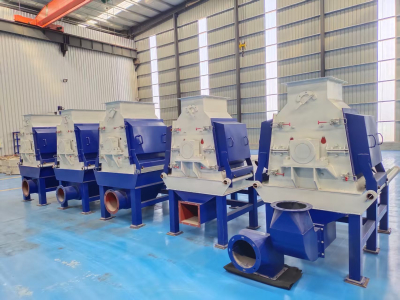
A dryer should not only meet the current production requirement but also match the capacity of upstream and downstream equipment. For example, in a biomass pellet production line, the dryer needs to work efficiently with equipment such as crushers, hammer mills, pellet mills, and conveyors.
If the dryer capacity is too small, it may become a bottleneck in the production line. If it is significantly oversized, the initial investment and energy consumption may increase unnecessarily.
Therefore, buyers should provide information such as:
Material type
Feed moisture
Target moisture
Required output
Working hours per day
Available heat source
With this information, the dryer configuration can be designed more accurately.
4. Pay Attention to Heat Source and Energy Efficiency
The heat source has a direct influence on the operating cost of an Industrial Dryer.
Biomass processing projects may use biomass burners, hot air furnaces, natural gas, or other suitable heat sources depending on local conditions and project requirements.
An efficient drying system should make good use of thermal energy and deliver hot air to the material effectively.
For high-moisture materials, reasonable hot-air distribution is particularly important. The wettest material needs sufficient heat transfer during the early stage of drying, while the later stage requires controlled moisture removal to avoid excessive drying.
A well-designed Industrial Dryer can improve heat utilization and help customers reduce unnecessary energy consumption during continuous operation.
5. Choose a Dryer Suitable for Difficult Materials
Not every dryer is suitable for high-moisture and sticky materials.
Materials such as sludge, chicken manure, brewer’s spent grain, and some agricultural residues may create challenges including sticking, uneven drying, material accumulation, and blockage.
For these applications, the dryer should have:
Reliable material feeding
Good internal material movement
Sufficient heat transfer
Proper drum structure
Easy maintenance
The equipment should be selected according to the actual characteristics of the material rather than simply based on price or theoretical capacity.
6. Consider Dust Collection and Environmental Control
Drying biomass and other powdery materials can generate dust during feeding, drying, conveying, and discharge.
For overseas industrial projects, dust control is therefore an important part of the overall drying system.
An Industrial Dryer can be combined with dust collection equipment according to project requirements. This helps improve the working environment, reduce dust escape, and make the complete production system more suitable for continuous industrial operation.
7. Yuchuan Industrial Dryer Solutions
As an industrial drying equipment manufacturer, Shandong Yuchuan focuses on customized drying solutions for biomass, agricultural residues, animal waste, and other industrial materials.
Yuchuan drying systems can be configured according to material characteristics, processing capacity, moisture requirements, and available heat sources.
Typical applications include:
Wood chips and sawdust
Straw and agricultural residues
Coco coir
Bagasse
Chicken manure
Brewer’s spent grain
Sludge
Palm fiber
Other high-moisture biomass materials
For projects requiring complete production systems, drying equipment can also be integrated with crushing, conveying, dust collection, heating, and pelletizing equipment.
This approach allows customers to consider the entire production process rather than purchasing a dryer as an isolated machine.
8. Conclusion
Choosing an Industrial Dryer for High-Moisture Materials requires more than comparing equipment prices or rated capacity.
Material characteristics, initial and final moisture, processing capacity, heat source, energy efficiency, dust control, and compatibility with the complete production line should all be considered.
For overseas buyers, a customized drying solution can help improve production stability and make better use of energy while meeting specific material-processing requirements.
If you are looking for an Industrial Dryer for wood chips, sawdust, coco coir, bagasse, chicken manure, sludge, or other high-moisture materials, providing your material type, moisture content, required capacity, and target moisture can help determine a more suitable drying solution.
Shandong Yuchuan is ready to provide customized industrial drying solutions for global customers.