Industrial Dryer Heat Source Selection Guide
When purchasing industrial rotary drying equipment, global buyers frequently face one core question: how to select the most suitable heat source for rotary dryers. The choice of heating system directly determines operating costs, environmental compliance, temperature control accuracy and long-term production benefits. This article systematically compares mainstream dryer heat sources to help international customers make informed investment decisions.
Coal-fired Hot Blast Stove
Advantages
Low fuel cost, stable heat supply, suitable for large-scale continuous drying production.
Disadvantages
Strict environmental restrictions in most regions. Complete flue gas dust removal and desulfurization supporting facilities are required. Not recommended for areas with stringent emission regulations.
Applicable Scenarios
Large-volume production bases with loose local environmental policies.
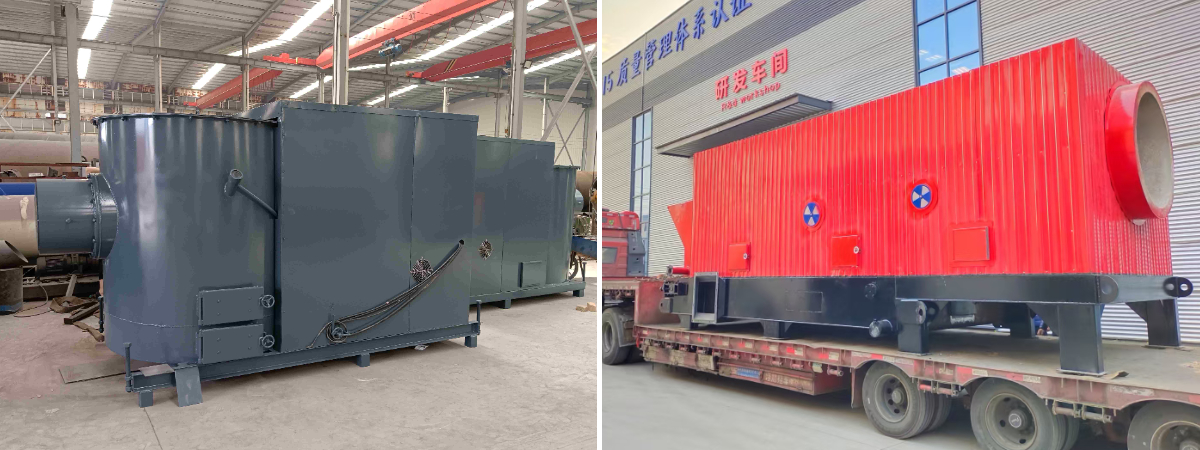
Biomass Burner & Biomass Hot Blast Stove
Disadvantages
Requires regular fuel supply channels; fuel storage space is necessary.
Applicable Scenarios
Agricultural waste treatment, biomass fuel processing, organic material drying projects.
Natural Gas & LPG Heating System
Advantages
Fast temperature rise, precise temperature control, clean flue gas without heavy dust. Minimal post-treatment equipment, ideal for materials with high purity requirements.
Disadvantages
Operating expense fluctuates with global gas prices; continuous mass production will increase long-term operation expenditure.
Applicable Scenarios
Food raw materials, chemical materials and other industries demanding high material cleanliness.
Fuel Oil Burner (Diesel / Heavy Oil)
Advantages
Compact structure, easy installation and flexible start-stop mode. Occupies small workshop space, suitable for intermittent production.
Disadvantages
High fuel price, uneconomical for long-time continuous drying.
Applicable Scenarios
Small and medium production lines, temporary drying projects, sites without stable gas or biomass supply.
Electric Heating Hot Blast Stove
Advantages
Zero pollution, simple installation, outstanding temperature accuracy, easy automatic control linkage.
Disadvantages
High power consumption. Not cost-effective for large-capacity drying lines.
Applicable Scenarios
Small batch production, high-value materials, projects with strict environmental standards.
Air Source Heat Pump
Advantages
Clean low-carbon energy, remarkable energy-saving performance, low daily operation expense.
Disadvantages
Limited maximum heating temperature. Only fit for medium & low temperature drying processes. Cannot meet high-temperature drying requirements.
Applicable Scenarios
Low-temperature dehydration of fruits, feed, daily organic raw materials.
Core Principles for Heat Source Selection
Local environmental protection laws and emission standards
Availability and long-term price of local fuels
Daily drying capacity and continuous production cycle
Maximum temperature requirement of raw materials
Workshop area, investment budget and automatic control demands
Conclusion
There is no universal best heat source for rotary dryers. The optimal solution must match your raw material characteristics, production scale and local energy conditions.
As a professional rotary dryer manufacturer, we provide customized drying system design including main equipment, heat source supporting facilities and automatic control cabinet. Send us your material type, daily output and local energy conditions, our engineering team can offer a targeted drying solution.