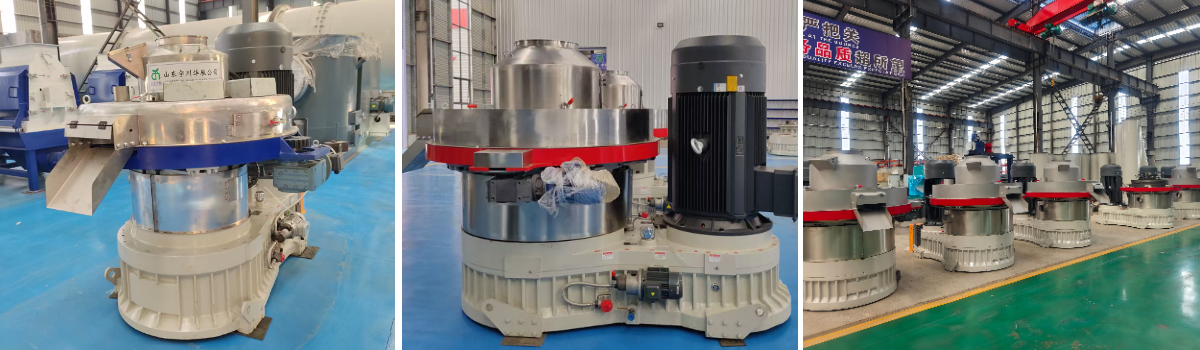
What Raw Materials Can Be Used for Biomass Pellet Machine?
In the global wave of carbon neutrality and renewable energy replacement, the Biomass Pellet Machine has become the core equipment for waste recycling and clean fuel production. Most overseas investors focus on one key question: what raw materials can a Biomass Pellet Machine use to produce qualified biomass pellets and wood pellets?
In fact, the modern Biomass Pellet Machine features ultra-wide raw material adaptability. All lignocellulosic biomass waste can be pressed into high-density, high-calorific-value biomass pellets after crushing and drying treatment. Abundant raw material resources, low investment cost and huge market demand make the Biomass Pellet Machine one of the most profitable green energy projects worldwide.
Wood and Forestry Waste Raw Materials
Woody raw materials are the best choice for producing high-quality wood pellets. They have high calorific value, low ash content, low sulfur content and excellent molding effect, which fully meet international fuel standards. The Biomass Pellet Machine can perfectly process sawdust, wood shavings, wood chips, tree branches, log residues, bark, fallen leaves, bamboo chips, bamboo dust, garden green waste and forestry residues. Processed wood pellets are widely used for power generation, industrial heating and export trade.
Agricultural Crop Residues
Agricultural waste is the most cost-effective raw material for large-scale production of biomass pellets. Highly versatile biomass pellet machines can process a wide variety of crop residues, including corn stalks, wheat straw, rice straw, cotton stalks, soybean stalks, rapeseed stalks, corn cobs, and sunflower stalks. These raw materials are readily available and extremely low-cost. After being compressed by the equipment, the resulting biomass pellets can replace traditional coal and be used in applications such as boiler heating, soil warming, and as a base material for organic fertilizers.
Grain Husk and Fruit Shell Materials
Husk and shell materials contain rich natural fiber and lignin, with natural adhesion, which greatly improves the molding rate of biomass pellets. The Biomass Pellet Machine is suitable for processing rice husk, peanut shell, coconut shell, palm kernel shell, palm fiber, tea seed shell and sunflower seed shell. These raw materials are extremely abundant in Southeast Asia, Africa and tropical regions, ideal for local biomass pellet production projects.
Industrial and Organic Waste Raw Materials
To meet global environmental protection requirements, many industrial organic wastes can be recycled for pellet production. The high-adaptability Biomass Pellet Machine can process sugarcane bagasse, mushroom residue, distiller's grains, fruit pomace, paper waste and dried organic sludge. It helps enterprises solve waste disposal problems, reduce environmental pressure and turn waste into profitable biomass pellets.
Advantages of Our Biomass Pellet Machine
Our biomass pellet mill supports the pelletization of multiple raw materials, offering high yield rates, low failure rates, and reduced energy consumption. The resulting biomass pellets feature uniform particle size, high density, and long shelf life, making them ideal for long-distance transport and meeting export standards.
Conclusion
In summary, any biomass waste containing lignin can be processed into high-value, clean biomass pellets and wood pellets using specialized biomass pellet machines. With the support of global carbon reduction policies and the continued rise in demand for clean energy, investing in biomass pellet machines and establishing pellet production projects offers vast growth potential in the European, Southeast Asian, African, and South American markets.