How to Choose the Right Industrial Dryer for Biomass Materials?
As the global demand for renewable energy continues to grow, biomass materials such as wood chips, sawdust, straw, rice husks, bagasse, palm residues, and agricultural waste are increasingly being processed into biomass fuel, animal bedding, and pelletized products.
However, moisture content is one of the most important factors affecting biomass processing. Materials with excessive moisture can reduce pellet quality, increase energy consumption, cause material blockage, and affect the stability of the entire production line. Therefore, choosing the right Industrial Dryer for Biomass Materials is essential for achieving stable production and controlling operating costs.
But how should buyers choose the right dryer? The answer depends on several factors, including raw material characteristics, moisture content, processing capacity, heat source, final application, and available space.
1.Start with the Characteristics of the Biomass MaterialDifferent biomass materials have different structures, moisture contents, and drying characteristics.
For example, wood chips and sawdust are relatively common materials for biomass fuel production, while straw, bagasse, rice husks, palm fiber, and other agricultural residues may have different fiber structures and moisture levels.
Before selecting an Industrial Dryer, buyers should determine:
Raw material type
Initial moisture content
Target moisture content
Particle size
Bulk density
Processing capacity
Final product application
These factors directly influence dryer selection and system configuration.
For example, if wet wood chips are going to be processed into biomass pellets, the drying system must reduce moisture to a suitable level before pelletizing. If the material is used as animal bedding, the drying requirements may be different.
Therefore, there is no single dryer that is ideal for every biomass material.
2. Pay Attention to Initial and Final Moisture Content
Moisture control is at the heart of biomass drying.
Biomass materials with excessive moisture are usually difficult to crush and pelletize efficiently. High moisture can also reduce the combustion performance of biomass fuel and increase transportation costs because more water is being transported along with the material.
An appropriate Biomass Dryer can efficiently reduce moisture while maintaining stable material flow.
When purchasing an industrial drying system, buyers should provide the supplier with accurate information about the moisture content before and after drying.
For example:
Wet Biomass → Industrial Dryer → Controlled Moisture Biomass → Pellet Machine
For biomass pellet production, moisture control is particularly important because excessively wet or excessively dry material can both affect pellet forming performance.
A professional equipment manufacturer should therefore recommend the drying capacity and configuration according to actual material conditions rather than simply providing a standard machine.
 3. Choose the Dryer According to Production Capacity
Production capacity is another critical consideration.
Small biomass processing projects may require only several hundred kilograms per hour, while large commercial pellet plants can process several tons of biomass per hour.
A dryer that is too small may become a bottleneck in the production line. On the other hand, selecting an oversized dryer may increase equipment investment and operating costs unnecessarily.
A suitable Industrial Dryer for Biomass Materials should match the capacity of upstream and downstream equipment.
For a complete biomass pellet production line, the relationship between equipment is particularly important:
Crusher → Dryer → Pellet Machine → Cooler → Screening → Packing
The capacity of each section should be reasonably matched to maintain continuous production.
4. Consider the Type of Dryer
Different industrial drying technologies can be used for biomass materials.
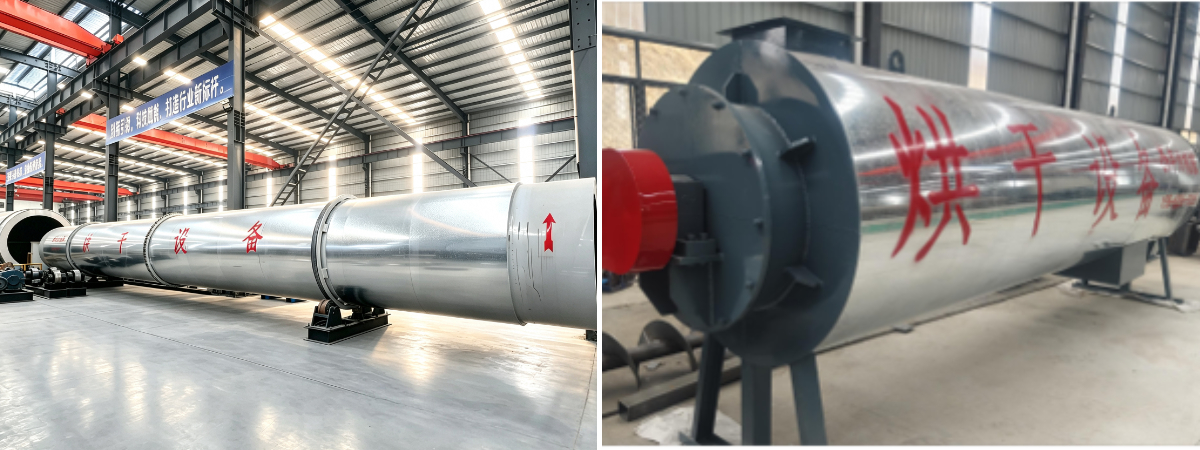
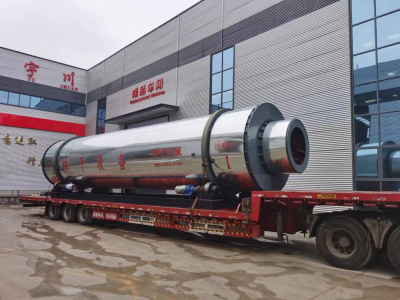
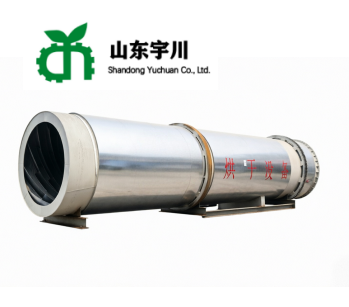
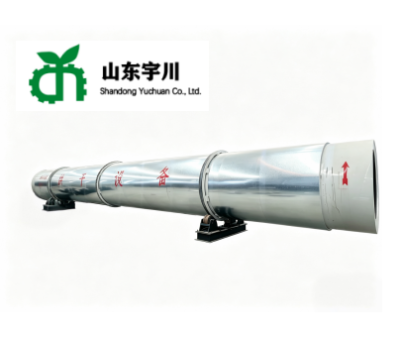
A Rotary Drum Dryer is one of the commonly used solutions for large-scale biomass drying.
The material enters the rotating drum and moves forward while being exposed to hot air. Internal lifting flights help distribute the material and improve contact between the biomass and hot air.
It can be used for materials such as:
Wood chips
Sawdust
Straw
Rice husks
Bagasse
Palm fiber
Agricultural residues
It is particularly suitable for continuous industrial production.
Three-Pass Rotary Dryer
A three-pass dryer uses multiple drying paths to improve heat transfer and reduce the required installation space compared with some conventional single-drum configurations.
It can be considered for projects requiring relatively high throughput and efficient heat utilization.
Customized Biomass Drying Systems
For materials with special characteristics, a customized drying system may be more appropriate.
Factors such as sticky materials, irregular particle sizes, high initial moisture, and strict final moisture requirements may require adjustments to feeding, hot-air circulation, drum structure, dust collection, and heat supply.
Therefore, dryer selection should be based on the actual material rather than simply the equipment name.
5. Select a Suitable Heat Source
The heat source has a direct impact on the operating cost of an industrial dryer.
For biomass processing projects, commonly considered heat sources include:
Biomass fuel
Natural gas
Diesel
Coal
Electricity, depending on the drying technology
For biomass pellet plants, a Biomass Hot Air Furnace can be integrated with the drying system. Biomass residues or other suitable fuels can be used to generate hot air for drying.
This creates a practical processing cycle:
Biomass Residues → Heat Generation → Drying → Biomass Fuel Production
When selecting a heat source, buyers should consider fuel availability, local energy prices, environmental requirements, thermal efficiency, and operating convenience.
6. Consider Energy Consumption and Heat Utilization
Energy efficiency is becoming increasingly important for biomass processing companies.
Drying large quantities of wet biomass requires considerable thermal energy. If heat is not efficiently transferred to the material, operating costs can rise significantly.
A well-designed biomass drying system should focus on:
Efficient heat transfer
Stable hot-air circulation
Reasonable material residence time
Reduced heat loss
Proper insulation
Continuous and stable feeding
For large-scale projects, even a small improvement in thermal efficiency can result in meaningful savings over long-term operation.
This is why buyers should evaluate not only the purchase price of an Industrial Dryer, but also its long-term operating cost.
7. Don't Ignore Dust Collection and Environmental Protection
Biomass drying can generate dust, especially when processing fine materials such as sawdust, rice husks, and straw particles.
Therefore, a complete drying system should consider dust collection and exhaust treatment.
Depending on the project requirements, the system may include:
Dryer → Cyclone → Dust Collector → Exhaust System
Proper dust management can help improve the working environment, reduce material loss, and support compliance with local environmental requirements.
For export projects, environmental standards and local regulations should be considered during the early stage of equipment design.
8. Match the Dryer with the Complete Production Line
One of the most common mistakes when purchasing a biomass dryer is evaluating it as an independent machine.
In reality, the dryer is usually only one part of a complete processing system.
For example, a typical wood pellet production line may include:
Raw Material → Crushing → Drying → Fine Grinding → Pelletizing → Cooling → Screening → Packing
If the dryer cannot provide stable moisture control, the pellet machine may not operate efficiently.
Similarly, if the crusher produces material that is too large or uneven, the drying efficiency may also be affected.
Therefore, an experienced supplier should evaluate the entire production process rather than recommending a dryer based only on capacity.
9. Why Customized Drying Solutions Matter
Biomass materials are highly diverse. Even the same type of material can have different moisture levels and physical characteristics in different regions.
For this reason, customized solutions can provide better results than simply choosing a standard machine.
Shandong Yuchuan can design biomass drying solutions according to:
Material characteristics
Initial and final moisture
Required capacity
Available heat source
Factory layout
Downstream equipment
Local environmental requirements
Depending on the project, the solution can include a biomass dryer, crusher, hot air furnace, dust collection system, feeding system, and electrical control system.
The goal is not simply to dry the material, but to establish a stable and efficient processing system.
Conclusion: Choose the Dryer Based on the Process, Not Just the Machine
Choosing the right Industrial Dryer for Biomass Materials requires more than comparing equipment prices.
The most important factors include:
Raw material characteristics
Initial and final moisture content
Required production capacity
Dryer type
Heat source
Energy efficiency
Dust collection requirements
Complete production line configuration
For biomass pellet production, animal bedding, biomass fuel processing, and agricultural waste utilization, a properly designed drying system can significantly improve production stability and product quality.
A professional supplier can evaluate the raw material and production requirements and recommend a suitable Biomass Dryer or customized drying solution.